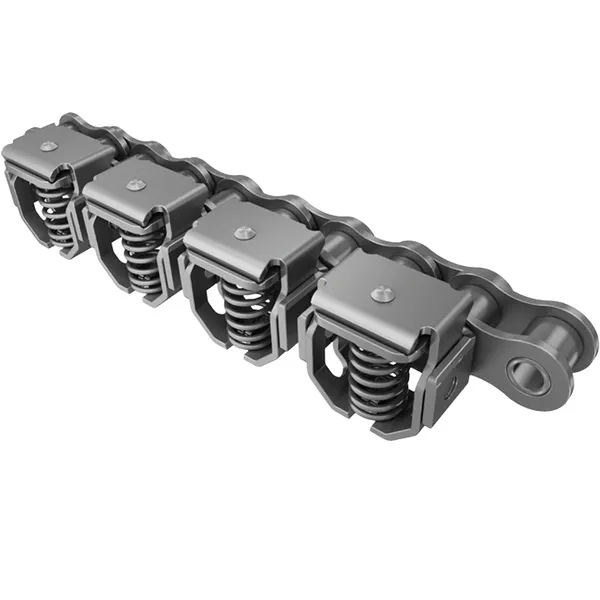
Produktbeskrivelse
CZPT rollers enhance rotation on the bushing while reducing impact loads on the sprocket tooth during operation.
Alle komponenter er varmebehandlet for å oppnå maksimal styrke.
Forhåndsbelastet under produksjonsprosessen for å minimere initial forlengelse.
Varmsmøring sikrer 100%-smøring av alle kjedekomponenter for å forlenge levetiden og redusere vedlikeholdskostnader.
| ANSI INGEN. |
PITCH | BUSK BREDDE |
RULLE DIA |
PIN-kode | TALLERKEN | ULTIMATE STREKK STYRKE |
WEIGHT | |||
| D | L | Lc | T | H | ||||||
| mm | mm | mm | mm | mm | mm | mm | mm | KN/min | kg/m² | |
| 428H-OR | 12.700 | 7.75 | 8.51 | 4.45 | 22.80 | 23.90 | 2.03 | 11.81 | 23.00 | 0.95 |
| 520H-OR | 15.875 | 6.25 | 10.16 | 5.09 | 22.00 | 23.20 | 2.42 | 15.09 | 21.80 | 1.30 |
| 50-OR | 15.875 | 9.40 | 10.16 | 5.09 | 24.80 | 26.00 | 2.03 | 15.09 | 21.80 | 1.15 |
| 60-OR | 19.050 | 12.57 | 11.91 | 5.94 | 30.40 | 31.90 | 2.42 | 18.08 | 31.10 | 1.66 |
| 80-OR | 25.400 | 15.75 | 15.88 | 7.94 | 35.50 | 37.00 | 3.25 | 24.13 | 55.60 | 2.95 |
| Bruk: | Transmission Chain, Conveyor Chain, Dedicated Special Chain, Roller Chain |
|---|---|
| Materiale: | Legering/karbonstål |
| Overflatebehandling: | Polering |
| Trekk: | Varmebestandig |
| Kjedestørrelse: | 1/2"*1" |
| Struktur: | Rullekjede |
| Prøver: |
US$ 10/meter
1 meter (min. bestilling) | |
|---|
| Tilpasning: |
Tilgjengelig
| Tilpasset forespørsel |
|---|
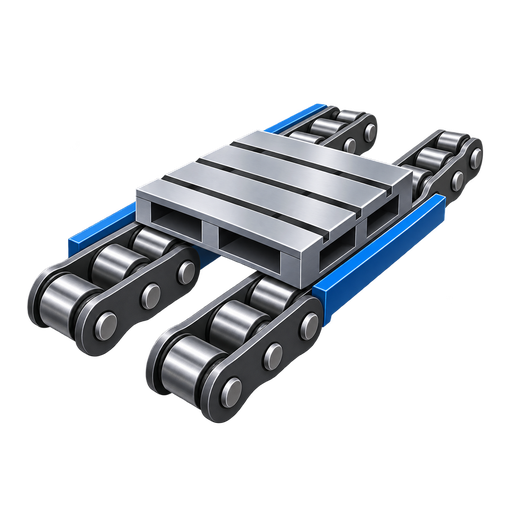
Hva er fordelene med å bruke et kjedesystem for overliggende transportbånd?
Bruk av et overliggende transportkjedesystem gir flere fordeler i ulike industrielle applikasjoner. Her er noen viktige fordeler:
1. Plassoptimalisering:
– Overliggende transportkjedesystemer utnytter den vertikale plassen, noe som gir effektiv utnyttelse av gulvplassen. Dette er spesielt fordelaktig i anlegg med begrenset gulvareal, da det muliggjør effektiv materialhåndtering og produksjonsflyt uten å hindre arbeidsområdet.
2. Fleksibilitet og allsidighet:
– Transportkjeder i taket gir fleksibilitet i ruteføring og kan tilpasses for å passe til anleggets spesifikke layoutkrav. De kan krysse forskjellige områder, inkludert samlebånd, lakkeringsbokser, lagerområder og mer. Allsidigheten til systemer i taket muliggjør effektiv og tilpasningsdyktig materialflytting.
3. Forbedret sikkerhet:
– Kjettinger i overliggende transportbånd minimerer hindringer på bakkenivå, noe som reduserer risikoen for snublefare og ulykker. Operatører og arbeidere kan trygt navigere i arbeidsområdet uten forstyrrelser fra transportbåndsystemet.
4. Produktbeskyttelse:
– Kjeder i overliggende transportbånd gir bedre beskyttelse for produktene som transporteres. Ved å holde produktene hevet og unna potensielle farer på gulvet, som støv, rusk eller søl, reduseres risikoen for produktskade eller forurensning.
5. Økt effektivitet:
– Transportbåndsystemer kan forbedre produksjonseffektiviteten ved å legge til rette for kontinuerlig materialflyt og redusere manuell håndtering. De muliggjør automatisert lasting og lossing av materialer, noe som fører til raskere behandlingstider og forbedret total produktivitet.
6. Enkelt vedlikehold:
– Kjeder for overliggende transportbånd er vanligvis utformet for enkelt vedlikehold. Komponenter som kjeder, løpekatter og drivverk er lett tilgjengelige og kan vedlikeholdes, noe som minimerer nedetid og vedlikeholdskostnader.
7. Tilpasning og integrasjon:
– Transportkjeder kan skreddersys for å møte spesifikke applikasjonskrav, inkludert lastekapasitet, hastighet og kontrollsystemer. De kan også integreres med andre automatiserte systemer, for eksempel robotarbeidsstasjoner eller sorteringsmekanismer, for å optimalisere materialhåndteringsprosessen ytterligere.
Alt i alt gir bruk av et kjedesystem for overliggende transportbånd effektiv materialhåndtering, maksimerer plassutnyttelsen, forbedrer sikkerheten og forbedrer produktiviteten i industrielle miljøer.
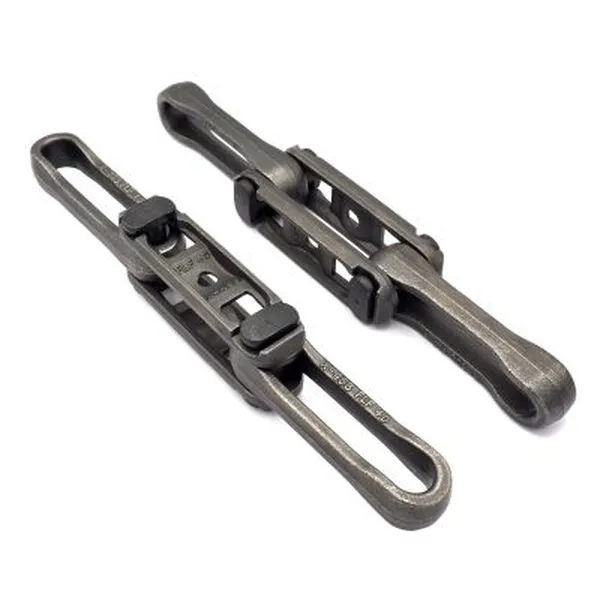
What are the safety measures for working with heavy-duty conveyor chains?
Working with heavy-duty conveyor chains requires strict adherence to safety measures to protect the workers and maintain a safe working environment. Here are some important safety measures to consider:
1. Proper Training: All personnel involved in working with conveyor chains should receive comprehensive training on the safe operation and maintenance of the equipment. This includes understanding the potential hazards, safety procedures, and proper use of personal protective equipment (PPE).
2. Equipment Inspection: Regular inspection of the conveyor chain and associated components is crucial to identify any signs of wear, damage, or malfunction. This includes checking for loose fasteners, worn sprockets, misalignment, and any other potential hazards. Any issues should be addressed promptly to prevent accidents.
3. Lockout/Tagout: Before performing any maintenance or repair tasks on the conveyor chain, proper lockout/tagout procedures must be followed. This ensures that the equipment is de-energized and isolated from any power source to prevent accidental startup or movement.
4. Personal Protective Equipment (PPE): Workers should wear appropriate PPE, including safety glasses, gloves, steel-toed boots, and hearing protection. The specific PPE requirements may vary depending on the nature of the work and the potential hazards involved.
5. Safe Work Practices: Workers should follow safe work practices, such as avoiding loose clothing or jewelry that can get caught in the chain, keeping hands and clothing clear of moving parts, and using proper lifting techniques when handling heavy loads.
6. Emergency Stop Systems: Conveyor systems should be equipped with emergency stop buttons or pull cords that allow workers to quickly stop the chain in case of an emergency or hazardous situation.
7. Regular Maintenance: Scheduled maintenance and lubrication of the conveyor chain should be performed according to the manufacturer’s recommendations. This helps to ensure optimal performance and minimize the risk of unexpected failures.
8. Clear Warning Signs and Labels: Proper signage, warning labels, and safety instructions should be clearly displayed near the conveyor chain system to remind workers of potential hazards and safe operating procedures.
9. Regular Safety Training and Communication: Ongoing safety training and communication among the workforce are vital to reinforce safe practices and raise awareness of any changes or updates to safety protocols.
By implementing these safety measures and fostering a safety-conscious culture, the risks associated with working with heavy-duty conveyor chains can be minimized, ensuring the well-being of the workers and the efficient operation of the equipment.
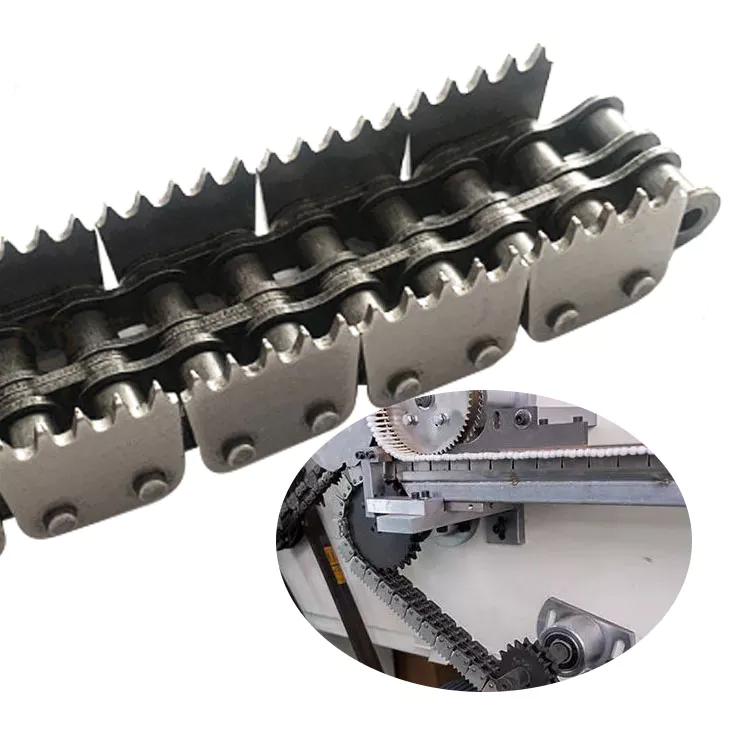
How do you properly tension a conveyor chain?
Properly tensioning a conveyor chain is crucial for its smooth operation and to prevent issues like chain slipping or excessive wear. Here are the steps to properly tension a conveyor chain:
- Identify the Tensioning Points: Determine the locations where the conveyor chain can be tensioned. These are typically at the ends of the chain or at specific tensioning devices.
- Loosen the Tensioning Devices: If there are tensioning devices in place, such as adjustable bolts or tensioning screws, loosen them to allow for adjustment.
- Apply Tension: Apply tension to the conveyor chain by either manually pulling the chain or using a tensioning tool. The amount of tension required depends on the chain type and the manufacturer’s recommendations.
- Check the Tension: Use a tension gauge or other suitable method to measure the tension of the conveyor chain. The tension should fall within the specified range provided by the chain manufacturer.
- Adjust the Tension: If the tension is too loose or too tight, make adjustments accordingly. Tighten or loosen the tensioning devices until the desired tension is achieved.
- Secure the Tensioning Devices: Once the proper tension is achieved, securely tighten the tensioning devices to hold the chain in place.
- Verify the Tension: After tensioning the chain, perform a visual inspection and run the conveyor to ensure the chain runs smoothly without excessive slack or tightness. Make any further adjustments if necessary.
It’s important to refer to the specific guidelines provided by the conveyor chain manufacturer for proper tensioning instructions, as the exact method may vary depending on the chain type and design. Regularly check the tension of the conveyor chain and make adjustments as needed to maintain optimal performance.


editor by CX 2023-07-24