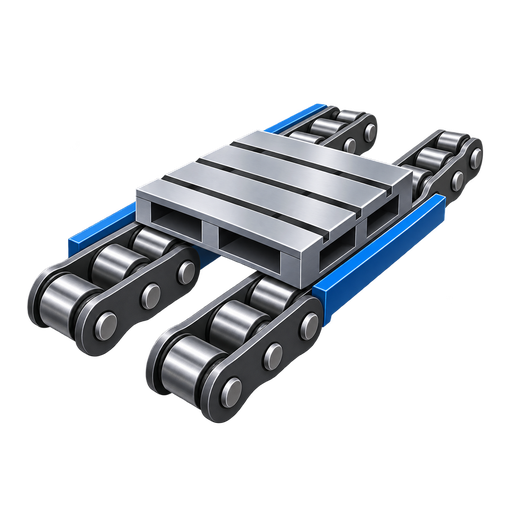
Productbeschrijving
CZPT rollers enhance rotation on the bushing while reducing impact loads on the sprocket tooth during operation.
Alle onderdelen worden warmtebehandeld om maximale sterkte te bereiken.
Vooraf gespannen tijdens het productieproces om de initiële rek te minimaliseren.
Smering door middel van thermisch dompelen zorgt voor 100%-smering van alle kettingonderdelen, waardoor de levensduur wordt verlengd en de onderhoudskosten worden verlaagd.
| ANSI NEE. |
TOONHOOGTE | STRUIK BREEDTE |
ROL DIA |
PIN | BORD | ULTIMATE TREKSTERKTE KRACHT |
WEIGHT | |||
| D | L | Lc | T | H | ||||||
| mm | mm | mm | mm | mm | mm | mm | mm | KN/min | kg/m | |
| 428H-OR | 12.700 | 7.75 | 8.51 | 4.45 | 22.80 | 23.90 | 2.03 | 11.81 | 23.00 | 0.95 |
| 520H-OR | 15.875 | 6.25 | 10.16 | 5.09 | 22.00 | 23.20 | 2.42 | 15.09 | 21.80 | 1.30 |
| 50-OR | 15.875 | 9.40 | 10.16 | 5.09 | 24.80 | 26.00 | 2.03 | 15.09 | 21.80 | 1.15 |
| 60-OR | 19.050 | 12.57 | 11.91 | 5.94 | 30.40 | 31.90 | 2.42 | 18.08 | 31.10 | 1.66 |
| 80-OR | 25.400 | 15.75 | 15.88 | 7.94 | 35.50 | 37.00 | 3.25 | 24.13 | 55.60 | 2.95 |
| Gebruik: | Transmission Chain, Conveyor Chain, Dedicated Special Chain, Roller Chain |
|---|---|
| Materiaal: | Gelegeerd/koolstofstaal |
| Oppervlaktebehandeling: | Polijsten |
| Functie: | Hittebestendig |
| Kettingmaat: | 1/2"*1" |
| Structuur: | Rollenketting |
| Voorbeelden: |
US$ 10/Meter
1 meter (minimale bestelling) | |
|---|
| Aanpassing: |
Beschikbaar
| Aanvraag op maat |
|---|
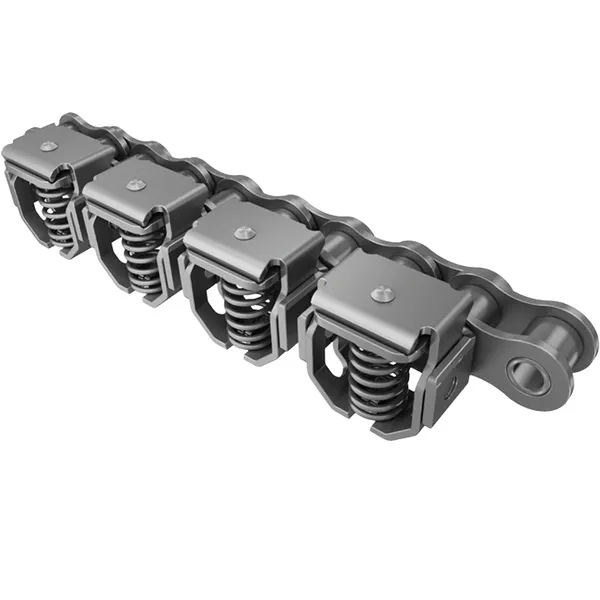
Wat zijn de voordelen van het gebruik van een bovenliggend transportkettingsysteem?
Het gebruik van een bovenloopkettingtransportsysteem biedt diverse voordelen in uiteenlopende industriële toepassingen. Hieronder enkele belangrijke voordelen:
1. Ruimteoptimalisatie:
– Bovenlooptransportkettingsystemen benutten de verticale ruimte optimaal, waardoor de vloeroppervlakte efficiënt wordt gebruikt. Dit is met name gunstig in faciliteiten met beperkte vloeroppervlakte, omdat het een efficiënte materiaalverwerking en productiestroom mogelijk maakt zonder de werkruimte te belemmeren.
2. Flexibiliteit en veelzijdigheid:
– Bovenlooptransportbanden bieden flexibiliteit in de routeplanning en kunnen worden aangepast aan de specifieke lay-outvereisten van de fabriek. Ze kunnen verschillende gebieden doorkruisen, waaronder assemblagelijnen, spuitcabines, opslagruimtes en meer. De veelzijdigheid van bovenloopsystemen maakt efficiënt en flexibel materiaaltransport mogelijk.
3. Verbeterde veiligheid:
– Bovenliggende transportkettingen minimaliseren obstakels op grondniveau, waardoor het risico op struikelgevaar en ongelukken afneemt. Operators en werknemers kunnen zich veilig in het werkgebied bewegen zonder hinder van het transportsysteem.
4. Productbescherming:
– Bovenliggende transportkettingen bieden betere bescherming voor de getransporteerde producten. Doordat de producten hoger worden gehouden en weg van mogelijke gevaren op de vloer, zoals stof, vuil of gemorste vloeistoffen, wordt het risico op productbeschadiging of -verontreiniging verminderd.
5. Verhoogde efficiëntie:
– Bovenlooptransportsystemen kunnen de productie-efficiëntie verhogen door een continue materiaalstroom te faciliteren en handmatige handelingen te verminderen. Ze maken geautomatiseerd laden en lossen van materialen mogelijk, wat leidt tot snellere verwerkingstijden en een hogere algehele productiviteit.
6. Eenvoudig onderhoud:
– Bovenloopkettingtransporteurs zijn doorgaans ontworpen voor eenvoudig onderhoud. Componenten zoals kettingen, loopwagens en aandrijvingen zijn gemakkelijk toegankelijk en te onderhouden, waardoor stilstand en onderhoudskosten tot een minimum worden beperkt.
7. Aanpassing en integratie:
– Bovenlooptransportkettingen kunnen worden aangepast aan specifieke toepassingsvereisten, waaronder draagvermogen, snelheid en besturingssystemen. Ze kunnen ook worden geïntegreerd met andere geautomatiseerde systemen, zoals robotwerkstations of sorteermechanismen, om het materiaalverwerkingsproces verder te optimaliseren.
Kortom, het gebruik van een bovenliggend transportkettingsysteem zorgt voor efficiënte materiaalverwerking, maximaliseert het ruimtegebruik, verhoogt de veiligheid en verbetert de productiviteit in industriële omgevingen.
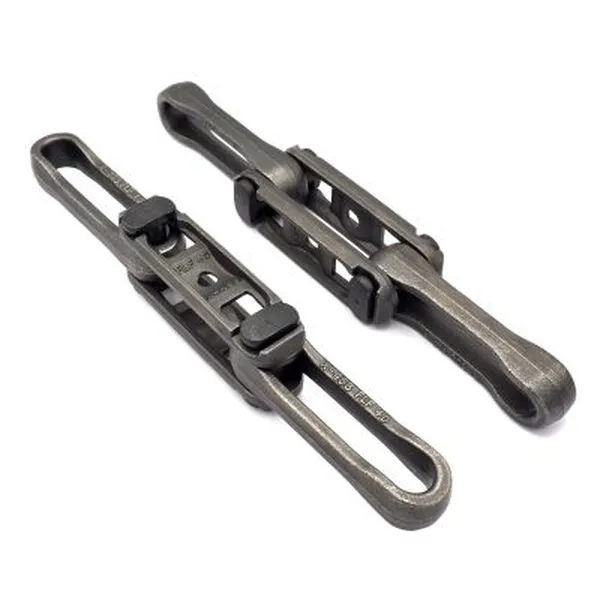
What are the safety measures for working with heavy-duty conveyor chains?
Working with heavy-duty conveyor chains requires strict adherence to safety measures to protect the workers and maintain a safe working environment. Here are some important safety measures to consider:
1. Proper Training: All personnel involved in working with conveyor chains should receive comprehensive training on the safe operation and maintenance of the equipment. This includes understanding the potential hazards, safety procedures, and proper use of personal protective equipment (PPE).
2. Equipment Inspection: Regular inspection of the conveyor chain and associated components is crucial to identify any signs of wear, damage, or malfunction. This includes checking for loose fasteners, worn sprockets, misalignment, and any other potential hazards. Any issues should be addressed promptly to prevent accidents.
3. Lockout/Tagout: Before performing any maintenance or repair tasks on the conveyor chain, proper lockout/tagout procedures must be followed. This ensures that the equipment is de-energized and isolated from any power source to prevent accidental startup or movement.
4. Personal Protective Equipment (PPE): Workers should wear appropriate PPE, including safety glasses, gloves, steel-toed boots, and hearing protection. The specific PPE requirements may vary depending on the nature of the work and the potential hazards involved.
5. Safe Work Practices: Workers should follow safe work practices, such as avoiding loose clothing or jewelry that can get caught in the chain, keeping hands and clothing clear of moving parts, and using proper lifting techniques when handling heavy loads.
6. Emergency Stop Systems: Conveyor systems should be equipped with emergency stop buttons or pull cords that allow workers to quickly stop the chain in case of an emergency or hazardous situation.
7. Regular Maintenance: Scheduled maintenance and lubrication of the conveyor chain should be performed according to the manufacturer’s recommendations. This helps to ensure optimal performance and minimize the risk of unexpected failures.
8. Clear Warning Signs and Labels: Proper signage, warning labels, and safety instructions should be clearly displayed near the conveyor chain system to remind workers of potential hazards and safe operating procedures.
9. Regular Safety Training and Communication: Ongoing safety training and communication among the workforce are vital to reinforce safe practices and raise awareness of any changes or updates to safety protocols.
By implementing these safety measures and fostering a safety-conscious culture, the risks associated with working with heavy-duty conveyor chains can be minimized, ensuring the well-being of the workers and the efficient operation of the equipment.
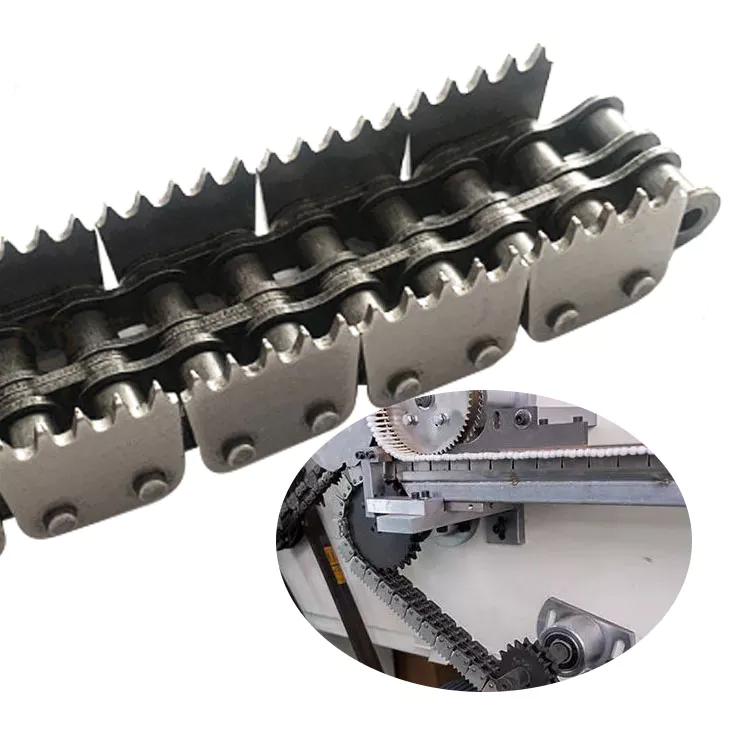
How do you properly tension a conveyor chain?
Properly tensioning a conveyor chain is crucial for its smooth operation and to prevent issues like chain slipping or excessive wear. Here are the steps to properly tension a conveyor chain:
- Identify the Tensioning Points: Determine the locations where the conveyor chain can be tensioned. These are typically at the ends of the chain or at specific tensioning devices.
- Loosen the Tensioning Devices: If there are tensioning devices in place, such as adjustable bolts or tensioning screws, loosen them to allow for adjustment.
- Apply Tension: Apply tension to the conveyor chain by either manually pulling the chain or using a tensioning tool. The amount of tension required depends on the chain type and the manufacturer’s recommendations.
- Check the Tension: Use a tension gauge or other suitable method to measure the tension of the conveyor chain. The tension should fall within the specified range provided by the chain manufacturer.
- Adjust the Tension: If the tension is too loose or too tight, make adjustments accordingly. Tighten or loosen the tensioning devices until the desired tension is achieved.
- Secure the Tensioning Devices: Once the proper tension is achieved, securely tighten the tensioning devices to hold the chain in place.
- Verify the Tension: After tensioning the chain, perform a visual inspection and run the conveyor to ensure the chain runs smoothly without excessive slack or tightness. Make any further adjustments if necessary.
It’s important to refer to the specific guidelines provided by the conveyor chain manufacturer for proper tensioning instructions, as the exact method may vary depending on the chain type and design. Regularly check the tension of the conveyor chain and make adjustments as needed to maintain optimal performance.


editor by CX 2023-07-24