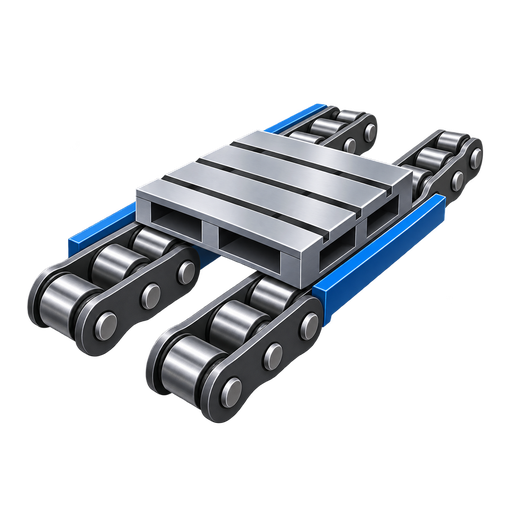
Deskripsi Produk
| Data(HS-820-K450) Rantai Plastik Lurus | |||||||
| Bahan Sabuk | Lebar W | Beban Kerja | Jari-jari Terbalik | Berat | |||
| mm | inci | N(21°C) | lbs (21°C) | mm | inci | kg/m | |
| POM | 114.3 | 4.50 | 1230 | 276 | – | – | 1.03 |
Avantages of the CZPT products
1.CZPT modular conveyor belt has more than 10 times service life,long life time and reducing replacement cost than traditional conveyor belt.
2.CZPT modular conveyor belt is easy to assemble, allowing only the replacement of damaged parts, easy to replace, saving maintenance time and costs.
3.CZPT modular conveyor belt has strong wear resistance, high temperature resistance, cold resistance and oil resistance.
4.CZPT modular conveyor belt is easy to clean, farewell to the propagation of bacteria, especially suitable for application in food industry.
5.CZPT modular conveyor belt in food and non-food industry, it plays an important role in the character of durability,low maintenance cost and easy to clean.
6.CZPT has agents in many countries and can provide good after-sales service.
7.CZPT not only has a complete production line to meet different application needs, but also can provide comprehensive product knowledge and experience. After 20 years of innovative research and development, we can provide more than 5000 kinds of solutions to provide perfect support for you in the field of transportation.
Aplikasi
Pabrik minuman, Aplikasi pengisian minuman, Pabrik produksi susu, Pengisian aerosol, Penanganan peralatan gelas
Rantai untuk permukaan meja dan piring berbahan termoplastik dengan jalur lurus.
Rantai plastik HONGSBELT dapat dipasang dan digunakan pada sebagian besar sistem rantai dan sproket yang ada saat ini, serta sepenuhnya kompatibel dengan berbagai standar industri. Hal ini membuat perawatan rantai meja menjadi lebih mudah. Seri rantai baru HONGBELT memiliki banyak performa unggulan. Seperti koefisien gesekan rendah, tahan terhadap bahan kimia, anti-statis, tahan api, dan sebagainya.
Ini bisa digunakan untuk berbagai industri & lingkungan.
Studi Kasus Kerja Sama
Kami bekerja sama dengan DHL & Amazon untuk membantu mereka memecahkan masalah penyortiran paket dalam berbagai skenario aplikasi.
Kerja sama global menembus lebih dari 50 penyedia layanan agen.
dan menandatangani perjanjian kerja sama strategis dengan “Safari Belting Systems” di Amerika Serikat.
“Cabang HONG'S BELT” di Eropa, dan “Cabang HONG'S BELT” di India
Pameran di seluruh dunia
Every year CZPT will go to all over the world to participate in exhibitions
Kami telah melayani proyek di lebih dari 120 wilayah dan negara dengan kemampuan pengiriman global.
Tim Hong's Belt dapat menyediakan lebih dari 5.000 solusi kepada pelanggan.
Pabrik
SABUK HONG
Xihu (West Lake) Dis. Xinhai (HangZhou) Technology Co., Ltd is a leading high-tech company providing intelligent conveyor solutions. We have a modern industrialized manufacturing area of 100,000 square CZPT for the production of modular plastic belts and conveying systems solutions.
Hong'sbelt Group saat ini memiliki lebih dari 1.000 karyawan, termasuk lebih dari 100 tim R&D, lebih dari 500 departemen produksi dan fungsional, dan sekitar 300 departemen penjualan dan dukungan penjualan. Titik penjualan tersebar di seluruh benua di dunia. Mewujudkan Otomatisasi dan Kecerdasan.
Kami mengembangkan rantai industri yang terintegrasi penuh dengan teknologi inti independen, komponen utama, produk unggulan, dan solusi sistem konveyor.
Sertifikat
Kami memiliki lebih dari 400 paten resmi nasional dan sertifikasi perangkat lunak.
Semua rangkaian produk telah memperoleh sertifikasi mutu pangan “FDA” AS dan sertifikasi “EU” di Eropa.
Memperoleh sertifikasi sistem manajemen mutu “ISO9001-2008”
Pertanyaan yang Sering Diajukan (FAQ)
T: Apakah Anda perusahaan perdagangan atau produsen?
A: Kami adalah produsen sabuk modular, sabuk rantai, dan komponen konveyor, dengan kantor pusat di Hangzhou, Tiongkok, dan 2 pabrik besar yang berlokasi di Hangzhou dan Hangzhou.
T: Apakah produk HONGSBELT sesuai dengan peraturan FDA dan Arahan Uni Eropa?
A: Bahan standar kami (PP, POM, PE, PA) sesuai dengan peraturan FDA dan Arahan Uni Eropa. Surat jaminan dapat diberikan jika diminta.
T: Bisakah kita menggunakan Sabuk Konveyor Modular HONGSBELT di lingkungan korosif?
A: HONGSBELT belts can be used in medium to severe CZPT applications, however, special product recommendations and conveyor design guidelines must be followed. More information, pls contact our online Customer Service or email to HONGSBELT Team.
T: Berapa kisaran suhu untuk material sabuk tersebut?
A: Sabuk HONGSBELT menawarkan berbagai material yang cocok untuk pengoperasian pada suhu mulai dari -60 °C hingga 260 °C. Material spesifik harus dipilih berdasarkan suhu pengoperasian Anda.
T: Apa arti sebenarnya dari kekuatan sabuk?
A: Kekuatan sabuk adalah tegangan maksimum (per kaki atau meter lebar) yang dapat ditahan sabuk secara terus menerus.
T: Berapa lama waktu yang dibutuhkan untuk mendapatkan penawaran harga?
A: Anda akan selalu menerima penawaran harga yang diminta paling lambat pada akhir hari kerja berikutnya, tetapi seringkali penawaran harga dikirimkan melalui email sebelum Anda menutup telepon.
| Bahan: | POM–Dp, POM-Lf |
|---|---|
| Struktur: | Rantai Atas |
| Perlakuan Permukaan: | Plastik |
| Ukuran Rantai: | 3,048m/Kotak |
| Fitur: | Tahan Api, Tahan Minyak, Tahan Panas |
| Certificate: | SGS,FDA,CE,ISO9001 |
| Contoh: |
US$ 15/Meter
1 Meter (Pesanan Minimum) | |
|---|
Can a conveyor chain be used in automotive assembly lines?
Yes, a conveyor chain can be effectively used in automotive assembly lines. Here are the reasons why:
1. Efficient Material Handling:
– Conveyor chains provide a reliable and efficient means of transporting automotive components and parts along the assembly line. They can handle heavy loads and withstand the demanding requirements of automotive manufacturing.
2. Versatility:
– Conveyor chains offer versatility in terms of design and configuration. They can be customized to accommodate various assembly processes, such as body welding, painting, assembly, and final inspection.
3. Precise Positioning:
– Conveyor chains allow precise positioning and synchronization of automotive components, ensuring accurate assembly and alignment during the production process. This helps maintain consistent quality and reduces errors.
4. Automation Integration:
– Conveyor chains can be easily integrated with automation systems in automotive assembly lines. They can work in conjunction with robotic arms, vision systems, and other automated equipment to optimize the production process and improve efficiency.
5. Assembly Line Flexibility:
– Conveyor chains provide flexibility in terms of line configuration and layout. They can be designed to accommodate different assembly line layouts, including straight sections, curves, inclines, and declines, to meet the specific requirements of automotive assembly processes.
6. Space Optimization:
– Conveyor chains help optimize space utilization in automotive assembly plants. They can be designed to navigate around existing equipment and infrastructure, making efficient use of available floor space.
7. Safety:
– Conveyor chains are designed with safety features to protect operators and prevent accidents. Emergency stop controls, guarding, and interlocking mechanisms ensure the safe operation of the assembly line.
8. Increased Production Speed:
– By using conveyor chains, automotive assembly lines can achieve higher production speeds, allowing for faster manufacturing cycles and increased output.
Overall, conveyor chains play a crucial role in enhancing the efficiency, productivity, and safety of automotive assembly lines, contributing to the smooth and streamlined production of vehicles.

Faktor apa saja yang perlu dipertimbangkan saat memilih jarak antar mata rantai pada rantai konveyor?
Saat memilih jarak antar mata rantai konveyor, beberapa faktor perlu dipertimbangkan untuk memastikan kinerja dan efisiensi yang optimal. Berikut adalah faktor-faktor kuncinya:
1. Kapasitas Beban: Jarak antar mata rantai konveyor harus dipilih berdasarkan kapasitas beban sistem yang diharapkan. Pertimbangkan berat dan ukuran material yang diangkut untuk memastikan rantai dapat menangani beban yang dibutuhkan tanpa melebihi kapasitasnya.
2. Kecepatan dan Aplikasi: Kecepatan operasi sistem konveyor dan aplikasi spesifik berperan dalam menentukan jarak antar mata rantai. Kecepatan yang lebih tinggi mungkin memerlukan jarak antar mata rantai yang lebih kecil untuk menjaga kelancaran dan keandalan operasi.
3. Panjang Konveyor: Panjang sistem konveyor memengaruhi pemilihan jarak antar mata rantai. Konveyor yang lebih panjang mungkin memerlukan rantai dengan jarak antar mata rantai yang lebih besar untuk mendistribusikan beban dan mengurangi tegangan pada setiap mata rantai.
4. Keterbatasan Ruang: Pertimbangkan ruang yang tersedia untuk sistem konveyor. Rantai dengan jarak antar mata rantai yang lebih kecil mungkin lebih disukai dalam aplikasi dengan ruang terbatas untuk meminimalkan jejak keseluruhan konveyor.
5. Keausan dan Perawatan: Pemilihan jarak antar mata rantai juga harus mempertimbangkan keausan dan kebutuhan perawatan yang diperkirakan. Rantai dengan jarak antar mata rantai yang lebih kecil seringkali memberikan ketahanan aus yang lebih baik dan mungkin memerlukan pelumasan dan perawatan yang lebih jarang.
6. Pengaturan Kecepatan: Jika sistem konveyor memerlukan pengaturan kecepatan atau penempatan yang tepat, pemilihan jarak antar mata rantai harus sesuai dengan kemampuan kontrol sistem penggerak. Rantai dengan jarak antar mata rantai yang lebih kecil dapat memberikan kontrol dan akurasi yang lebih baik.
7. Kompatibilitas: Pastikan bahwa jarak ulir yang dipilih kompatibel dengan komponen lain dari sistem konveyor, termasuk sproket, pemandu, dan perlengkapan tambahan. Komponen-komponen tersebut harus dirancang agar dapat bekerja bersama dengan lancar dan efisien.
8. Lingkungan Aplikasi: Pertimbangkan kondisi lingkungan tempat konveyor akan beroperasi. Faktor-faktor seperti suhu, kelembapan, zat korosif, atau material abrasif dapat memengaruhi pemilihan jarak antar mata rantai dan material untuk memastikan daya tahan dan umur pakai yang panjang.
Dengan mempertimbangkan faktor-faktor ini, Anda dapat memilih jarak ulir yang tepat untuk rantai konveyor, sehingga memastikan kinerja optimal, umur pakai yang panjang, dan pengoperasian sistem yang andal.

What are the main components of a conveyor chain?
The main components of a conveyor chain include:
- Chain Links: Chain links are the individual components that make up the conveyor chain. They are typically made of metal and are connected to form a continuous loop. The design and configuration of the chain links can vary depending on the specific application and load requirements.
- Pins: Pins are the cylindrical components that hold the chain links together. They are inserted through the end of each chain link to create a solid connection. Pins are usually made of hardened steel to withstand the forces and friction within the conveyor system.
- Sprockets: Sprockets are toothed wheels that engage with the chain links and provide the driving force to move the conveyor chain. They are typically made of durable materials such as steel or plastic and are designed to match the pitch and profile of the conveyor chain. Sprockets come in various sizes and configurations depending on the desired speed and load capacity of the conveyor system.
- Guide Rails: Guide rails are stationary components installed along the conveyor path to guide and support the movement of the conveyor chain. They help maintain proper alignment and prevent the chain from derailing or deviating from its intended path.
- Tensioners: Tensioners are devices used to maintain the proper tension in the conveyor chain. They ensure that the chain remains taut and engaged with the sprockets, preventing slack or excessive sagging. Tensioners can be adjusted to accommodate variations in chain length and to compensate for wear over time.
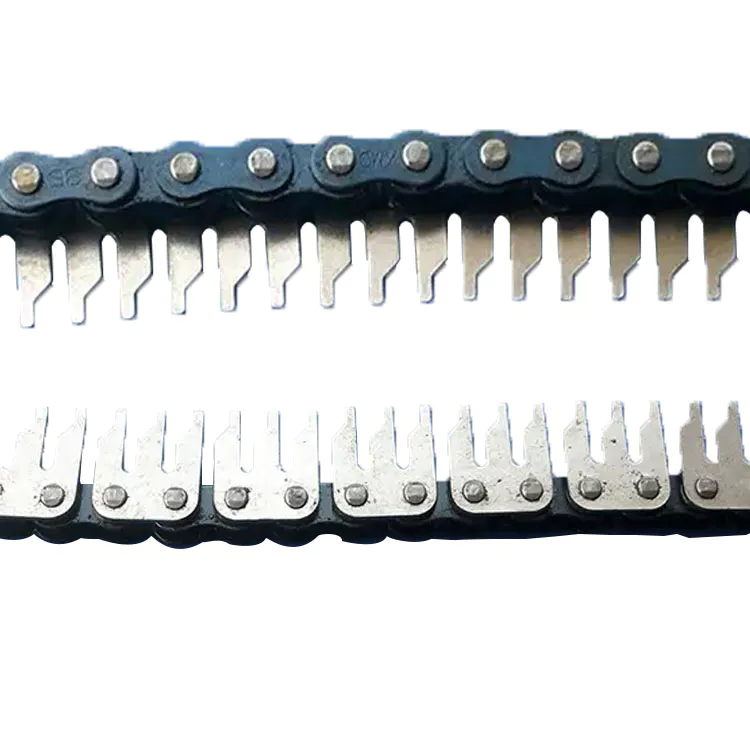
- Attachments and Accessories: Depending on the specific application, conveyor chains may include various attachments and accessories. These can include cleats, flights, buckets, or other devices that aid in the movement and handling of specific types of materials. These attachments are typically secured to the chain links at specific intervals or locations.
The combination of these components creates a robust and reliable conveyor chain system capable of efficiently transporting materials in a wide range of industrial applications.


editor by CX 2023-08-16