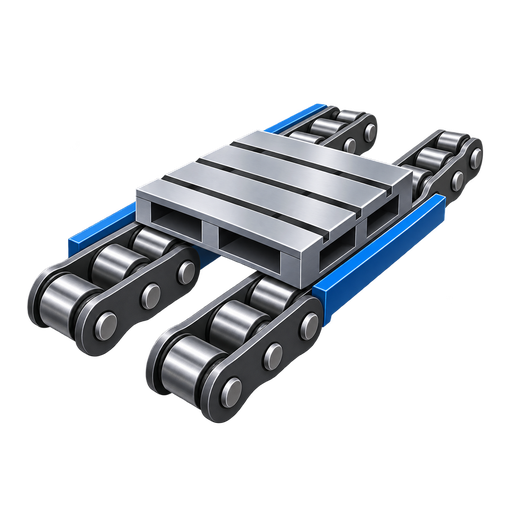
Description du produit
High Quality & Made to Order Stainless Steel Table Top Conveyor Chain (TS635)
Description du produit
1. Material: Stainless steel chain / Alloy Carbon Steel
2. Surface Treatment: Zinc-Plated / Nickel-Plated / Dacromet-Plated
3. Short pitch stainless steel conveyor chain with attachments.
4. Double pitch stainless steel conveyor chain.
5. Double pitch hollow pin chain.
Note: If you have drawing or samples, we can do the special conveyor chains.
| Product name | Table Top Conveyor Chain (TS635) |
| Materials Available | 1. Stainless Steel: SS304, SS316, etc |
| 2. Alloy Steel: 45Mn, 42CrMo, etc | |
| 3. OEM according to your request | |
| Surface Treatment | Shot peening, Polishing, Oxygenation, Blackening, Zinc-plated, Nickel-plated, Anodized, etc. |
| Characteristic | Fire Resistant, Oil Resistant, Heat Resistant |
| Application | Mainly used in products transmission |
| Design criterion | ISO DIN ANSI & Customer’s Drawing |
| Size | Customer’s Drawing & ISO standard |
| Package | Wooden Case / Container and pallet, or made-to-order |
| Certificat | ISO9001: 2008 |
| Advantage | First quality, Best service, Competitive price, Fast delivery |
| Delivery Time | 20 days for samples. 45 days for official order. |
View more products,please click here…
Company Profile
| Matériel: | Stainless Steel |
|---|---|
| Structure: | Conveyor Chain |
| Traitement de surface : | Oil Blooming |
| Taille de la chaîne : | Ts635 |
| Fonctionnalité: | Résistant à la chaleur |
| Sample: | for Free |
| Exemples : |
US$ 0/Meter
1 mètre (commande minimale) | |
|---|
| Personnalisation : |
Disponible
| Demande personnalisée |
|---|

Quels sont les critères à prendre en compte pour choisir une chaîne de convoyeur résistante à la corrosion ?
Lors du choix d'une chaîne de convoyeur résistante à la corrosion, plusieurs facteurs doivent être pris en compte afin de garantir sa longévité et ses performances en milieu corrosif. Voici quelques points clés à considérer :
1. Choix du matériau : Optez pour un matériau de chaîne naturellement résistant à la corrosion. L’acier inoxydable, comme l’AISI 304 ou l’AISI 316, est un choix courant grâce à ses excellentes propriétés de résistance à la corrosion. D’autres matériaux, tels que les chaînes en plastique ou les alliages spéciaux, peuvent également être envisagés en fonction des exigences spécifiques de l’application.
2. Revêtements et traitements de surface : Dans certains cas, des revêtements protecteurs ou des traitements de surface supplémentaires peuvent être appliqués pour améliorer la résistance à la corrosion de la chaîne. Ces revêtements, tels que le zingage, la galvanisation ou les revêtements époxy, créent une barrière entre le matériau de la chaîne et les substances corrosives, empêchant le contact direct et réduisant ainsi le risque de corrosion.
3. Compatibilité environnementale : Tenez compte des agents corrosifs spécifiques présents dans l’environnement d’utilisation de la chaîne de convoyeur. Différentes substances corrosives, telles que les acides, les bases ou l’eau salée, requièrent des propriétés de résistance spécifiques. Assurez-vous que le matériau et les revêtements de la chaîne sélectionnés sont compatibles avec les agents corrosifs présents dans l’environnement d’exploitation.
4. Entretien et lubrification : Un entretien et une lubrification appropriés sont essentiels pour prévenir la corrosion et prolonger la durée de vie d’une chaîne de convoyeur. Un nettoyage régulier, une inspection et l’application de lubrifiants adaptés permettent d’éliminer les contaminants corrosifs et de protéger la surface de la chaîne contre la dégradation.
5. Essais et certification : Privilégiez les chaînes ayant subi des essais et obtenu une certification de résistance à la corrosion conformes aux normes industrielles en vigueur. Recherchez des certifications telles que l’ISO 9227 (essai au brouillard salin) ou l’ASTM B117 (essai de résistance à la corrosion) afin de garantir la performance de la chaîne en milieu corrosif.
En tenant compte de ces facteurs et en consultant des fabricants de chaînes de convoyeurs ou des experts en résistance à la corrosion, vous pouvez sélectionner une chaîne bien adaptée à votre environnement corrosif spécifique, minimisant ainsi les risques de problèmes liés à la corrosion et garantissant des performances et une longévité optimales.
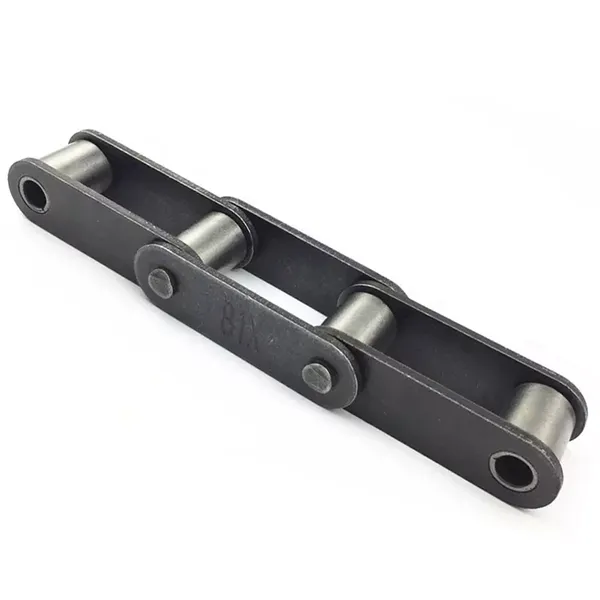
What are the future trends and advancements in conveyor chain technology?
The field of conveyor chain technology is constantly evolving, driven by the need for improved efficiency, productivity, and sustainability. Here are some of the future trends and advancements in conveyor chain technology:
1. Automation and robotics: The integration of conveyor chains with automation and robotics systems is a growing trend. This includes the use of advanced sensors, machine vision, and artificial intelligence to enable autonomous operation, precise positioning, and efficient material handling.
2. Smart and connected systems: Conveyor chains are becoming increasingly connected through the Internet of Things (IoT) technology. This allows for real-time monitoring, data collection, and analysis of various performance parameters such as chain wear, tension, temperature, and energy consumption. Smart systems can optimize maintenance schedules, detect potential failures, and improve overall system efficiency.
3. Lightweight and high-strength materials: The development of lightweight yet high-strength materials is an ongoing focus in conveyor chain technology. Advanced alloys, composites, and engineered plastics offer improved strength-to-weight ratios, reducing energy consumption and increasing the load capacity of conveyor systems.
4. Energy efficiency: Energy efficiency is a key consideration in conveyor chain design. Future advancements aim to minimize power consumption through the use of efficient drive systems, regenerative braking, and smart control algorithms that optimize speed and acceleration profiles. Energy recovery technologies, such as regenerative drives, can also capture and reuse energy during deceleration or braking.
5. Sustainability and environmental friendliness: Conveyor chain technology is moving towards more sustainable and environmentally friendly solutions. This includes the use of eco-friendly materials, improved lubrication techniques to minimize environmental impact, and the adoption of energy-efficient components and systems. Recycling and circular economy concepts are also gaining prominence in the design and manufacturing of conveyor chains.
6. Advanced wear monitoring and predictive maintenance: The future of conveyor chain technology involves advanced wear monitoring systems that can accurately predict the remaining useful life of chains and components. This enables proactive maintenance planning and reduces unplanned downtime. Predictive maintenance algorithms analyze data collected from sensors and provide timely alerts for chain replacement or repair.
These are just a few examples of the future trends and advancements in conveyor chain technology. As technology continues to advance, we can expect further innovations that enhance performance, efficiency, reliability, and sustainability in conveyor systems.

What are the cost considerations when purchasing a conveyor chain?
When purchasing a conveyor chain, there are several cost considerations that need to be taken into account to ensure an optimal investment and operational efficiency.
1. Initial Cost: The initial cost of the conveyor chain includes the cost of the chain itself, as well as any additional components such as sprockets, attachments, and connecting links. It is important to compare prices from different suppliers and evaluate the overall value for the money.
2. Maintenance and Repair Costs: Consider the long-term maintenance and repair costs associated with the conveyor chain. Some chains may require more frequent lubrication or replacement of components, which can add to the overall operating expenses.
3. Service Life: The service life of the conveyor chain is an essential factor in determining its cost-effectiveness. Chains with longer service life may have a higher initial cost but can result in lower replacement and downtime costs in the long run.
4. Energy Efficiency: Energy consumption is an ongoing cost to consider. Conveyor chains that offer lower friction and efficient power transmission can contribute to energy savings and reduce operating expenses.
5. Maintenance Ease: Consider the ease of maintenance when selecting a conveyor chain. Chains that are easier to clean, inspect, and maintain can reduce labor costs and increase operational efficiency.
6. Compatibility and Integration: Ensure that the selected conveyor chain is compatible with the existing conveyor system or equipment. Retrofitting or modifying the system to accommodate a specific chain may incur additional costs.
7. Supplier Support and Warranty: Evaluate the level of technical support provided by the supplier and the warranty coverage offered for the conveyor chain. This can impact the overall cost of ownership and provide peace of mind in case of any unforeseen issues.
It is important to consider these factors holistically and make a cost-benefit analysis based on the specific requirements of the application. Choosing a conveyor chain that aligns with the budget, performance needs, and long-term cost considerations will help optimize the investment and ensure efficient material handling operations.


editor by CX 2023-10-17