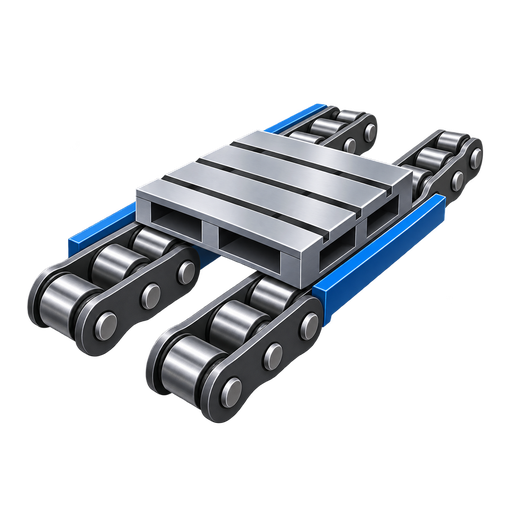
Double Plus Chain Working Principle Explained
Practical engineering guide: Double Plus Chain Working Principle Explained. Selection, interfaces, application checks, maintenance and RFQ inputs.
This guide focuses on how the small and large roller arrangement creates free-flow carrier motion and a speed relationship between chain and pallet. It is written for machine builders, maintenance teams and buyers who need a chain selection that can be checked against drawings and the real conveyor rather than a generic product label.
Double Plus Chain Working Principle Explained
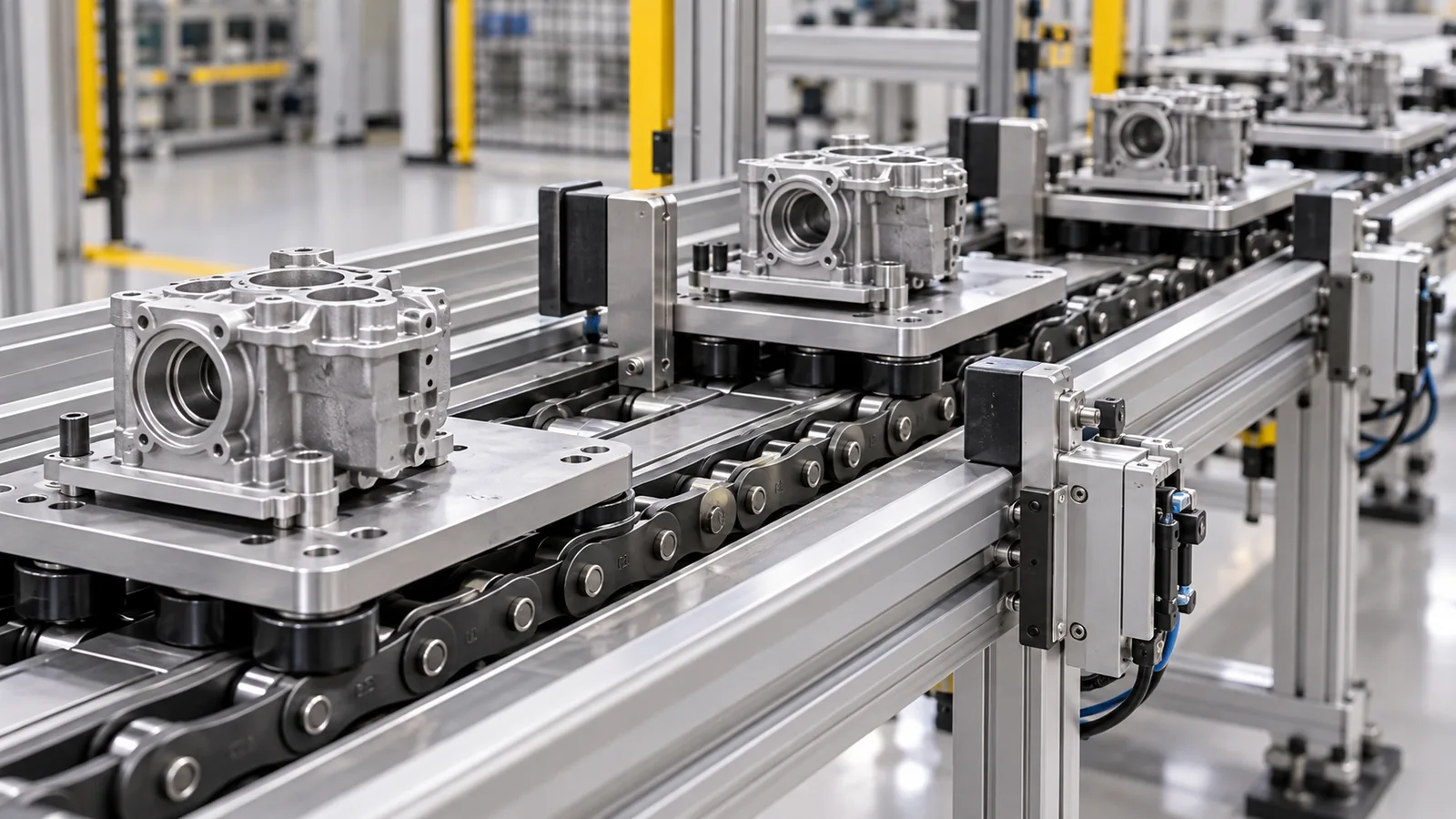
The most useful way to evaluate this subject is to treat the chain as one part of a complete carrier-transport mechanism. In a typical project such as a workpiece pallet moving between assembly stations, chain pitch, roller contact, rail alignment, sprocket engagement, carrier stiffness, stops and maintenance access all influence the result. A useful engineering review therefore combines model-level data with the operating sequence of the machine.
لماذا هذه القضية مهمة؟
How the small and large roller arrangement creates free-flow carrier motion and a speed relationship between chain and pallet affects more than catalogue selection. It changes how the workpiece carrier enters a station, how loads pass into guide rails, how the chain approaches the drive and how the system behaves during stopping or accumulation. If one interface is ignored, the symptom may appear somewhere else: a roller can wear because a rail joint is high, a chain can pull sideways because a pallet stop is offset, or a new chain can run badly because the old sprocket is worn.
The practical objective is not to eliminate every variation in the machine. It is to identify the variables that must be controlled, define which dimensions are fixed by the chain source, and leave unsupported items for explicit RFQ confirmation. This is also why treating the 2.5x or 3.0x ratio as a motor-speed setting is a risky shortcut. It replaces measurable machine data with an assumption and can make a correct-looking part fail at installation.
في الكتالوج المعتمد المستخدم لهذا المشروع، تُعرض عائلة Double Plus ضمن مجموعات سرعة 2.5 و3 أضعاف. يدعم هذا الوصف مفهوم نسبة السرعة، ولكنه لا يُغني عن مراجعة بيانات كل طراز على حدة. قد تشترك سلسلتا BS25 وBS30 في نفس الخطوة الاسمية مع اختلاف هندسة البكرات، لذا يبقى الجدول الكامل والرسم المرجع الأساسي لأعمال الاستبدال.
أربع عمليات تحقق لتحديد أولاً
Small/Large Roller Contact
Record the relevant diameter, offset, contact surface, clearance and visible wear so the running interface can be checked.
Rail Support
Record the relevant diameter, offset, contact surface, clearance and visible wear so the running interface can be checked.
Pallet Contact Surface
حدد حالة التحميل، وسطح التلامس أو سطح المرجع، والموضع، ومسار القوة حتى يمكن فحص واجهة الحامل.
Sprocket And Return Path
سجل عدد الأسنان أو هندسة المحرك، ومحاذاة العمود، وموضع الالتقاط، وطريقة دخول السلسلة وخروجها من المحرك.

ابدأ بالهندسة الدقيقة للسلسلة
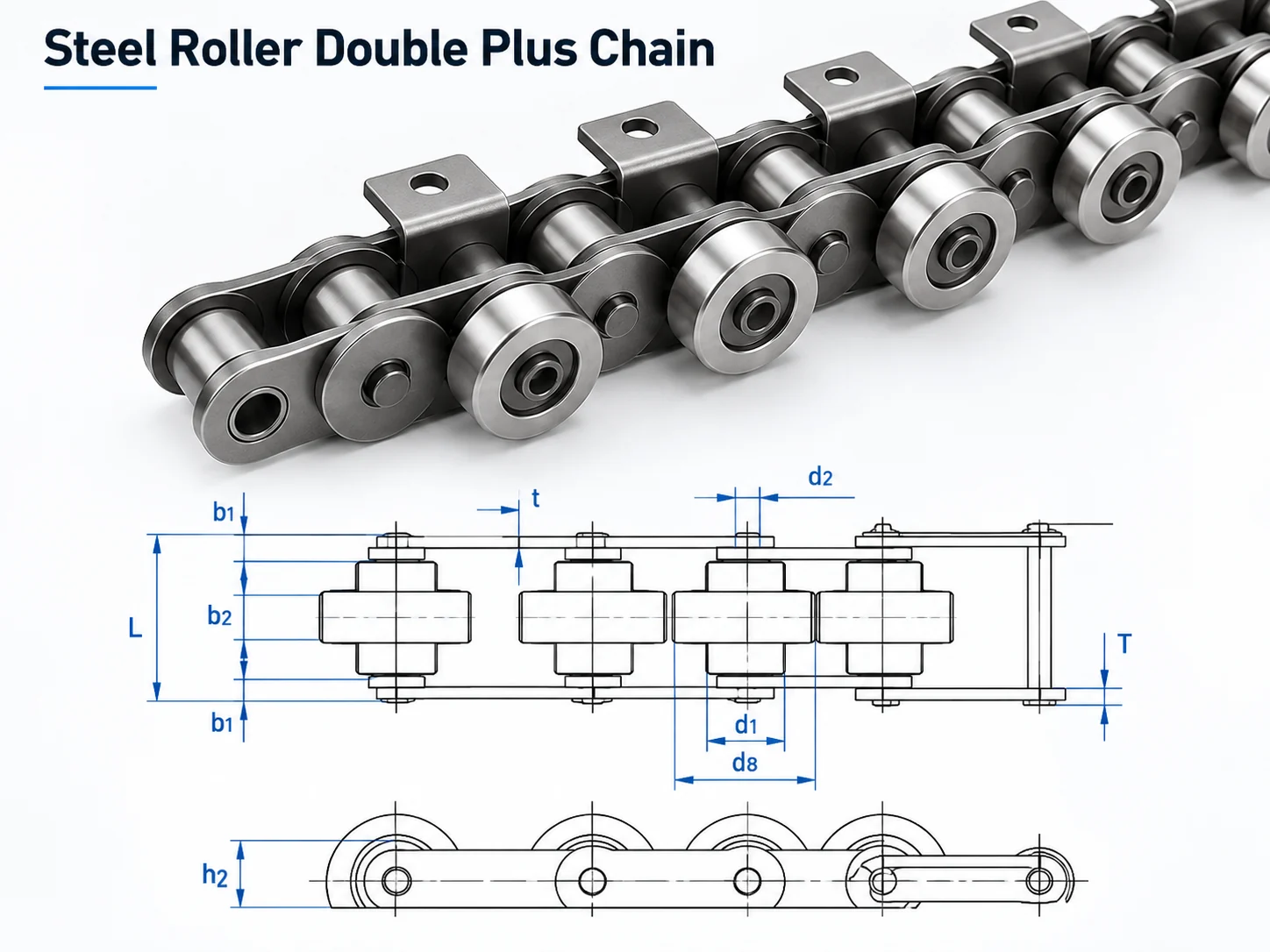
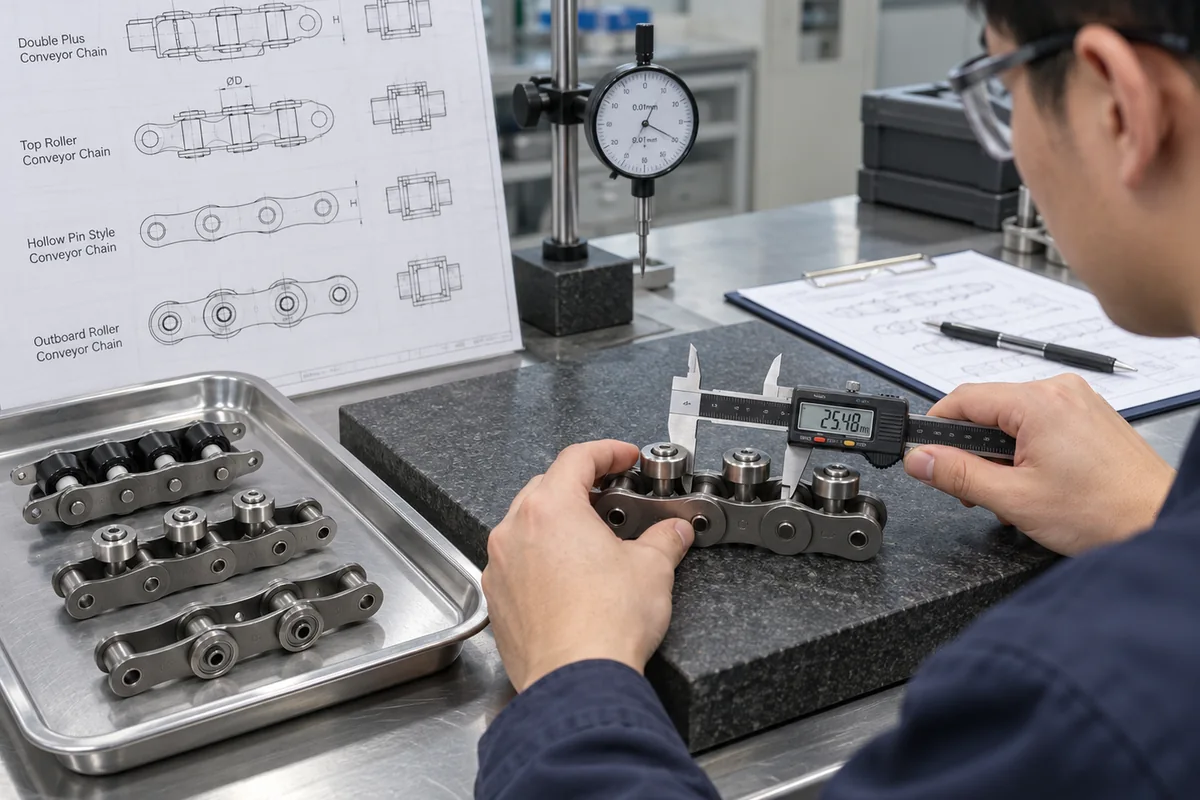
عند توفر رقم الطراز، استخدم مواصفات الطراز الدقيقة والرسم المطابق. قارن المسافة بين الدبابيس، وأقطار البكرات، والعرض الداخلي، وقطر الدبوس وطوله، وارتفاع الصفيحة وسماكتها، وأي أبعاد للبكرات الجانبية أو البكرات الكبيرة أو الدبابيس المجوفة التي تتصل بالناقل. في حال عدم معرفة الرمز، قم بقياس السلسلة المركبة بشكل منهجي. يُعد قياس المسافة بين الدبابيس عبر عدة دبابيس أكثر موثوقية من قراءة فجوة واحدة مهترئة، ويجب أن تُظهر الصور المظهر الجانبي، وترتيب البكرات، وتلامس العجلة المسننة والسكك الحديدية.
لا تستخدم قوة الشد كقيمة لحمولة المنصة. قيم قوة الشد المذكورة في الكتالوج هي خصائص اختبار المواد/المكونات. تشمل ظروف تشغيل الناقل أيضًا طول الخط، وعدد خيوط السلسلة، وعدد الحوامل، والتسارع، والصدمات، والاحتكاك، والتشحيم، وحجم العجلة المسننة، وحالة التآكل، ومعامل الأمان المطلوب. لا يمكن التحقق من السلسلة لأي نظام إلا بعد فهم هذه الظروف.
سير عمل الاختيار
- Small/Large Roller Contact: قارن الحالة المطلوبة مع الرسم التخطيطي الدقيق للسلسلة أو تصميم النظام وسجل أي أسئلة مفتوحة لتأكيد طلب عرض الأسعار.
- Rail Support: قارن الحالة المطلوبة مع الرسم التخطيطي الدقيق للسلسلة أو تصميم النظام وسجل أي أسئلة مفتوحة لتأكيد طلب عرض الأسعار.
- Pallet Contact Surface: قارن الحالة المطلوبة مع الرسم التخطيطي الدقيق للسلسلة أو تصميم النظام وسجل أي أسئلة مفتوحة لتأكيد طلب عرض الأسعار.
- Sprocket And Return Path: قارن الحالة المطلوبة مع الرسم التخطيطي الدقيق للسلسلة أو تصميم النظام وسجل أي أسئلة مفتوحة لتأكيد طلب عرض الأسعار.
- الناقل والجهة الموكلة إليه: سجل كتلة الناقل المحمل، وعدد الناقلات، وسرعة الخط، وعدد مرات البدء في الساعة، ونمط التراكم، وأي ميل أو انتقال رأسي.
- القيادة والعودة: تأكيد بيانات العجلة المسننة، ومحاذاة العمود، ونطاق الشد، ودعامة الإرجاع، وإمكانية الوصول إلى التشحيم.
- شروط الإفراج: قم بإدراج أي حقل لا تذكره البيانات الفنية - مثل درجة المواد الخاصة، أو الطلاء، أو الحمل المسموح به للنظام، أو التصنيف البيئي - كبند تأكيد في طلب عرض الأسعار بدلاً من تقديره.
تكامل الأنظمة
بعد تحديد السلسلة، تحقق من كيفية نقل الناقل للحمل إلى باقي أجزاء الآلة. يجب أن يدعم دليل السلسلة أو سكة التآكل سطح البكرة المقصود وأن يظل متصلاً عبر الوصلات. يجب أن تكون المسافة المركزية بين الخيوط المتوازية محددة وأن يكون توقيت الحركة متزامنًا. يجب أن تلامس نقاط التوقف سطح المنصة المصمم، وليس لوحة جانب السلسلة. تحتاج عمليات النقل والرفع العرضية إلى دعم كافٍ حتى لا يسقط الناقل في فجوة أو يهبط على حافة دبوس/لوحة.
بالنسبة للأنظمة التي تتراكم فيها المواد، يجب فصل عملية النقل عن عملية التوقف. قد تستمر السلسلة في الحركة أثناء توقف الناقل، ولكن لا يزال من الضروري فحص قوة التوقف، وطول قائمة الانتظار، وتسلسل إعادة التشغيل، والاحتكاك الموضعي. أما بالنسبة للأنظمة التي تحدد موضع قطعة العمل للمعالجة، فيُفضل استخدام ميزات تحديد المواقع المخصصة عندما تكون دقة التكرار المطلوبة أعلى مما يوفره النقل العادي بواسطة السيور الناقلة.
التشغيل والصيانة
قم بتشغيل ناقل جديد أو مُصلح بسرعة منخفضة أولاً. حرّك عدة دورات كاملة للسلسلة وراقب حركة الدفع والعودة وانتقالات القضبان والتوقفات وعمليات النقل. استمع إلى الأصوات التي تتكرر مرة واحدة لكل دورة للسلسلة أو مرة واحدة لكل دورة للعجلة المسننة، لأن هذه الأنماط تساعد في تحديد الوصلات الضيقة أو تلف البكرات أو وجود خلل في القضبان أو العجلة المسننة. مع منصات قطع العمل الصلبة، انتبه إلى أي انحراف عبر الخيوط المتوازية؛ حتى اختلافات التوقيت الصغيرة يمكن أن تُحمّل جانبًا واحدًا من الناقل.
ينبغي أن تتبع الصيانة الاتجاهات بدلاً من انتظار حدوث عطل. سجّل فحوصات الاستطالة أو الطول باستخدام الطريقة المعتمدة، وافحص البكرات للتأكد من دورانها بحرية وعدم وجود أسطح مستوية غير طبيعية، وابحث عن علامات التلامس الجانبية المصقولة التي تشير إلى عدم المحاذاة، وافحص أسنان العجلة المسننة وتحقق من وضعية الشد. يجب أن تتناسب فترات التشحيم مع بيئة التشغيل وإرشادات الشركة المصنعة للسلسلة؛ فزيادة كمية المُشحِّم ليست بالضرورة أفضل إذا كانت تجذب الملوثات الكاشطة أو تدخل منطقة المعالجة.
قائمة التحقق من طلب عرض الأسعار
لطلب استبدال، يُرجى إرسال رمز الطراز (إن كان واضحًا)، وقياس المسافة بين البكرات، وترتيب البكرات، وعرض السلسلة، وارتفاع الصفيحة، وأبعاد الدبابيس، وصورة للجانب، وصورة توضح تلامس العجلة المسننة مع السكة. أما بالنسبة لنظام جديد، فيُرجى إضافة طول الناقل، وحجم الحامل، والوزن المُحمّل، وعدد الخيوط، والمسافة بين الخيوط، والسرعة، ونقاط البدء/التوقف، وطول منطقة التخزين المؤقت، والظروف البيئية، وبلد الوجهة. تُتيح هذه التفاصيل فصل عملية مطابقة السلسلة عن حساب الحمل الكامل للناقل.
Read the roller motion as a system
The useful feature of Double Plus chain comes from the interaction between the smaller rollers, larger carrier rollers and the guide rail. Carrier movement therefore depends on more than the base chain speed. Rail contact, roller condition, carrier weight, accumulation and the stop mechanism all change the way the conveyor behaves in service.
When checking an existing line, observe a carrier during free travel, accumulation and restart. Confirm that the intended roller surfaces rotate rather than slide, the stop restrains the carrier rather than the chain side plate, and the rail transition does not lift or shock the roller. These simple observations should accompany the dimensional model check.
قياس الواجهة
استخدم أبعادًا متعددة الخطوات، وهندسة المنظر النهائي، وتفاصيل العجلة المسننة/السكك الحديدية عندما يجب أن يتناسب البديل مع آلة موجودة.
صف الواجب
يشمل ذلك كتلة الناقل المحملة، والسرعة، والبدايات، وسلوك التراكم أو الفهرسة، وبيئة التشغيل.
اختبر أسوأ الحالات
يتم التعامل مع شركات النقل التمثيلية وأكثر حالات الانتظار والتوقف والتحويل وإعادة التشغيل تطلبًا بدلاً من السفر بدون حمولة فقط.
أبقِ العناصر المفتوحة واضحة
إذا لم يتم ذكر مادة أو طلاء أو تفاوت خاص أو حاجة إلى وثائق أو حمل نظام مسموح به، فيرجى تأكيد ذلك في الاستفسار.
الأسئلة الشائعة
هل يمكنني اختيار بديل بناءً على الملعب فقط؟
For double plus chain working principle explained, pitch is only the first filter. Confirm roller geometry, inner width, pins, plates and any side-roller or hollow-pin features against the installed conveyor before treating two chains as interchangeable.
هل تعني قيمة الشد الأعلى أنه يمكنني حمل هذا الحمل على المنصة؟
For double plus chain working principle explained, do not convert tensile strength directly into pallet payload. Service load depends on strand count, friction, acceleration, stop impact, sprockets, rails and the safety margin used for the machine.
هل يمكن لصورة عائلية نموذجية أن تثبت الطراز الدقيق؟
لا. يمكن أن تساعد صورة عائلية نموذجية في شرح عملية البناء، ولكن يجب أن تأتي هوية النموذج وأبعاده من المواصفات الفنية الخاصة بالنموذج أو الرسم أو بيانات التصنيع المؤكدة.
ما هي المعلومات التي تسرّع عملية الحصول على عرض سعر؟
For an RFQ related to double plus chain working principle explained, send the model code or dimensional sketch, clear photographs, conveyor layout, loaded carrier information, quantity and delivery country so the review starts from reproducible machine data.
Key engineering variables for Double Plus Chain Working Principle Explained
Double Plus selection combines speed ratio, large/small roller interaction, guide rails and carrier underside contact. Record the operating case in one line: what the conveyor carries, how fast it moves, where it stops and what condition triggered the review. Capture dimensions and observations another engineer can reproduce.
| مدخل | ما الذي يجب تسجيله؟ | لماذا يُعد ذلك مهماً؟ |
|---|---|---|
| الناقل/الحمولة | الكتلة المحملة، مركز الثقل، نقطة التلامس السفلية، وعدد الحوامل | الدعم والاحتكاك وسلوك التوقف |
| حركة | السرعة، والبدايات، والتوقفات، والتراكم، والفهرسة | الطلب الديناميكي وتوقيت العمليات |
| مسار السلسلة | المسافة بين الأسلاك، والبكرات، والمسافة بين الخيوط، والقضبان | التوافق الميكانيكي والتتبع |
| يقود | أسنان العجلة المسننة، والمحاذاة، والشد، وموضع القيادة | المشاركة وتوزيع التوتر |
| بيئة | حدود درجة الحرارة والغبار والرطوبة والتنظيف والتشحيم | خيارات المواد والصيانة |
موارد ذات صلة بالمنتجات والاختيارات
استخدم كتالوج سلاسل نقل البضائع على المنصات لمقارنة العائلات و سير عمل اختيار الهندسة عندما تكون بيانات الجهاز غير مكتملة.
What to include with an enquiry about Double Plus Chain Working Principle Explained
حدد نوع السلسلة المركبة أو المقترحة، وكميتها، وتطبيقها، وناقلها/حمولتها، وأبعادها الرئيسية، وظروف التشغيل التي يجب أن يحلها الجزء الجديد. أرفق صورًا أو رسومات توضيحية عندما يكون الرمز الحالي غير واضح، واحرص على إبقاء المواد والوثائق ومتطلبات التسليم غير المكتملة ظاهرة للعيان.
Make the selection from interfaces, not from one catalogue dimension
A useful selection sequence starts with the carrier and rail, then moves to the chain and sprocket. Measure several pitches, identify the roller arrangement and compare plate height, pin dimensions and roller position against the drawing. Confirm the sprocket tooth count and bore and check whether the chain enters the rail smoothly after leaving the sprocket. For side-roller or hollow-pin designs, include the outboard rail or cross-rod interface in the same review. For Double Plus layouts, state the required conveying and accumulation behavior together with queue length and stop sequence. If any key dimension is unknown, leave it as an RFQ confirmation item instead of filling it from a neighboring model.
Geometry
Pitch over several joints, roller arrangement, pin/plate dimensions and strand spacing.
يقود
Sprocket tooth count, bore, shaft alignment, take-up and chain entry/exit geometry.
Duty
Speed, starts per hour, maximum queue, carrier mass and environmental conditions.
Confirm the model
Compare the complete model drawing and list any unstated material, tolerance or application requirement in the enquiry.
سجل ظروف النقل والتراكم
When reviewing Double Plus Chain Working Principle Explained, collect data from the conveyor while carriers are moving freely and again while the longest realistic queue is stopped. Record loaded carrier mass, carrier spacing, conveyor and carrier speed where available, stop position, release interval and restart sequence. Mark a carrier so its movement can be followed through the queue, and compare both strands on a dual-chain system. Photographs should show the roller/rail interface from the end as well as the chain from the side.
استخدم نفس المسح لفحص نظام الدفع والهندسة الداعمة. احسب عدد أسنان العجلة المسننة، وسجل ترتيب التجويف أو العمود، ولاحظ موضع الشد، وابحث عن حواف مصقولة أو علامات صدم عند وصلات القضبان ونقاط النقل. إذا كان الناقل يخضع لتعديل وليس مجرد إصلاح، فقم بتضمين وقت الدورة الجديد، وأقصى طول للطابور، وأي تغيير في كتلة المنصات. تُمكّن هذه الملاحظات من التمييز بين مشكلة تتعلق بسلسلة النقل ومشكلة تتعلق بالقضبان أو نقاط التوقف أو التوقيت قبل تحديد قطع الغيار.
السفر الحر
سرعة الناقل، ودوران البكرات، والتتبع، ودعم النقل.
السفر في طوابير
أقصى تراكم، إيقاف الاتصال، السحب وإعادة التشغيل.
يقود
عدد أسنان العجلة المسننة، وترتيب العمود، والشد، ودخول السلسلة.
واجهة الجهاز
قسم السكة الحديدية، والجانب السفلي للحامل، ومراكز الشد، ومسافات المحطة.
Observe the two operating states of a Double Plus conveyor
A useful field check includes both free-running travel and accumulation. Mark one carrier and note its travel speed while the chain is moving normally, then stop that carrier in a controlled accumulation zone while the chain continues. Watch the large and small rollers, rail contact and the carrier underside. The purpose is not to estimate a ratio by eye, but to confirm that the installed roller arrangement and guide geometry behave as intended in both states.
Next release a short queue of representative loaded carriers. A clean restart should not produce sudden side movement, roller skidding or an impact at the first rail joint. Compare both strands on dual-chain conveyors. If one side leads, check rail height, sprocket timing, take-up position and carrier stiffness before increasing chain tension.
When requesting a chain, state the model if known, pitch, roller dimensions, required carrier speed, base chain speed when available, loaded carrier mass and maximum queue. Include an end-view photograph that shows which roller runs on the rail. This is more reliable than treating “Double Plus” as a complete specification.