Penerangan Produk
|
Produk |
Standard Double Pitch Roller chain |
||
|
Bahan |
40Mn steel,304 stainless steel, 316 stainless steel and 201 stainless steel. |
||
|
Types |
Standard chains and special chains, such as A or B series chains, roller chains, driving chains, conveyor chains, hoisting chains, agricultural chains, sprockets, gears, wheels and so on. |
||
|
Siri |
A series(12.7-50.8mm pitches),B series (9.525-50.8mm pitches)and the heavy series. |
||
|
Short pitch precision roller chain |
Simplex Roller Chains&Bushing Chains: 04C-1,06C-1,085-1,08A-1,10A-1,12A-1,16A-1,20A-1,24A-1,28A-1,32A-1,36A-1,40A-1,48A-1 04C-2,06C-2,085-2,08A-2,10A-2,12A-2,16A-2,20A-2,24A-2,28A-2,32A-2,36A-2,40A-2,48A-2 04C-3,06C-2,085-3,08A-3,10A-3,12A-3,16A-3,20A-3,24A-3,28A-3,32A-3,36A-3,40A-3,48A-3 |
||
|
Chain link type |
Standard links (without attachment) and non-standard links (with attachment).
A1: One-side,one hole cranked attachments. |
||
|
Our Products Advantage |
1. Every step from production order to the packing process has a strict quality inspection. |
||
1.Fast delivery: Standard products can be delivered in as fast as 20 days
2.Good service: timely reply, prompt quotation, responsible for the product
3.High cost performance: can maintain price stability for a certain period of time, bringing greater profits to customers
4.Good quality: production and testing have corresponding supervision to ensure product quality and get high praise from customers
5.OEM service: products can be customized according to drawings and requirements
We are responsible for the ordered products. We are very confident in the products we produce. Of course, if you have any problems after receiving the goods, you can contact us directly. We will confirm and negotiate in time to solve your difficulties.
| Standard atau Bukan Standard: | Piawai |
|---|---|
| Permohonan: | Textile Machinery, Garment Machinery, Conveyer Equipment, Packaging Machinery, Food Machinery, Mining Equipment, Agricultural Machinery |
| Rawatan Permukaan: | Minyak Mekar |
| Struktur: | Rantai Penggelek |
| Bahan: | Aloi |
| Jenis: | Double Pitch Chain |
| Sampel: |
US$ 35/kg
1 kg(Min.Order) | |
|---|
| Penyesuaian: |
Tersedia
| Permintaan Tersuai |
|---|

Apakah pertimbangan untuk memilih rantai penghantar yang tahan kakisan?
Apabila memilih rantai penghantar yang tahan kakisan, beberapa faktor perlu dipertimbangkan untuk memastikan ketahanan dan prestasi rantai tersebut dalam persekitaran yang menghakis. Berikut adalah beberapa pertimbangan utama:
1. Pemilihan Bahan: Pilih bahan rantai yang sememangnya tahan kakisan. Keluli tahan karat, seperti AISI 304 atau AISI 316, adalah pilihan biasa kerana sifat rintangan kakisannya yang sangat baik. Bahan lain seperti rantai plastik atau aloi khas juga boleh dipertimbangkan berdasarkan keperluan aplikasi khusus.
2. Salutan dan Rawatan Permukaan: Dalam beberapa kes, salutan pelindung tambahan atau rawatan permukaan boleh digunakan untuk meningkatkan rintangan kakisan rantai. Salutan ini, seperti penyaduran zink, penyaduran galvani atau epoksi, mewujudkan penghalang antara bahan rantai dan bahan menghakis, mencegah sentuhan langsung dan mengurangkan risiko kakisan.
3. Keserasian Alam Sekitar: Pertimbangkan agen menghakis khusus yang terdapat dalam persekitaran di mana rantai penghantar akan digunakan. Bahan menghakis yang berbeza, seperti asid, alkali atau air masin, memerlukan sifat rintangan tertentu. Pastikan bahan rantai dan salutan yang dipilih serasi dengan agen menghakis yang terdapat dalam persekitaran operasi.
4. Penyelenggaraan dan Pelinciran: Penyelenggaraan dan pelinciran yang betul memainkan peranan penting dalam mencegah kakisan dan memanjangkan jangka hayat rantai penghantar. Pembersihan, pemeriksaan dan penggunaan pelincir yang sesuai secara berkala dapat membantu menghilangkan bahan cemar yang menghakis dan melindungi permukaan rantai daripada degradasi.
5. Pengujian dan Pensijilan: Pertimbangkan rantai yang telah menjalani ujian dan pensijilan untuk ketahanan kakisan dalam piawaian industri yang berkaitan. Cari pensijilan seperti ISO 9227 (ujian semburan garam) atau ASTM B117 (ujian rintangan kakisan) untuk memastikan prestasi rantai dalam persekitaran yang menghakis.
Dengan mempertimbangkan faktor-faktor ini dengan teliti dan berunding dengan pengeluar rantai penghantar atau pakar tahan kakisan, anda boleh memilih rantai yang sesuai untuk persekitaran menghakis khusus anda, meminimumkan risiko masalah berkaitan kakisan dan memastikan prestasi dan jangka hayat yang optimum.

How does a conveyor chain handle different types of materials?
A conveyor chain is designed to handle a wide variety of materials in diverse industrial applications. It is capable of efficiently transporting different types of materials, including:
1. Bulk Materials: Conveyor chains are commonly used to handle bulk materials such as grains, coal, ores, aggregates, and powders. The design of the chain, including the spacing and shape of the links, helps prevent material spillage and ensures smooth and consistent flow.
2. Packaged Goods: Conveyor chains are also used for conveying packaged goods such as boxes, cartons, crates, and pallets. They provide a stable and reliable method of transporting these items along the production line, reducing manual handling and increasing productivity.
3. Small Parts: Conveyor chains with specialized attachments or small-pitch configurations are suitable for handling small parts or components. These chains ensure precise positioning and gentle transport of delicate or intricate items.
4. Heavy-Duty Loads: Industrial conveyor chains are capable of handling heavy-duty loads, such as automotive parts, machinery components, and large equipment. They are engineered to withstand the weight and stress of these objects, providing reliable and efficient material handling in demanding environments.
5. Food and Beverage Products: Conveyor chains used in the food and beverage industry are designed to meet strict hygiene and safety standards. They are constructed from materials that are resistant to corrosion, easy to clean, and compliant with food-grade regulations. These chains ensure the safe and contamination-free handling of food products.
6. Hazardous Materials: Conveyor chains can be used to safely transport hazardous materials, such as chemicals or waste products. Specialized chains with additional safety features, such as sealed housings or containment systems, are utilized to minimize the risk of spills or leaks.
Conveyor chains can be customized with different chain configurations, attachments, and accessories to accommodate specific material characteristics and handling requirements. The selection of the appropriate chain type, material, and design parameters ensures optimal performance and efficient material handling for a wide range of materials.
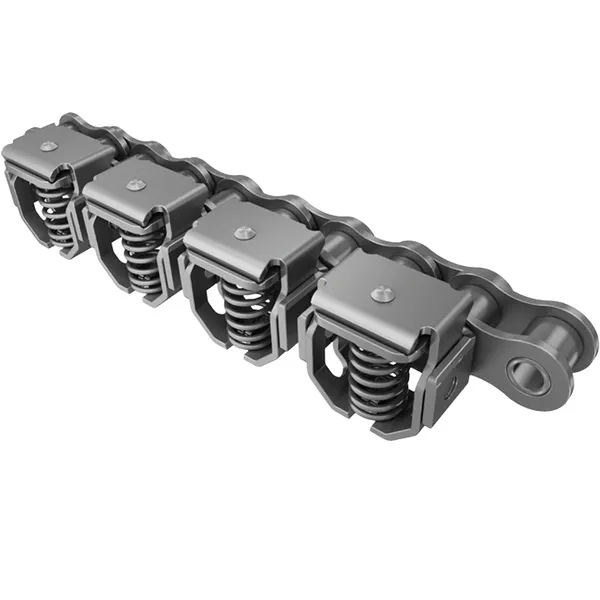
How to select the right conveyor chain for your conveyor system?
Selecting the right conveyor chain for your conveyor system is crucial to ensure optimal performance and longevity. Here are the steps to follow when choosing a conveyor chain:
- Identify your application requirements: Determine the specific requirements of your conveyor system, including the type of material being conveyed, the speed of operation, the load capacity, the environmental conditions, and any special considerations.
- Consider the chain type: Based on your application requirements, consider the different types of conveyor chains available, such as roller chains, double pitch chains, hollow pin chains, apron chains, or plastic chains. Evaluate their features and benefits to determine which type is most suitable for your needs.
- Assess the chain material: Conveyor chains are typically made from various materials such as steel, stainless steel, or plastic. Consider factors such as corrosion resistance, temperature resistance, wear resistance, and food-grade requirements when selecting the chain material.
- Determine the chain pitch: The chain pitch refers to the distance between the centers of adjacent pins. Choose the appropriate pitch size based on your conveyor system’s design, load requirements, and speed. Smaller pitch sizes provide smoother operation at higher speeds, while larger pitch sizes offer better resistance against wear and fatigue.
- Evaluate the chain strength: Consider the required tensile strength and fatigue resistance of the chain to ensure it can withstand the anticipated load and operating conditions. Factors such as chain construction, material quality, and heat treatment play a role in determining the chain’s strength.
- Consider additional features: Depending on your application, you may need additional features such as attachments, guides, or specialized coatings on the chain. Assess if any of these features are necessary to meet your specific requirements.
- Consult with experts: If you’re uncertain about the selection process or have unique application needs, it’s advisable to consult with conveyor chain manufacturers or industry experts who can provide guidance and recommendations based on their expertise.
By following these steps and carefully considering your application requirements, you can select the right conveyor chain that ensures efficient and reliable operation of your conveyor system.


editor by CX 2023-08-02