Description du produit
|
Produit |
Standard Double Pitch Roller chain |
||
|
Material |
40Mn steel,304 stainless steel, 316 stainless steel and 201 stainless steel. |
||
|
Types |
Standard chains and special chains, such as A or B series chains, roller chains, driving chains, conveyor chains, hoisting chains, agricultural chains, sprockets, gears, wheels and so on. |
||
|
Series |
A series(12.7-50.8mm pitches),B series (9.525-50.8mm pitches)and the heavy series. |
||
|
Short pitch precision roller chain |
Simplex Roller Chains&Bushing Chains: 04C-1,06C-1,085-1,08A-1,10A-1,12A-1,16A-1,20A-1,24A-1,28A-1,32A-1,36A-1,40A-1,48A-1 04C-2,06C-2,085-2,08A-2,10A-2,12A-2,16A-2,20A-2,24A-2,28A-2,32A-2,36A-2,40A-2,48A-2 04C-3,06C-2,085-3,08A-3,10A-3,12A-3,16A-3,20A-3,24A-3,28A-3,32A-3,36A-3,40A-3,48A-3 |
||
|
Chain link type |
Standard links (without attachment) and non-standard links (with attachment).
A1: One-side,one hole cranked attachments. |
||
|
Our Products Advantage |
1. Every step from production order to the packing process has a strict quality inspection. |
||
1.Fast delivery: Standard products can be delivered in as fast as 20 days
2.Good service: timely reply, prompt quotation, responsible for the product
3.High cost performance: can maintain price stability for a certain period of time, bringing greater profits to customers
4.Good quality: production and testing have corresponding supervision to ensure product quality and get high praise from customers
5.OEM service: products can be customized according to drawings and requirements
We are responsible for the ordered products. We are very confident in the products we produce. Of course, if you have any problems after receiving the goods, you can contact us directly. We will confirm and negotiate in time to solve your difficulties.
| Standard or Nonstandard: | Standard |
|---|---|
| Application: | Textile Machinery, Garment Machinery, Conveyer Equipment, Packaging Machinery, Food Machinery, Mining Equipment, Agricultural Machinery |
| Traitement de surface : | Oil Blooming |
| Structure: | Chaîne à rouleaux |
| Matériel: | Alliage |
| Type: | Double Pitch Chain |
| Exemples : |
US$ 35/kg
1 kg(Min.Order) | |
|---|
| Personnalisation : |
Disponible
| Demande personnalisée |
|---|

Quels sont les critères à prendre en compte pour choisir une chaîne de convoyeur résistante à la corrosion ?
Lors du choix d'une chaîne de convoyeur résistante à la corrosion, plusieurs facteurs doivent être pris en compte afin de garantir sa longévité et ses performances en milieu corrosif. Voici quelques points clés à considérer :
1. Choix du matériau : Optez pour un matériau de chaîne naturellement résistant à la corrosion. L’acier inoxydable, comme l’AISI 304 ou l’AISI 316, est un choix courant grâce à ses excellentes propriétés de résistance à la corrosion. D’autres matériaux, tels que les chaînes en plastique ou les alliages spéciaux, peuvent également être envisagés en fonction des exigences spécifiques de l’application.
2. Revêtements et traitements de surface : Dans certains cas, des revêtements protecteurs ou des traitements de surface supplémentaires peuvent être appliqués pour améliorer la résistance à la corrosion de la chaîne. Ces revêtements, tels que le zingage, la galvanisation ou les revêtements époxy, créent une barrière entre le matériau de la chaîne et les substances corrosives, empêchant le contact direct et réduisant ainsi le risque de corrosion.
3. Compatibilité environnementale : Tenez compte des agents corrosifs spécifiques présents dans l’environnement d’utilisation de la chaîne de convoyeur. Différentes substances corrosives, telles que les acides, les bases ou l’eau salée, requièrent des propriétés de résistance spécifiques. Assurez-vous que le matériau et les revêtements de la chaîne sélectionnés sont compatibles avec les agents corrosifs présents dans l’environnement d’exploitation.
4. Entretien et lubrification : Un entretien et une lubrification appropriés sont essentiels pour prévenir la corrosion et prolonger la durée de vie d’une chaîne de convoyeur. Un nettoyage régulier, une inspection et l’application de lubrifiants adaptés permettent d’éliminer les contaminants corrosifs et de protéger la surface de la chaîne contre la dégradation.
5. Essais et certification : Privilégiez les chaînes ayant subi des essais et obtenu une certification de résistance à la corrosion conformes aux normes industrielles en vigueur. Recherchez des certifications telles que l’ISO 9227 (essai au brouillard salin) ou l’ASTM B117 (essai de résistance à la corrosion) afin de garantir la performance de la chaîne en milieu corrosif.
En tenant compte de ces facteurs et en consultant des fabricants de chaînes de convoyeurs ou des experts en résistance à la corrosion, vous pouvez sélectionner une chaîne bien adaptée à votre environnement corrosif spécifique, minimisant ainsi les risques de problèmes liés à la corrosion et garantissant des performances et une longévité optimales.

How does a conveyor chain handle different types of materials?
A conveyor chain is designed to handle a wide variety of materials in diverse industrial applications. It is capable of efficiently transporting different types of materials, including:
1. Bulk Materials: Conveyor chains are commonly used to handle bulk materials such as grains, coal, ores, aggregates, and powders. The design of the chain, including the spacing and shape of the links, helps prevent material spillage and ensures smooth and consistent flow.
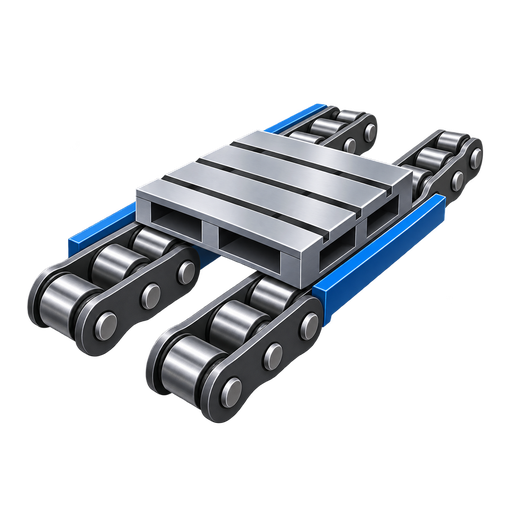
2. Packaged Goods: Conveyor chains are also used for conveying packaged goods such as boxes, cartons, crates, and pallets. They provide a stable and reliable method of transporting these items along the production line, reducing manual handling and increasing productivity.
3. Small Parts: Conveyor chains with specialized attachments or small-pitch configurations are suitable for handling small parts or components. These chains ensure precise positioning and gentle transport of delicate or intricate items.
4. Heavy-Duty Loads: Industrial conveyor chains are capable of handling heavy-duty loads, such as automotive parts, machinery components, and large equipment. They are engineered to withstand the weight and stress of these objects, providing reliable and efficient material handling in demanding environments.
5. Food and Beverage Products: Conveyor chains used in the food and beverage industry are designed to meet strict hygiene and safety standards. They are constructed from materials that are resistant to corrosion, easy to clean, and compliant with food-grade regulations. These chains ensure the safe and contamination-free handling of food products.
6. Hazardous Materials: Conveyor chains can be used to safely transport hazardous materials, such as chemicals or waste products. Specialized chains with additional safety features, such as sealed housings or containment systems, are utilized to minimize the risk of spills or leaks.
Conveyor chains can be customized with different chain configurations, attachments, and accessories to accommodate specific material characteristics and handling requirements. The selection of the appropriate chain type, material, and design parameters ensures optimal performance and efficient material handling for a wide range of materials.
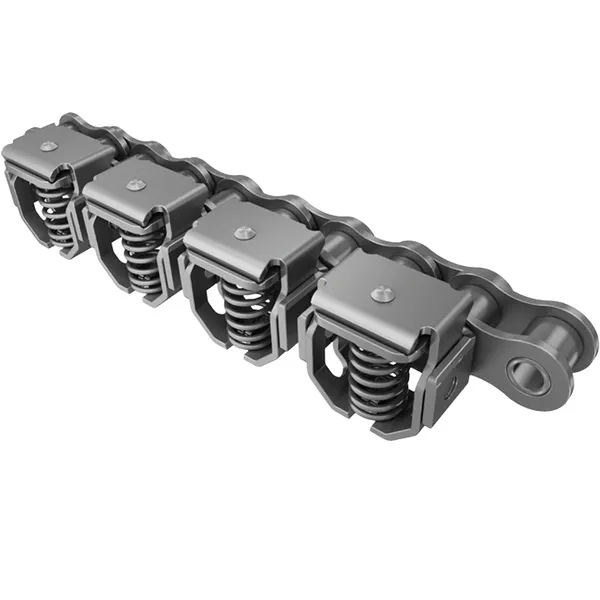
How to select the right conveyor chain for your conveyor system?
Selecting the right conveyor chain for your conveyor system is crucial to ensure optimal performance and longevity. Here are the steps to follow when choosing a conveyor chain:
- Identify your application requirements: Determine the specific requirements of your conveyor system, including the type of material being conveyed, the speed of operation, the load capacity, the environmental conditions, and any special considerations.
- Consider the chain type: Based on your application requirements, consider the different types of conveyor chains available, such as roller chains, double pitch chains, hollow pin chains, apron chains, or plastic chains. Evaluate their features and benefits to determine which type is most suitable for your needs.
- Assess the chain material: Conveyor chains are typically made from various materials such as steel, stainless steel, or plastic. Consider factors such as corrosion resistance, temperature resistance, wear resistance, and food-grade requirements when selecting the chain material.
- Determine the chain pitch: The chain pitch refers to the distance between the centers of adjacent pins. Choose the appropriate pitch size based on your conveyor system’s design, load requirements, and speed. Smaller pitch sizes provide smoother operation at higher speeds, while larger pitch sizes offer better resistance against wear and fatigue.
- Evaluate the chain strength: Consider the required tensile strength and fatigue resistance of the chain to ensure it can withstand the anticipated load and operating conditions. Factors such as chain construction, material quality, and heat treatment play a role in determining the chain’s strength.
- Consider additional features: Depending on your application, you may need additional features such as attachments, guides, or specialized coatings on the chain. Assess if any of these features are necessary to meet your specific requirements.
- Consult with experts: If you’re uncertain about the selection process or have unique application needs, it’s advisable to consult with conveyor chain manufacturers or industry experts who can provide guidance and recommendations based on their expertise.
By following these steps and carefully considering your application requirements, you can select the right conveyor chain that ensures efficient and reliable operation of your conveyor system.


editor by CX 2023-08-02