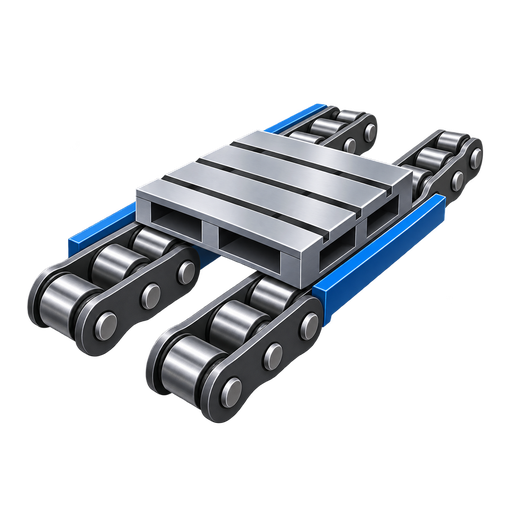
Description du produit
ForgedScraper conveyor chain
P152F51/45/45A/45C/47/45D/45E/45F, P2000F29/29A, P101.6F20, RO6205MF3, MR56, MR80, MR224, MR315, FVR40/63/90/112
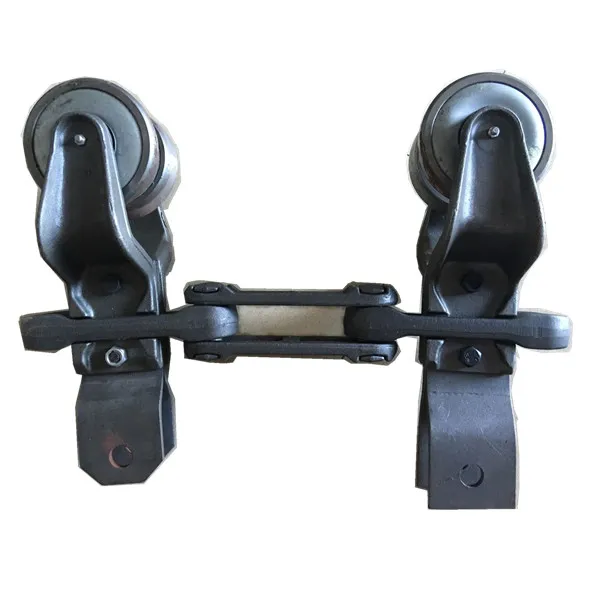
Forged chain , trolleys,carriers used on overhead conveyor production line.
Main products are Forge chain and trolley, welded link chain, Standard and non-standard stainless steel and carbon steel roller chain, Leaf chain, standard and non-standard conveyor chain, Scraper conveyor chain, Cranked link chain, double plus chain, double pitch transmission chain, plastic chain, sprockets and Other accessories.
Main products are Forge chain and trolley, welded link chain, Standard and non-standard stainless steel and carbon steel roller chain, Leaf chain, standard and non-standard conveyor chain, Scraper conveyor chain, Cranked link chain, double plus chain, double pitch transmission chain, plastic chain, sprockets and Other accessories.
The products can be combined to find the best possible solution for even the most demanding applications. Special solutions can also be developed for customers’ individual requirements.
Drop Forged Rivetless Chain, Drop Forged Chains, drop forged link,forged scraper chains.
1.Scraper chains P142,P142V,P142H,P200,P102,P250,P260
2.Detachable chain 51,52,55,57,62,74,78
3.Relevant overhead trolley&carriages&spare parts
4.as per your drawings or samples
| Drop forged detachable chains | X348,X458,X678,X698,F100,F160,P80,P100,P200 |
| CatterPilar Chains for | X348,X458,X678,X698 |
| Matériel: | Alliage |
|---|---|
| Structure: | Combined Chain |
| Traitement de surface : | Polissage |
| Taille de la chaîne : | 1/2"*3/32" |
| Fonctionnalité: | Résistant à la chaleur |
| Process: | Forging |
| Exemples : |
US$ 1/Piece
1 Piece(Min.Order) | |
|---|
Comment calcule-t-on la puissance nécessaire pour un entraînement par chaîne de convoyeur ?
Le calcul de la puissance requise pour l'entraînement d'une chaîne de convoyeur implique la prise en compte de divers facteurs liés au système de convoyage et à l'application spécifique. Voici la démarche à suivre :
1. Déterminer la résistance totale :
– Calculez la résistance totale que la chaîne du convoyeur doit surmonter en fonctionnement. Celle-ci inclut la résistance due à la charge transportée, les pertes par frottement, les variations d'altitude et toute autre résistance du système.
2. Convertir la résistance en inertie équivalente :
– Convertissez la résistance totale en une inertie équivalente en la multipliant par le carré de la vitesse de la chaîne.
3. Calculer l'inertie totale :
– Déterminer l’inertie totale du système en tenant compte de l’inertie de tous les composants rotatifs, tels que la chaîne du convoyeur, les pignons et tout autre élément entraîné.
4. Déterminer le couple requis :
– Calculez le couple requis en multipliant l'inertie totale par le taux d'accélération ou de décélération souhaité.
5. Convertir le couple en puissance :
– Convertissez le couple requis en chevaux-vapeur en le divisant par la vitesse du moteur (en tr/min) et en multipliant par un facteur de conversion.
6. Prendre en compte les facteurs de sécurité et l'efficacité :
– Appliquer des coefficients de sécurité à la puissance calculée pour tenir compte des variations, des imprévus et de la croissance future.
– Tenez compte de l’efficacité du système d’entraînement, notamment du moteur, de la boîte de vitesses et des autres composants de transmission, afin de garantir une transmission de puissance précise.
Il est important de noter que la méthode de calcul ci-dessus fournit une estimation de la puissance requise. Pour des calculs précis et afin de garantir que la transmission par chaîne du convoyeur choisi réponde aux exigences de l'application, il est recommandé de consulter les fabricants de systèmes de convoyage, les ingénieurs ou les normes sectorielles.

What are the benefits of using a roller conveyor chain?
A roller conveyor chain offers several advantages in material handling and transportation applications. Here are some of the benefits:
1. Efficient transportation: Roller conveyor chains are designed to smoothly and efficiently transport various types of goods and materials. The rollers provide low-friction movement, reducing the effort required to move the load along the conveyor.
2. Versatility: Roller conveyor chains are versatile and can handle a wide range of products, from small and lightweight items to heavy and bulky loads. They are commonly used in industries such as manufacturing, distribution, logistics, and warehouses.
3. Durability: Roller conveyor chains are typically made from robust materials such as steel, which provides excellent durability and longevity. They can withstand heavy loads, repetitive use, and harsh working environments.
4. Flexibility: Roller conveyor chains can be configured in various layouts to accommodate different space requirements and material flow patterns. They can be straight, curved, inclined, or declined to optimize the flow of goods within the facility.
5. Easy accumulation: Roller conveyor chains allow for efficient accumulation of products without causing damage or jamming. The rollers can be designed with specific spacing and configurations to enable controlled accumulation and release of items along the conveyor line.
6. Minimal maintenance: With proper maintenance and lubrication, roller conveyor chains require minimal upkeep. The design of the chain and rollers reduces the accumulation of debris, making them easier to clean and maintain.
7. Smooth and quiet operation: The use of rollers in the conveyor chain ensures smooth and quiet operation, reducing noise levels in the workplace. This creates a more comfortable and productive working environment.
8. Enhanced safety: Roller conveyor chains are designed with safety in mind. They can be equipped with various safety features such as guards, sensors, and emergency stop mechanisms to ensure the well-being of operators and prevent accidents.
By utilizing a roller conveyor chain, businesses can benefit from improved efficiency, increased durability, flexibility in material handling, and enhanced safety in their operations.

What factors should be considered when designing a conveyor chain system?
When designing a conveyor chain system, several factors need to be considered to ensure optimal performance and functionality. These factors include:
- Load Capacity: The load capacity of the conveyor chain system is a critical consideration. It involves determining the maximum weight and size of the materials or products to be conveyed. This information helps in selecting the appropriate chain type, size, and strength to handle the expected load.
- Speed and Throughput: The desired speed at which the conveyor system needs to operate and the expected throughput of materials are important factors. They influence the selection of chain pitch, sprocket size, and motor power to achieve the desired conveyor speed and material handling capacity.
- Environmental Conditions: The operating environment plays a crucial role in the design of a conveyor chain system. Factors such as temperature, humidity, dust, corrosive substances, and presence of water or chemicals impact the selection of materials for the chain, sprockets, and other components to ensure durability and resistance to wear and corrosion.
- Conveyor Layout and Configuration: The layout and configuration of the conveyor system are key considerations. Factors such as available space, conveyor path, incline or decline angles, and any required curves or turns affect the selection of chain type, sprocket arrangement, and overall system design.
- Maintenance and Accessibility: Easy access for maintenance and servicing is crucial for the longevity and efficient operation of the conveyor chain system. Considering factors such as lubrication points, chain tension adjustment mechanisms, and overall accessibility for inspections and repairs ensures smooth operation and minimizes downtime.
- Noise and Vibration: The level of noise and vibration generated by the conveyor chain system can impact the working environment. Design considerations such as selecting chain types with low noise characteristics, implementing proper lubrication, and using vibration-damping components help minimize noise and vibration levels.
- Safety: Safety is of paramount importance in conveyor chain system design. Factors such as guarding, emergency stop systems, proper alignment, and anti-slip measures need to be incorporated to ensure the safety of operators and prevent accidents or injuries.
Considering these factors during the design stage helps in selecting the appropriate conveyor chain type, size, and configuration to meet the specific requirements of the application, ensuring smooth and efficient material handling operations.


editor by CX 2023-08-14