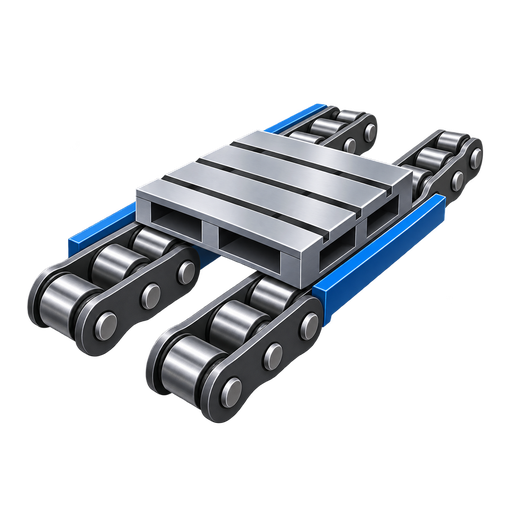
Description du produit
These chains used in a variety of industries including manufacturing, assembly, and packaging, for example, cosmetics, foodstuffs, paper, eletrical and Electronic sectors, mechanical, chemical and automotive industry.
Max conveyor length per drive until 25m
Operating temperature -20¯ +60º C
Allowed max speed ca 50m/min
Packing: 1M 26PCS
Min curve radius: 150mm
Chain Width:83mm
Chain Pitch:38mm
| Chain Type | Plate Width | Working Load(max) | Sideflex Radius(min) | Backflex Radius(min) | Poids | ||||
| mm | pouce | N(21ºC) | IBF(21ºC) | mm | pouce | mm | pouce | kg/m | |
| 83-1 | 83 | 3.25 | 2100 | 472 | 150 | 5.90 | 40 | 1.57 | 1.35 |
HangZhou CZPT Conveyor Equipment Co.,Ltd. is specialized in manufacturing all kinds of Plastic Tabletop Chains, Modular Plastic Belts and Conveyor Components and our products have been applied in many industries. With professional engineers, we can meet your demand with specific solutions.
With the idea of innovation, CZPT has been developing a variety of new products. Our aim is to meet your various requirement with leading solutions. The range of our products as well as production scale are leading the industry. As the professional manufacturer, our products are applied in a variety of industries, such as the food processing of meat, seafood, bakery, fruit and vegetable as well as beverage and dairy products. They also play an important role in the industry of pharmacy, chemistry, battery, paper and tire production etc.
Since CZPT was established, we are trying our best to satisfy every customer’s requirement. We have been supplying some CZPT companies such as ZheJiang ASG group, Wahaha, Mengniu, Yurun, Coca Cola, Tsingtao beer, Hayao Group etc.
The company has been qualified with ISO 9001 quality system. The production strictly complies with the standard and procedures of ISO 9001, which ensures good product quality. An increasing number of customers start to use our products because of Tuoxin’s advanced facilities, rich experience, efficient management and excellent sales team. CZPT has not only gained good reputation in domestic market, but also exported products to Southeast Asia, Japan, Russia, Australia, Newzealand, Germany and other countries.
CZPT has been always keeping our vision in mind, which is “Satisfy customer with reasonable price, reliable quality and timely delivery.
We believe that satisfying our customer is the basis of the company’s sustainable development. CZPT is willing to cooperate with you and achieve mutual benefits.
Any enquiries from customers are welcome.
| Usage: | Transportation Chain |
|---|---|
| Matériel: | Plastique |
| Traitement de surface : | Polissage |
| Fonctionnalité: | Résistant à la chaleur |
| Taille de la chaîne : | 1/2"*3/32" |
| Structure: | Chaîne supérieure |
| Personnalisation : |
Disponible
| Demande personnalisée |
|---|
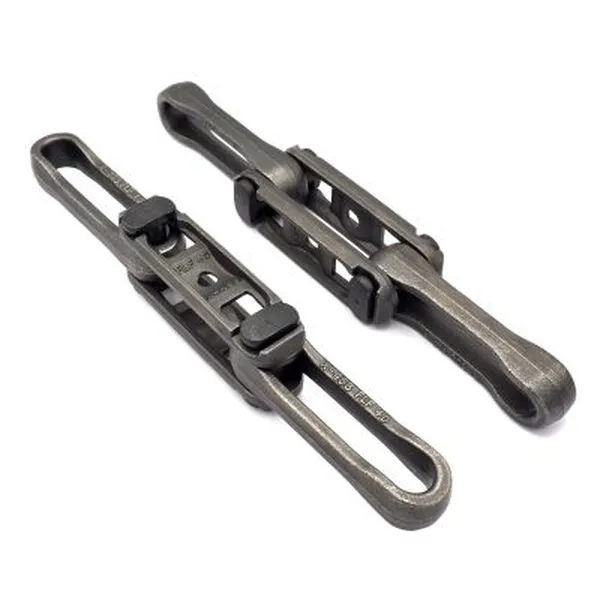
What are the advantages of using a slat conveyor chain?
A slat conveyor chain offers several advantages in material handling and conveying applications. Here are some key benefits:
1. Heavy-Duty Capacity:
- Slat conveyor chains are designed to handle heavy loads and can withstand rigorous industrial environments.
- They are commonly used in applications that require transporting large, bulky, or irregularly shaped items, such as automotive parts, pallets, or containers.
2. Flexibility:
- Slat chains can be customized and configured to suit specific conveying requirements. They are available in various widths, lengths, and chain configurations to accommodate different product sizes and shapes.
- The modular design of slat chains allows for easy modification or expansion of the conveyor system as production needs change.
3. Versatility:
- Slat chains can be used in both horizontal and inclined conveying applications. They are capable of moving products up or down slopes, making them suitable for production lines with varying elevations.
- These chains can be integrated with curves, turns, merges, and diverters to create complex conveying systems that optimize space utilization and product flow.
4. Durability and Longevity:
- Slat chains are typically made from robust materials such as steel or plastic, providing excellent durability and resistance to wear and tear.
- They can withstand demanding operating conditions, including high temperatures, corrosive environments, or exposure to chemicals.
5. Low Maintenance:
- Slat conveyor chains require minimal maintenance compared to other types of conveyor systems. They have fewer moving parts and typically operate with reduced friction.
- With proper lubrication and periodic inspection, slat chains can maintain their performance and reliability over an extended service life.
6. Easy Cleaning:
- The open design of slat chains allows for easy cleaning and debris removal. They are suitable for applications that require frequent sanitation or hygiene maintenance, such as in food processing or pharmaceutical industries.
Overall, using a slat conveyor chain offers the advantages of high load capacity, flexibility in design, versatility in conveying applications, durability, low maintenance requirements, and ease of cleaning. These features make slat chains an effective solution for various industries requiring efficient and reliable material handling.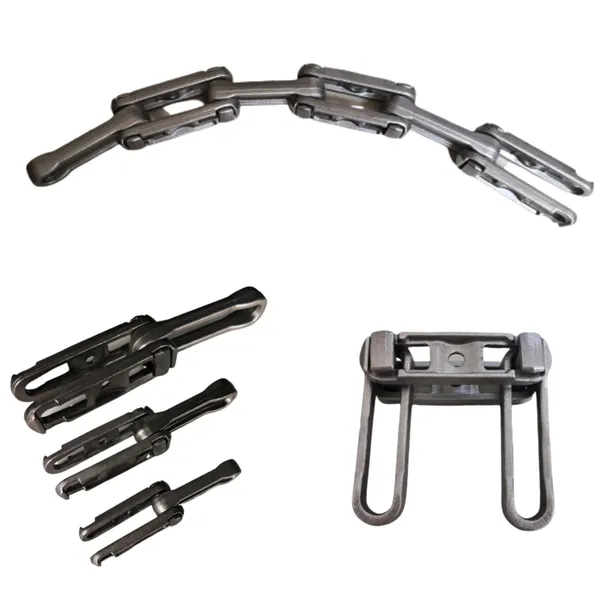
How does lubrication affect the performance of a conveyor chain?
Lubrication plays a crucial role in the performance and longevity of a conveyor chain. Proper lubrication helps to reduce friction, wear, and heat generation, ensuring smooth operation and minimizing the risk of premature failure. Here's how lubrication affects the performance of a conveyor chain:
1. Friction Reduction: Lubrication forms a thin film between the chain components, reducing friction between metal surfaces. This reduces the energy required for operation, minimizes heat generation, and prevents excessive wear and tear.
2. Wear Prevention: Lubrication forms a protective layer on the chain components, preventing direct metal-to-metal contact. This helps to reduce wear and extend the service life of the chain.
3. Corrosion Protection: Lubricants often contain anti-corrosion additives that protect the chain from rust and oxidation. This is particularly important in environments with high humidity or exposure to corrosive substances.
4. Noise Reduction: Proper lubrication reduces the noise generated during chain operation by minimizing friction and metal-to-metal contact. This can contribute to a quieter and more comfortable working environment.
5. Temperature Control: Lubrication helps to dissipate heat generated during chain operation, preventing excessive temperature rise. This is crucial in high-speed or heavy-duty applications where heat can lead to accelerated wear and reduced chain performance.
6. Maintenance and Service Life: Regular lubrication and proper lubricant selection are essential for maintaining the chain's performance and extending its service life. Adequate lubrication reduces the need for frequent maintenance, minimizes downtime, and lowers overall operating costs.
It's important to follow the manufacturer's recommendations for lubrication frequency and use the appropriate lubricant for the conveyor chain. Regular inspections and maintenance checks should also be conducted to ensure proper lubrication levels and address any issues promptly. Proper lubrication practices will enhance the performance, reliability, and durability of the conveyor chain system.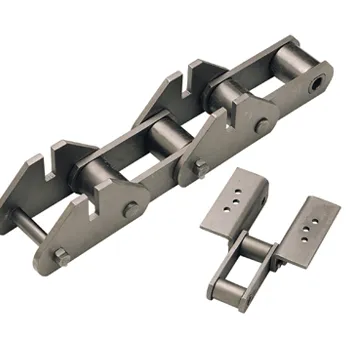
What are the industry standards and regulations for conveyor chains?
In the field of conveyor chains, there are several industry standards and regulations that help ensure safety, performance, and quality. Some of the commonly recognized standards include:
1. ISO 1977:2013 - Conveyor chains, attachments, and sprockets: This International Organization for Standardization (ISO) standard specifies the requirements and dimensions for various types of conveyor chains, attachments, and sprockets used in general industrial applications.
2. ANSI/ASME B29.1 - Precision Power Transmission Roller Chains, Attachments, and Sprockets: This American National Standard Institute (ANSI) standard provides guidelines for the design, dimensions, and performance of roller chains, attachments, and sprockets used in power transmission systems, including conveyor chains.
3. CEMA - Conveyor Equipment Manufacturers Association: CEMA publishes various standards and technical documents related to conveyor systems, including conveyor chains. These standards cover topics such as safety, design, installation, maintenance, and operation of conveyor equipment.
4. OSHA - Occupational Safety and Health Administration: OSHA is a regulatory agency in the United States that sets and enforces safety standards for workplaces. They have specific regulations related to conveyor systems, including requirements for guarding, maintenance, and employee safety.
5. Local and National Building Codes: Depending on the location and application, there may be specific building codes or regulations that dictate the design, installation, and operation of conveyor chains. These codes ensure compliance with safety and structural requirements.
It's important for conveyor chain manufacturers, system integrators, and end-users to adhere to these industry standards and regulations to ensure the safe and reliable operation of conveyor systems. Compliance with these standards helps to maintain worker safety, promote system performance, and ensure compatibility and interchangeability of conveyor chain components.

editor by CX 2023-07-18