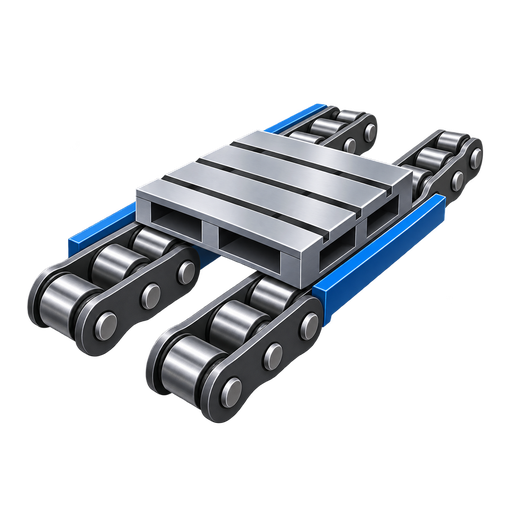
Description du produit
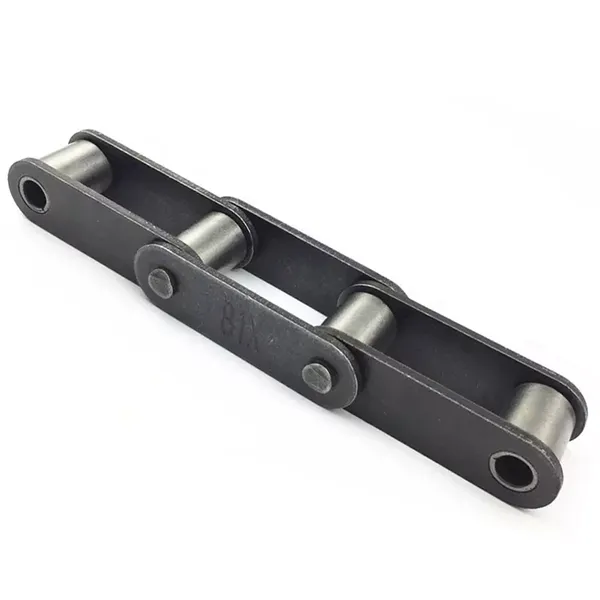
MC Series Hollow Pin Chains:
Carbon Steel and Stainless Steel Hollow Pin Chain for food handling conveyors. Products are available in ANSI standard series, double pitch series with standard rollers, and large rollers.
This chain has hollow pins so that the holes can be used to mount various pins and attachments.
| Product Name |
MC Series Hollow Pin Chains |
| Type | MC28, MC56, MC112, MC224 |
| Colour | primary |
| Material | carbon steel, alloy steel,stainless steel |
| Customize | YES |
| OEM | YES |
| Surface Treatment | rust-preventative oil |
| Shipping Type | sea & air |
| Market | global |
| Payment Terms | T/T in advance |
| Packaging | carton,wooden case,pallet |
Main products:
Transmission Chains:
Standard Roller Chains/ Nickel-Plated Roller Chain/ Stainless Steel Roller Chain/ Bicycle Chain/ Motorcycle Chain/ Chains for Automotive Engines/ Leaf Chains/ Silent Chain.
Conveyor Chains:
Small Size Conveyor Chains/ Large Size Conveyor Chains/ Roller Conveyor Chain/ Hollow Pin Chain/ Drive Chain/ Steel Bushing Chain/ Welded Steel Mill Chain/ Welded Steel Drag Chain/ Barloop Chain/ Drop Forged Rivetless Chain/ Caterpiller Drive Chain/ Cast Combination Chain/ Cast Pintle Chain/ Double Flex Chain/ Specialty Chain/ Plastic Top Chain/ Snap Cover Chain.
Link Chains:
Grade 120 Alloy Chain/ Grade 100 Alloy chain/ Grade 80 Lifting Chain/ Grade 70 Transport Chain/ Grade 50 Stainless Steel Chain/ Grade 43 High Test Chain/ Grade 40 High Test chain/ Grade 30 Proof Coil Chain/ Double Loop Chain/ Single Jack Chain/ Twist Chain/ Register Chain/ Ball Chain/ Oval Link/ Square Chain.
Sprockets:
Single Type A Hub/ Single Type B Hub/ Single Type C Hub/ Single Type D Hub/ Double Strand Type B Hub/ Double Strand Type C Hub/ Hardened Teeth Type A/ Double Single Type A Sprocket/ Double Pitch Strand Type B Hub/ Large Roller Double Pitch Sprocket.
Gear & Rack:
Spur Gears/ Helical Gears/ Bevel Gear/ Hypoid Gears/ Worm Gear/ Internal Helical Gear/ Herringbone Gears/ Rack And Pinion Gears/ Sector Gear/ Internal Ring Gear/ Miter Gears/ Nylon Gear Rack.
Wire Mesh:
Woven Wire Mesh/ Plain Weave/ Twilled Weave/ Plain Dutch Weave/ Twilled Dutch Weave/ Reverse Plain Dutch Weave/ Reverse Twilled Dutch Weave/ Five Heddle Weave/ Super Mesh Weave/ Welded Wire Mesh/ Wire Mesh Belt.
Shackles:
Screw Pin Anchor Shackle/ Round Pin Anchor Shackle/ Bolt Type Safety Anchor Shackle/ Screw Pin Chain Shackle/ Round Pin Chain Shackle/ Bolt Type Safety Chain Shackle.
Hooks:
Clevis Sling Hook/ Clevis Grab Hook/ Eye Sling Hooks/ Eye Grab Hook/ Clevis Foundry Hooks.
Riggings:
Chain Hoists/ Wire Rope Clip/ Link/ Coupling Link/ Quick Link/ Snap Hooks/ Eye Bolt/ Turnbuckle/ Anchor Rod/ Swivels/ Cable Thimble.
Machinery Equipment:
Belt conveyors/ Scraper Conveyor/ Chain Conveyor/ Plate Conveyor/ Roller Conveyor/ Spiral Conveyor/ Elevator Conveyors/ Incline Conveyor/ Vegetable And Fruit Processing Machines/ Food Processing Machinery/ Dairy Processing Equipment/ Slaughtering Equipment/ Brewing Equipment/ Frozen Drink Machine.
Company information:
We are engaged in the import and export of Mechanical Hardware.
We have professional factory. Technology is strong in products of different specifications complete, has strong product development and manufacturing capacity.to provide all kinds of hardware tools products, specifications complete, variety, quality, reasonable price.
Our Advantages:
Our company has over 20 years’ experience producing high-quality hardware products.
The products are reliable and we can manufacture the products according to customers’ requirement.
We can also cooperate with customers to develop new products.
Our products have been certified by CE and ROHS, also can provide customized product Certificate.
We sincerely welcome domestic and foreign, new and old customers to carry on the cooperation and exchange with us, and establish a long-time cooperative relationship.
Company Name: HangZhou CHINAMFG Jin Hao International Trade Co., Ltd.
/* January 22, 2571 19:08:37 */!function(){function s(e,r){var a,o={};try{e&&e.split(“,”).forEach(function(e,t){e&&(a=e.match(/(.*?):(.*)$/))&&1
| Material: | Alloy |
|---|---|
| Structure: | Hollow Chain |
| Surface Treatment: | Oxygenation |
| Chain Size: | 1/2"*11/128" |
| Feature: | Oil Resistant |
| Chain No.: | Mc56 |
| Samples: |
US$ 10/Piece
1 Piece(Min.Order) | |
|---|
| Customization: |
Available
| Customized Request |
|---|

What are the considerations for selecting a corrosion-resistant conveyor chain?
When selecting a corrosion-resistant conveyor chain, several considerations should be taken into account to ensure optimal performance and longevity in corrosive environments. Here are the key factors to consider:
– Material Selection:
Choose a conveyor chain material that is resistant to the specific corrosive agents present in the environment. Stainless steel, plastic, and special coatings such as zinc or nickel plating are commonly used for their corrosion resistance properties.
– Corrosion Resistance Ratings:
Review the corrosion resistance ratings of different chain materials and coatings. Look for industry standards such as ASTM or ISO ratings that indicate the material’s resistance to specific corrosive substances or environmental conditions.
– Environmental Factors:
Consider the specific environmental factors that contribute to corrosion, such as humidity, temperature, presence of chemicals or solvents, and exposure to saltwater or acids. Evaluate how these factors may impact the chain’s corrosion resistance requirements.
– Coating or Surface Treatment:
If using a metal chain, consider applying additional coatings or surface treatments to enhance its corrosion resistance. Options may include electroplating, powder coating, or using specialized anti-corrosion coatings.
– Compatibility with Cleaning Methods:
Ensure that the selected chain material is compatible with the cleaning methods and chemicals used in the application. Some corrosive-resistant materials may require specific cleaning procedures to maintain their performance and longevity.
– Operational Considerations:
Take into account the load capacity, speed, and operational requirements of the conveyor system. Ensure that the corrosion-resistant chain can withstand the mechanical stresses and operational demands without compromising its corrosion resistance properties.
– Cost-Effectiveness:
Weigh the initial cost and long-term benefits of using a corrosion-resistant conveyor chain. While corrosion-resistant materials may have a higher upfront cost, they can significantly reduce maintenance, replacement, and downtime costs associated with corrosion-related failures.
By considering these factors, you can select a corrosion-resistant conveyor chain that is well-suited for the specific corrosive environment, ensuring reliable and durable performance in applications such as chemical processing, food production, wastewater treatment, or outdoor environments.
What are the future trends and advancements in conveyor chain technology?
The field of conveyor chain technology is constantly evolving, driven by the need for improved efficiency, productivity, and sustainability. Here are some of the future trends and advancements in conveyor chain technology:
1. Automation and robotics: The integration of conveyor chains with automation and robotics systems is a growing trend. This includes the use of advanced sensors, machine vision, and artificial intelligence to enable autonomous operation, precise positioning, and efficient material handling.
2. Smart and connected systems: Conveyor chains are becoming increasingly connected through the Internet of Things (IoT) technology. This allows for real-time monitoring, data collection, and analysis of various performance parameters such as chain wear, tension, temperature, and energy consumption. Smart systems can optimize maintenance schedules, detect potential failures, and improve overall system efficiency.
3. Lightweight and high-strength materials: The development of lightweight yet high-strength materials is an ongoing focus in conveyor chain technology. Advanced alloys, composites, and engineered plastics offer improved strength-to-weight ratios, reducing energy consumption and increasing the load capacity of conveyor systems.
4. Energy efficiency: Energy efficiency is a key consideration in conveyor chain design. Future advancements aim to minimize power consumption through the use of efficient drive systems, regenerative braking, and smart control algorithms that optimize speed and acceleration profiles. Energy recovery technologies, such as regenerative drives, can also capture and reuse energy during deceleration or braking.
5. Sustainability and environmental friendliness: Conveyor chain technology is moving towards more sustainable and environmentally friendly solutions. This includes the use of eco-friendly materials, improved lubrication techniques to minimize environmental impact, and the adoption of energy-efficient components and systems. Recycling and circular economy concepts are also gaining prominence in the design and manufacturing of conveyor chains.
6. Advanced wear monitoring and predictive maintenance: The future of conveyor chain technology involves advanced wear monitoring systems that can accurately predict the remaining useful life of chains and components. This enables proactive maintenance planning and reduces unplanned downtime. Predictive maintenance algorithms analyze data collected from sensors and provide timely alerts for chain replacement or repair.
These are just a few examples of the future trends and advancements in conveyor chain technology. As technology continues to advance, we can expect further innovations that enhance performance, efficiency, reliability, and sustainability in conveyor systems.

What safety precautions should be followed when working with conveyor chains?
Working with conveyor chains involves potential hazards, and it is essential to follow proper safety precautions to ensure the well-being of workers and prevent accidents. Here are some important safety measures to consider:
- Proper Training: Ensure that workers operating or maintaining conveyor chains receive proper training on safe practices, including chain handling, maintenance procedures, and emergency protocols.
- Personal Protective Equipment (PPE): Workers should wear appropriate PPE, such as safety glasses, gloves, and steel-toed shoes, to protect themselves from potential hazards, including flying debris, pinch points, or entanglement.
- Lockout/Tagout: Before performing any maintenance or repair tasks on conveyor chains, follow lockout/tagout procedures to isolate and de-energize the equipment to prevent accidental startup or release of stored energy.
- Guarding: Ensure that conveyor chains are adequately guarded to prevent access to moving parts, such as pinch points and rotating sprockets. Guards should be securely in place and not interfere with the chain’s operation.
- Housekeeping: Keep the work area clean and free of debris, tools, or other objects that could cause tripping hazards or interfere with the operation of the conveyor chain.
- Regular Inspections: Regularly inspect the conveyor chains for any signs of wear, damage, or misalignment. Address any issues promptly to prevent potential safety hazards.
- Safe Loading and Unloading: When loading or unloading materials onto the conveyor, follow safe lifting techniques and ensure the load is evenly distributed to prevent overloading or imbalance.
- Emergency Stop Devices: Install and clearly mark emergency stop devices along the conveyor system to enable immediate shutdown in case of an emergency or hazardous situation.
- Clear Communication: Establish clear communication protocols, including signals or signs, to ensure effective communication between workers operating different sections of the conveyor system.
These safety precautions are general guidelines, and it’s important to consult and adhere to specific safety regulations and guidelines provided by the equipment manufacturer and relevant safety authorities. Regular safety training, awareness, and a proactive safety culture are crucial in maintaining a safe working environment when working with conveyor chains.


editor by CX 2024-04-15