Description du produit
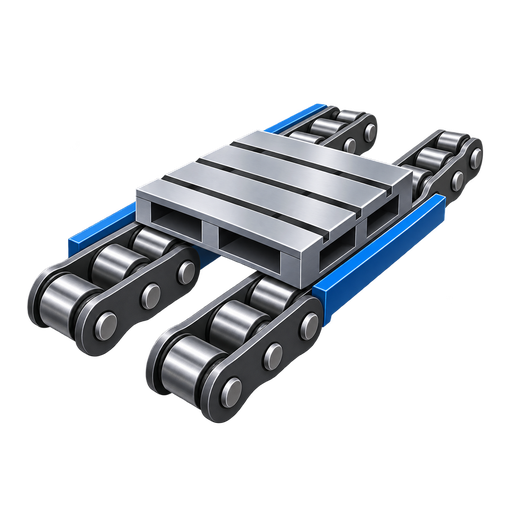
Scraper conveyor chain
P152F51/45/45A/45C/47/45D/45E/45F, P2000F29/29A, P101.6F20, RO6205MF3, MR56, MR80, MR224, MR315, FVR40/63/90/112
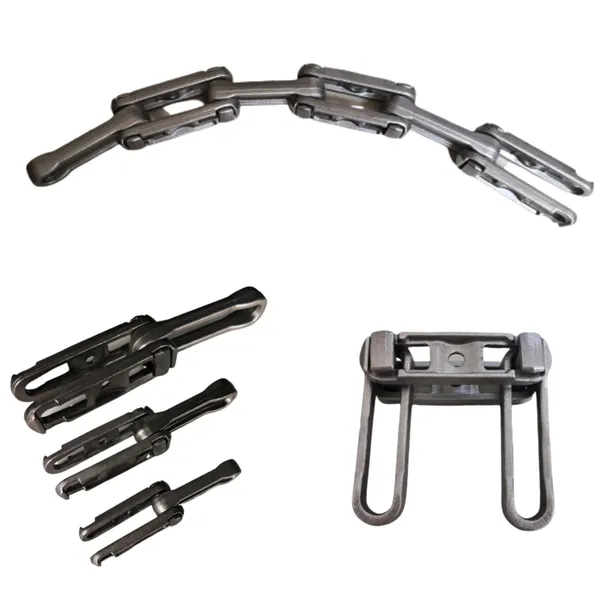
Forged chain , trolleys,carriers used on overhead conveyor production line.
Main products are Forge chain and trolley, welded link chain, Standard and non-standard stainless steel and carbon steel roller chain, Leaf chain, standard and non-standard conveyor chain, Scraper conveyor chain, Cranked link chain, double plus chain, double pitch transmission chain, plastic chain, sprockets and Other accessories.
Main products are Forge chain and trolley, welded link chain, Standard and non-standard stainless steel and carbon steel roller chain, Leaf chain, standard and non-standard conveyor chain, Scraper conveyor chain, Cranked link chain, double plus chain, double pitch transmission chain, plastic chain, sprockets and Other accessories.
The products can be combined to find the best possible solution for even the most demanding applications. Special solutions can also be developed for customers’ individual requirements.
Drop Forged Rivetless Chain, Drop Forged Chains, drop forged link,forged scraper chains.
1.Scraper chains P142,P142V,P142H,P200,P102,P250,P260
2.Detachable chain 51,52,55,57,62,74,78
3.Relevant overhead trolley&carriages&spare parts
4.as per your drawings or samples
| Drop forged detachable chains | X348,X458,X678,X698,F100,F160,P80,P100,P200 |
| CatterPilar Chains for | X348,X458,X678,X698 |
| Usage: | Conveyor System |
|---|---|
| Type: | Conveyor |
| Surface: | Self Colored, Zinc Plated,Blacken |
| Process: | Forging |
| Transport Package: | Plywood Case. |
| Specification: | ISO |
| Personnalisation : |
Disponible
| Demande personnalisée |
|---|
Can a conveyor chain be used in cleanroom environments?
Yes, conveyor chains can be used in cleanroom environments with proper selection and design considerations. Cleanroom environments require stringent control of airborne particles, such as dust, microbes, and contaminants, to maintain high levels of cleanliness. Here are some factors to consider when using a conveyor chain in a cleanroom:
1. Material Selection:
– Choose a conveyor chain made from materials that are compatible with cleanroom requirements. Stainless steel, plastic, or special coatings are commonly used for their clean and non-contaminating properties.
– Avoid materials that generate excessive particles or contaminants, such as certain types of lubricants or chain coatings.
2. Design Considerations:
– Design the conveyor chain system to minimize particle generation. This includes smooth surfaces, rounded edges, and avoiding areas that can trap or accumulate particles.
– Use sealed or enclosed chain designs to prevent the release of lubricants or contaminants.
– Consider the integration of additional features, such as covers or guards, to further protect the chain and prevent particle ingress.
3. Cleaning and Maintenance:
– Establish a cleaning and maintenance protocol specific to the cleanroom environment. This may include regular cleaning and sanitization procedures to maintain cleanliness standards.
– Use cleaning agents and procedures that are approved for cleanroom use and do not introduce contaminants.
– Regularly inspect the conveyor chain system for any signs of wear, damage, or contamination. Promptly address any issues to ensure the chain’s reliability and cleanliness.
4. Compliance with Cleanroom Standards:
– Ensure that the conveyor chain system meets the cleanliness and particle generation requirements of the specific cleanroom standards or classifications in which it will be used.
– Comply with relevant industry guidelines and regulations, such as ISO standards, when selecting and using conveyor chains in cleanroom environments.
By considering these factors and implementing proper material selection, design considerations, cleaning protocols, and compliance with cleanroom standards, a conveyor chain can be effectively used in cleanroom environments while maintaining the required cleanliness levels.
What are the advantages of using a plastic conveyor chain?
Plastic conveyor chains offer several advantages over traditional metal chains. Here are some of the key advantages:
1. Corrosion Resistance: Plastic chains are highly resistant to corrosion, making them ideal for applications in humid or corrosive environments. They do not rust or deteriorate when exposed to moisture or chemicals.
2. Lightweight: Plastic chains are significantly lighter than metal chains, making them easier to handle and install. Their lightweight nature reduces the overall weight of the conveyor system and can result in energy savings during operation.
3. Low Noise Operation: Plastic chains generate less noise compared to metal chains, leading to a quieter working environment. This can be particularly beneficial in industries where noise reduction is important, such as food processing or packaging.
4. Reduced Friction and Wear: Plastic chains have self-lubricating properties, which reduce friction and wear. This results in lower maintenance requirements and longer chain life. The smooth surface of plastic chains also minimizes the risk of product damage during transportation.
5. Flexibility and Modularity: Plastic chains can be easily customized and designed to fit specific conveyor system requirements. They offer flexibility in terms of length, width, and configuration. Additionally, plastic chains are often modular, allowing for easy replacement of damaged or worn-out sections without replacing the entire chain.
6. Cost-Effective: Plastic conveyor chains are generally more cost-effective compared to metal chains. They are often less expensive to manufacture and offer a longer lifespan with minimal maintenance requirements, resulting in lower overall costs.
7. Chemical Resistance: Plastic chains are resistant to a wide range of chemicals, making them suitable for applications where exposure to aggressive substances is a concern. They can withstand contact with oils, acids, alkalis, and various cleaning agents.
Overall, the advantages of using a plastic conveyor chain include corrosion resistance, lightweight design, low noise operation, reduced friction and wear, flexibility, cost-effectiveness, and chemical resistance. These benefits make plastic chains a popular choice in various industries, including food processing, packaging, pharmaceuticals, and logistics.
Qu'est-ce qu'une chaîne de convoyage et comment fonctionne-t-elle ?
Une chaîne de convoyeur est un type de chaîne mécanique conçue spécifiquement pour les systèmes de convoyage. Elle est composée d'une série de maillons interconnectés formant une boucle continue. Ces maillons sont généralement en métal et assemblés par des axes ou d'autres éléments de connexion.
Les chaînes de convoyage fonctionnent en transmettant la puissance et le mouvement du mécanisme d'entraînement, tel qu'un moteur ou un pignon, au système de convoyage afin de déplacer des matériaux ou des produits le long d'un parcours prédéfini. La chaîne est placée sur un rail ou des rails de guidage et, en se déplaçant, elle transporte la charge qui y est déposée.
Le fonctionnement d'une chaîne de convoyage comprend les étapes suivantes :
- Transmission de puissance :
Le mécanisme d'entraînement transmet la puissance de rotation à la chaîne du convoyeur, généralement par l'intermédiaire d'un moteur et de pignons. Le moteur fournit le couple nécessaire à l'entraînement de la chaîne.
- Traction et mouvement :
Lorsque le mécanisme d'entraînement fait tourner les pignons, les dents de ces derniers s'engrènent avec les maillons de la chaîne du convoyeur. Cette interaction crée une traction, ce qui permet à la chaîne de se déplacer le long du parcours prévu.
- Transport de charges :
La charge à transporter est placée sur la chaîne du convoyeur. Cette charge peut être constituée de produits, de matériaux ou d'autres articles. Le déplacement de la chaîne entraîne la charge le long du système de convoyage, permettant ainsi un transport ou une manutention efficace.
- Soutien et conseils :
La chaîne du convoyeur est supportée et guidée par divers composants, tels que des rails de guidage, des rouleaux ou des bandes d'usure. Ces composants garantissent l'alignement correct et le déplacement régulier de la chaîne le long du système de convoyage.
Les chaînes de convoyage sont couramment utilisées dans des secteurs tels que la fabrication, la logistique, l'emballage et la manutention. Elles constituent une méthode fiable et efficace pour déplacer des produits ou des matériaux de manière contrôlée et automatisée.


editor by CX 2023-10-31