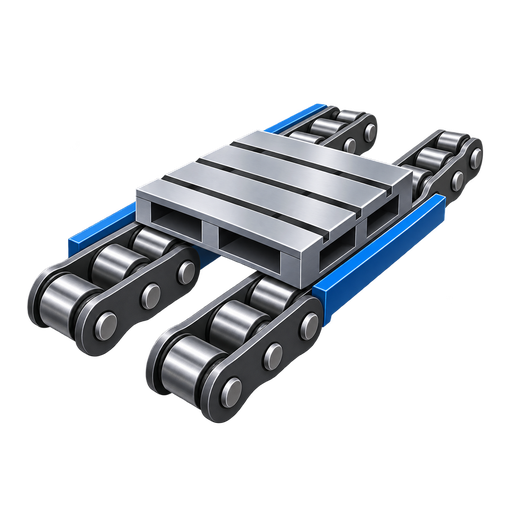
Description du produit
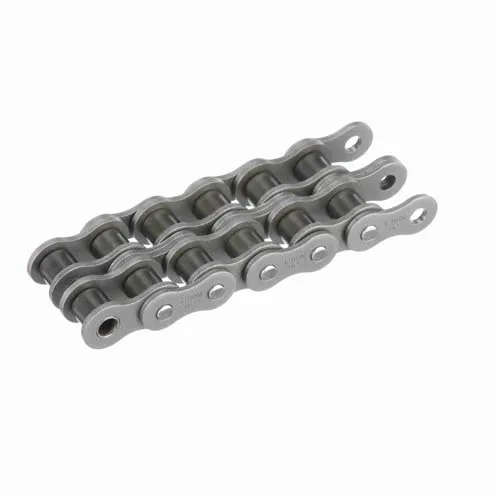
| Model NO. | 06C/08A/10A/12A/16A/20A/24A/28A/32A/40A/06B/08B/10B/12B/16B/20B/24B/28B/32B/40B-1/2/3 Heavy duty |
| Chain Model | Roller Chains |
| Structure (for Chain) | Chaîne à rouleaux |
| Specification | GB/T, DIN, ANSI, ISO, BS, JIS. |
| Origin | HangZhou, ZheJiang |
| Color | Couleur unie |
| Chain Color | Customized |
Our company
Wolff Chain Co. is 1 of the professional chain manufacturers in China. We focus on reseaching, manufacturing and trading of the chain drive with famous brands — “DOVON” and “DECHO”. We supply OEM services for many famous enterprises such as SUZUKI, XIHU (WEST LAKE) DIS., FAW, AGCO, JUMING as well.
Wolff mainly producing the Transmission chains,Conveyor chains,Dragging Chains,Silent chains,Leaf chains,Roller chains,Special chain and many other series of chain products. Our technicians a have improved the chains quality to the world-level. High quality material selection, powerful and precise heat-treatment technology and excellent assembly methods ensure Wolff chains meet the tough and strict requirements for machines and vehicles.
All of our products completely conform to the international standard such as ISO\DIN\ANSI\BS\JIS, etc. Wolff has been successfully certified by ISO9001 Quality Management System,SGS inspection and BV inspection. Wolff chains can be widely applied to many industries including automobile, motorcycle, forklift, wood processing machine, constructure machine, packing machine, food machine,tobacco machine and agricultural equipments. Wolff chains are popular in America,South America,Europe,Middle East, South East Asia and Africa markets.
Our workshop
Our certification
Welcome to our exhibition
FAQ
Q1. What is your terms of packing?
A: Generally, we pack our goods in single color box. If you have special request about packing, pls negotiate with us in advance, we can pack the goods as your request.
Q2. What is your terms of payment?
A: T/T 30% as deposit, and 70% before delivery. We’ll show you the photos of the products and packages
before you pay the balance. Other payments terms, pls negotiate with us in advance, we can discuss.
Q3. What is your terms of delivery?
A: EXW, FOB, CFR, CIF.
Q4. How about your delivery time?
A: Generally, it will take 25 to 30 days after receiving your advance payment. The specific delivery time depends
on the items and the quantity of your order.
Q5. Can you produce according to the samples?
A: Yes, we can produce by your samples or technical drawings. We can build the molds and fixtures.
Q6. What is your sample policy?
A: We can supply the sample if we have ready parts in stock, but the customers have to pay the sample cost and
the courier cost.We welcome sample order.
Q7. Do you test all your goods before delivery?
A: Yes, we have 100% test before delivery
Q8: How do you make our business long-term and good relationship?
1. We keep good quality and competitive price to ensure our customers benefit ;
2. We respect every customer as our friend and we sincerely do business and make friends with them,
| Standard or Nonstandard: | Standard |
|---|---|
| Application: | Textile Machinery, Garment Machinery, Conveyer Equipment, Packaging Machinery, Food Machinery, Marine, Mining Equipment |
| Traitement de surface : | Oil Blooming |
| Structure: | Chaîne à rouleaux |
| Matériel: | Carbon Steel |
| Type: | Short Pitch Chain |
| Exemples : |
US$ 0/Piece
1 Piece(Min.Order) | |
|---|
| Personnalisation : |
Disponible
| Demande personnalisée |
|---|
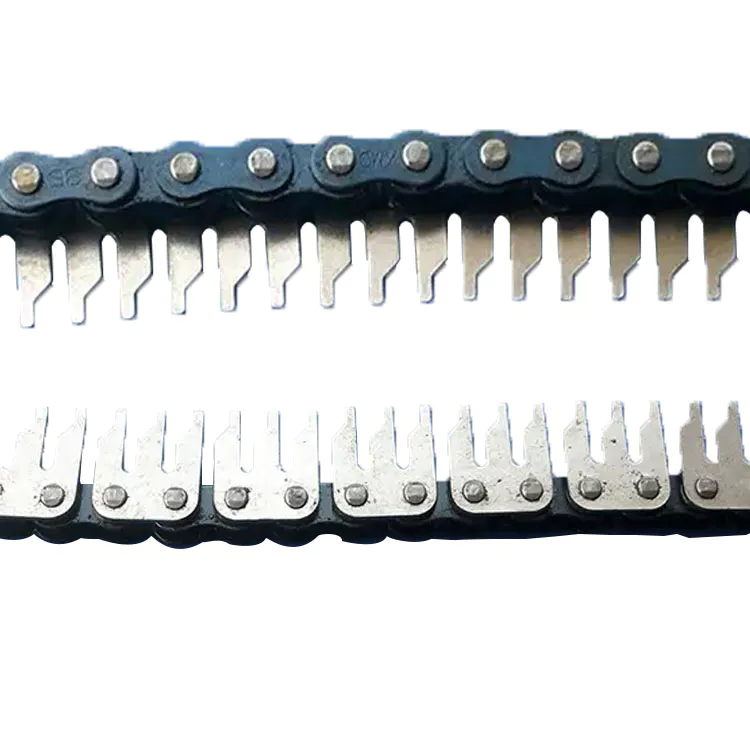
Can a conveyor chain be used in automotive assembly lines?
Yes, a conveyor chain can be effectively used in automotive assembly lines. Here are the reasons why:
1. Efficient Material Handling:
– Conveyor chains provide a reliable and efficient means of transporting automotive components and parts along the assembly line. They can handle heavy loads and withstand the demanding requirements of automotive manufacturing.
2. Versatility:
– Conveyor chains offer versatility in terms of design and configuration. They can be customized to accommodate various assembly processes, such as body welding, painting, assembly, and final inspection.
3. Precise Positioning:
– Conveyor chains allow precise positioning and synchronization of automotive components, ensuring accurate assembly and alignment during the production process. This helps maintain consistent quality and reduces errors.
4. Automation Integration:
– Conveyor chains can be easily integrated with automation systems in automotive assembly lines. They can work in conjunction with robotic arms, vision systems, and other automated equipment to optimize the production process and improve efficiency.
5. Assembly Line Flexibility:
– Conveyor chains provide flexibility in terms of line configuration and layout. They can be designed to accommodate different assembly line layouts, including straight sections, curves, inclines, and declines, to meet the specific requirements of automotive assembly processes.
6. Space Optimization:
– Conveyor chains help optimize space utilization in automotive assembly plants. They can be designed to navigate around existing equipment and infrastructure, making efficient use of available floor space.
7. Safety:
– Conveyor chains are designed with safety features to protect operators and prevent accidents. Emergency stop controls, guarding, and interlocking mechanisms ensure the safe operation of the assembly line.
8. Increased Production Speed:
– By using conveyor chains, automotive assembly lines can achieve higher production speeds, allowing for faster manufacturing cycles and increased output.
Overall, conveyor chains play a crucial role in enhancing the efficiency, productivity, and safety of automotive assembly lines, contributing to the smooth and streamlined production of vehicles.
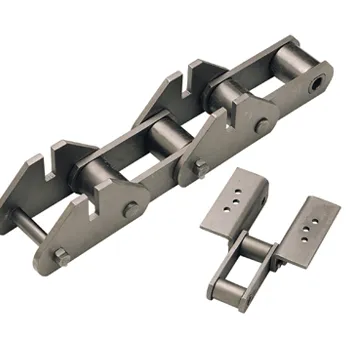
Quel est l'impact d'une chaîne de convoyage sur le flux de matériaux dans une ligne de production ?
Une chaîne de convoyage joue un rôle crucial dans la fluidité et l'efficacité du flux de matériaux sur une ligne de production. Voici les principaux impacts d'une chaîne de convoyage sur ce flux :
1. Mouvement continu : Une chaîne de convoyage permet le déplacement continu des matériaux le long de la ligne de production. En maintenant et en transportant les matériaux en toute sécurité, la chaîne assure un flux constant, sans interruption ni retard.
2. Contrôle de la vitesse : La vitesse de déplacement de la chaîne du convoyeur peut être ajustée en fonction du débit de production souhaité. Ceci permet un contrôle précis du flux de matières, garantissant son alignement avec les processus en aval et évitant les goulots d’étranglement et les surcharges.
3. Orientation et positionnement : Les chaînes de convoyage peuvent être conçues avec des dispositifs spécifiques permettant d’orienter et de positionner les matériaux selon les besoins. Ceci garantit une présentation correcte des matériaux pour le traitement, l’assemblage ou le conditionnement, optimisant ainsi le flux de production global.
4. Tri et déviation : Dans certaines applications, les chaînes de convoyage peuvent être équipées de mécanismes de tri ou de déviation des matériaux selon des critères prédéfinis. Ceci permet un acheminement efficace des différents produits ou composants vers leurs destinations respectives, optimisant ainsi le flux de matières.
5. Accumulation et tampon : Les chaînes de convoyage peuvent intégrer des zones d’accumulation ou des zones tampons où les matériaux peuvent s’arrêter ou s’accumuler temporairement. Cette fonctionnalité est utile lorsque les processus en aval subissent des interruptions temporaires ou lorsqu’il est nécessaire d’équilibrer le flux entre les différentes étapes de production.
6. Intégration aux équipements : Les chaînes de convoyage peuvent être intégrées à d’autres équipements ou machines de la ligne de production, tels que des bras robotisés, des systèmes d’emballage automatisés ou des postes d’inspection. Cette intégration fluide permet une manutention synchronisée des matériaux, optimisant ainsi le flux et l’efficacité de l’ensemble du processus de production.
7. Personnalisation pour des besoins spécifiques : Les chaînes de convoyeurs peuvent être personnalisées pour répondre aux exigences spécifiques de manutention des matériaux. Cela inclut des aspects tels que la largeur, la longueur et la hauteur de la chaîne, les inclinaisons et les descentes, ainsi que les accessoires ou guides spécialisés. Cette personnalisation garantit que le flux de matériaux est adapté aux besoins uniques de la ligne de production.
En assurant un transport fiable et contrôlé des matériaux, une chaîne de convoyage influence considérablement le flux de matières dans une ligne de production. Elle améliore la productivité, réduit la manutention manuelle, minimise les risques d'erreurs ou de dommages et contribue ainsi à l'efficacité et à la réussite globales du processus de fabrication.
What safety precautions should be followed when working with conveyor chains?
Working with conveyor chains involves potential hazards, and it is essential to follow proper safety precautions to ensure the well-being of workers and prevent accidents. Here are some important safety measures to consider:
- Proper Training: Ensure that workers operating or maintaining conveyor chains receive proper training on safe practices, including chain handling, maintenance procedures, and emergency protocols.
- Personal Protective Equipment (PPE): Workers should wear appropriate PPE, such as safety glasses, gloves, and steel-toed shoes, to protect themselves from potential hazards, including flying debris, pinch points, or entanglement.
- Lockout/Tagout: Before performing any maintenance or repair tasks on conveyor chains, follow lockout/tagout procedures to isolate and de-energize the equipment to prevent accidental startup or release of stored energy.
- Guarding: Ensure that conveyor chains are adequately guarded to prevent access to moving parts, such as pinch points and rotating sprockets. Guards should be securely in place and not interfere with the chain’s operation.
- Housekeeping: Keep the work area clean and free of debris, tools, or other objects that could cause tripping hazards or interfere with the operation of the conveyor chain.
- Regular Inspections: Regularly inspect the conveyor chains for any signs of wear, damage, or misalignment. Address any issues promptly to prevent potential safety hazards.
- Safe Loading and Unloading: When loading or unloading materials onto the conveyor, follow safe lifting techniques and ensure the load is evenly distributed to prevent overloading or imbalance.
- Emergency Stop Devices: Install and clearly mark emergency stop devices along the conveyor system to enable immediate shutdown in case of an emergency or hazardous situation.
- Clear Communication: Establish clear communication protocols, including signals or signs, to ensure effective communication between workers operating different sections of the conveyor system.
These safety precautions are general guidelines, and it’s important to consult and adhere to specific safety regulations and guidelines provided by the equipment manufacturer and relevant safety authorities. Regular safety training, awareness, and a proactive safety culture are crucial in maintaining a safe working environment when working with conveyor chains.


editor by CX 2023-10-09