Descripción del Producto
Modern Design Powder Coating Oven Automatic Wet Painting Line XT80/100/160 Forged Overhead Conveyor Chain For robot painting power line
XT80 chain / load carriage
Chain pitch: t = 80 / 76.2mm
Chain tensile load: 110KN
Allowable tensile force of the chain: 10KN
Ultimate load of the carriage: 300kg
Allowable load of carriage: 125kg
Track: Worker 10 or Worker 12
Minimum horizontal turning radius: R305
Minimum vertical bending radius: R1500
XT100 chain / load carriage
Chain pitch: t = 100mm
Chain tensile load: 220KN
Allowable tension of the chain: 15KN
Limit load of carriage: 500kg
Allowable load of carriage: 250kg
Track: Worker 12 or Worker 14
Minimum horizontal turning radius: R317
Minimum vertical bending radius: R2000
XT160 chain / load carriage
Chain pitch: t = 160mm
Chain tensile load: 400KN
Allowable pull force of chain: 30KN
Ultimate load of the carriage: 800kg
Allowable load of carriage: 500kg
Track: Worker 14 or Worker 16
Minimum horizontal turning radius: R404
Minimum vertical bending radius: R3150
Our painting line chain have several items according to different load.
Please feel free to let us know your detail enquiry and we will offer drawing for your confirmation before confirming order. We will also send sample chain to you for your final confirmation on order.
Package: Steel pallet or wooden case
Our quality is reliable and export to Europe, USA, Canada, Japan, Korea and so on in big quantity
Please feel free to let us know your detail enquiry by return e-mail or fax
Our Drop Forged Chain and trolley can be used widely in aggregate, amusement park rides, asphalt paving, automotive industry, bakery ovens, bottling, bucket elevators, car dumper, car wash, case conveyors, cement plants, citrus processing, clean grain and return elevators, coal preparation, construction equipment, conveyors, cotton tramper, dairy handling, fertilizer conveying, flight conveyors, food processing, forest products, grain handling, heavy duty conveyors, high-temperature industrial ovens, jack ladder, log handling, material handling, meat packing, mining, overhead conveyors, power drives, produce washdown, pulp and paper, recycling, refineries, roofing plants, rubber manufacturing, stackers, steel mills, sugar harvesting, sugar processing, trolle, conveyors, utilities, water treatment
| Material | Alloy steel |
| Proceso | Ensamblado |
| Tratamiento térmico | Tratamiento térmico de endurecimiento superficial y temple en horno de malla |
| Tratamiento de superficies | Blackened, Zinc galvanized, Nickel galvanized, Chroming, Colour Painting, or as per customer’s request |
| Actuación | Alta precisión, alta resistencia al desgaste, bajo nivel de ruido, funcionamiento suave y constante, alta resistencia. |
| Número de modelo | P142, P142V , P142H , P200 , P102 , P260 , P250 |
| Embalaje | Plastic bag ,carton box ,plywood case or customer requirement. |
/* 22 de enero de 2571 19:08:37 */!function(){function s(e,r){var a,o={};try{e&&e.split(“”,).forEach(function(e,t){e&&(a=e.match(/(.*?):(.*)$/))&&1
| Uso: | Transmission Chain |
|---|---|
| Material: | Aleación |
| Tratamiento de superficie: | Pulido |
| Personalización: |
Disponible
| Solicitud personalizada |
|---|
.shipping-cost-tm .tm-status-off{background: none;padding:0;color: #1470cc}
| Costo de envío:
Coste estimado por unidad. |
about shipping cost and estimated delivery time. |
|---|
| Payment Method: |
|
|---|---|
|
Initial Payment Full Payment |
| Currency: | US$ |
|---|
| Return&refunds: | You can apply for a refund up to 30 days after receipt of the products. |
|---|
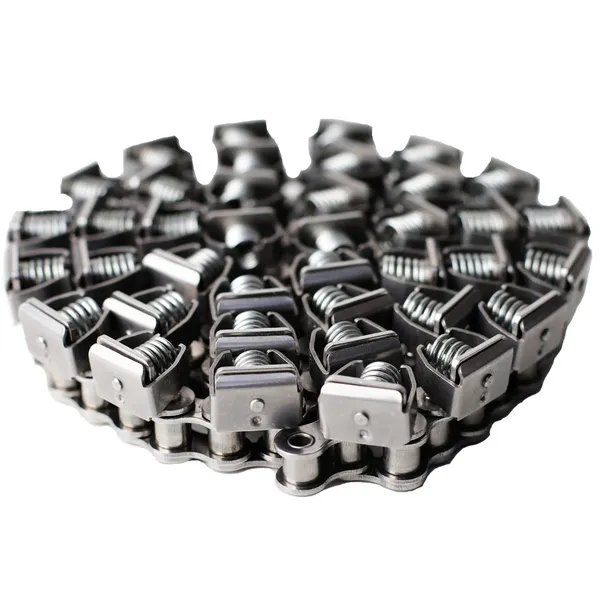
How do you calculate the maximum allowable tension in a conveyor chain?
The maximum allowable tension in a conveyor chain can be calculated using the following steps:
1. Determine the Chain Pitch:
– Measure the distance between the centers of two consecutive chain pins. This measurement is known as the chain pitch and is typically expressed in inches or millimeters.
2. Determine the Chain Speed:
– Determine the speed at which the conveyor chain will be operating. The chain speed is typically expressed in feet per minute or meters per second.
3. Calculate the Chain Pull:
– Determine the total weight or force that needs to be moved by the conveyor chain. This includes the weight of the conveyed material and any additional loads or forces acting on the chain.
4. Calculate the Required Tension:
– Use the following formula to calculate the required tension:
Tension = (Chain Pull × Chain Speed) / (Chain Pitch × Efficiency)
– The efficiency factor accounts for losses due to friction and other factors and is typically expressed as a decimal between 0 and 1.
5. Determine the Maximum Allowable Tension:
– The maximum allowable tension is determined by the manufacturer’s specifications for the conveyor chain. It is important to consult the manufacturer’s documentation or contact them directly to obtain the maximum allowable tension value.
6. Compare the Required Tension and Maximum Allowable Tension:
– Compare the calculated required tension with the maximum allowable tension. The required tension should be less than or equal to the maximum allowable tension to ensure safe and reliable operation of the conveyor chain.
By following these steps and considering the manufacturer’s specifications, you can accurately calculate the maximum allowable tension in a conveyor chain and ensure that it is within the safe operating limits.
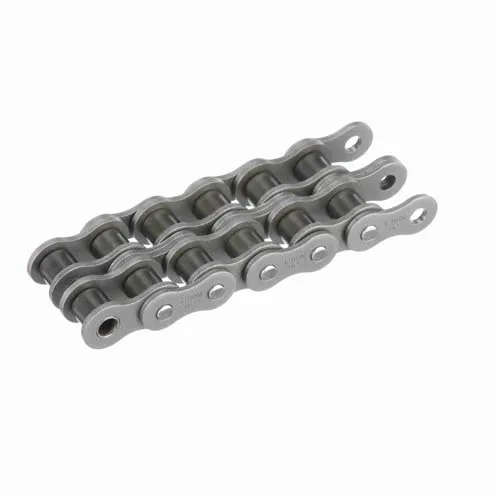
What are the benefits of using stainless steel conveyor chains?
Stainless steel conveyor chains offer several advantages over other types of chains. Here are some of the key benefits:
1. Corrosion Resistance: Stainless steel is highly resistant to corrosion, making it suitable for applications in harsh environments or industries where frequent washdowns or exposure to moisture is required. It does not rust or corrode like other metals, ensuring a longer lifespan and reliable performance.
2. Strength and Durability: Stainless steel chains are known for their high strength and durability. They can withstand heavy loads, high temperatures, and abrasive materials without deformation or breakage. This makes them ideal for heavy-duty applications where reliability and longevity are crucial.
3. Hygienic and Sanitary: Stainless steel is a non-porous material that is easy to clean and maintain. It is resistant to bacteria, mold, and other contaminants, making it suitable for industries with strict hygiene requirements such as food processing, pharmaceuticals, and medical devices. Stainless steel chains can be thoroughly cleaned and sanitized, reducing the risk of product contamination.
4. Temperature Resistance: Stainless steel chains can withstand a wide range of temperatures, both high and low. They exhibit excellent heat resistance, allowing them to maintain their strength and performance even in extreme temperature conditions.
5. Aesthetic Appeal: Stainless steel chains have a sleek and polished appearance, adding a professional and aesthetic touch to the conveyor system. They are commonly used in industries where visual appeal and brand representation are important, such as retail or luxury goods.
6. Chemical Resistance: Stainless steel is resistant to various chemicals, including acids, alkalis, and solvents. This makes it suitable for applications where contact with corrosive substances is likely.
7. Compatibility with High-Speed Applications: Stainless steel chains can withstand high-speed operations without compromising their structural integrity or performance. They maintain their stability and accuracy even at elevated speeds.
Overall, stainless steel conveyor chains offer corrosion resistance, strength, durability, hygienic properties, temperature resistance, aesthetic appeal, chemical resistance, and compatibility with high-speed applications. These benefits make them a preferred choice in industries such as food and beverage, pharmaceuticals, automotive, and manufacturing, where reliability, cleanliness, and performance are essential.
¿Qué es una cadena transportadora y cómo funciona?
Una cadena transportadora es un tipo de cadena mecánica diseñada específicamente para su uso en sistemas de transporte. Está compuesta por una serie de eslabones interconectados que forman un bucle continuo. Los eslabones suelen ser de metal y se unen mediante pasadores u otros elementos de conexión.
Las cadenas transportadoras funcionan transfiriendo potencia y movimiento desde el mecanismo de accionamiento, como un motor o una rueda dentada, al sistema de transporte para mover materiales o productos a lo largo de una trayectoria predeterminada. La cadena se coloca sobre un riel o guías y, al moverse, soporta la carga que se deposita sobre ella.
El funcionamiento de una cadena transportadora implica los siguientes pasos:
- Transmisión de potencia:
El mecanismo de accionamiento transfiere la potencia de rotación a la cadena transportadora, normalmente mediante un motor y piñones. El motor proporciona el par necesario para accionar la cadena.
- Tracción y movimiento:
A medida que el mecanismo de accionamiento hace girar las ruedas dentadas, los dientes de estas se engranan con los eslabones de la cadena transportadora. Esta interacción genera tracción, lo que provoca que la cadena se desplace a lo largo del camino deseado.
- Capacidad de carga:
La carga a transportar se coloca sobre la cadena transportadora. Esta carga puede consistir en productos, materiales u otros artículos. A medida que la cadena se mueve, transporta la carga a lo largo del sistema de transporte, lo que permite un transporte o manipulación eficiente.
- Apoyo y orientación:
La cadena transportadora está soportada y guiada por diversos componentes, como rieles guía, rodillos o bandas de desgaste. Estos componentes garantizan la correcta alineación y el movimiento fluido de la cadena a lo largo del sistema transportador.
Las cadenas transportadoras se utilizan habitualmente en industrias como la manufacturera, la logística, el embalaje y la manipulación de materiales. Ofrecen un método fiable y eficiente para el traslado controlado y automatizado de productos o materiales.


editor by CX 2024-04-03