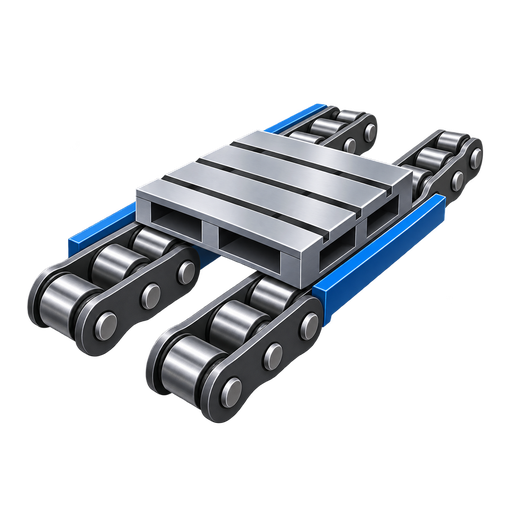
Chain Tension and Take-Up on Pallet Conveyors
Practical engineering guide: Chain Tension and Take-Up on Pallet Conveyors. Selection, interfaces, application checks, maintenance and RFQ inputs.
This guide focuses on how take-up travel manages installation, wear and chain engagement without using excessive tension. It is written for machine builders, maintenance teams and buyers who need a chain selection that can be checked against drawings and the real conveyor rather than a generic product label.
Chain Tension and Take-Up on Pallet Conveyors
Many conveyor problems begin when a correct catalogue component is installed into an interface that was never checked in detail. In a typical project such as a long conveyor with drive and take-up stations at opposite ends, chain pitch, roller contact, rail alignment, sprocket engagement, carrier stiffness, stops and maintenance access all influence the result. A useful engineering review therefore combines model-level data with the operating sequence of the machine.
لماذا هذه القضية مهمة؟
How take-up travel manages installation, wear and chain engagement without using excessive tension affects more than catalogue selection. It changes how the workpiece carrier enters a station, how loads pass into guide rails, how the chain approaches the drive and how the system behaves during stopping or accumulation. If one interface is ignored, the symptom may appear somewhere else: a roller can wear because a rail joint is high, a chain can pull sideways because a pallet stop is offset, or a new chain can run badly because the old sprocket is worn.
The practical objective is not to eliminate every variation in the machine. It is to identify the variables that must be controlled, define which dimensions are fixed by the chain source, and leave unsupported items for explicit RFQ confirmation. This is also why tightening the chain until it has no designed slack is a risky shortcut. It replaces measurable machine data with an assumption and can make a correct-looking part fail at installation.
أربع عمليات تحقق لتحديد أولاً
Take-Up Range
سجل عدد الأسنان أو هندسة المحرك، ومحاذاة العمود، وموضع الالتقاط، وطريقة دخول السلسلة وخروجها من المحرك.
Sprocket Wrap
سجل عدد الأسنان أو هندسة المحرك، ومحاذاة العمود، وموضع الالتقاط، وطريقة دخول السلسلة وخروجها من المحرك.
Return Support
حدد الحالة القابلة للقياس، والواجهة المثبتة، وفحص القبول الذي ينطبق على هذا الجزء من الناقل.
Thermal/Length Changes
حدد الحالة القابلة للقياس، والواجهة المثبتة، وفحص القبول الذي ينطبق على هذا الجزء من الناقل.
ابدأ بالهندسة الدقيقة للسلسلة
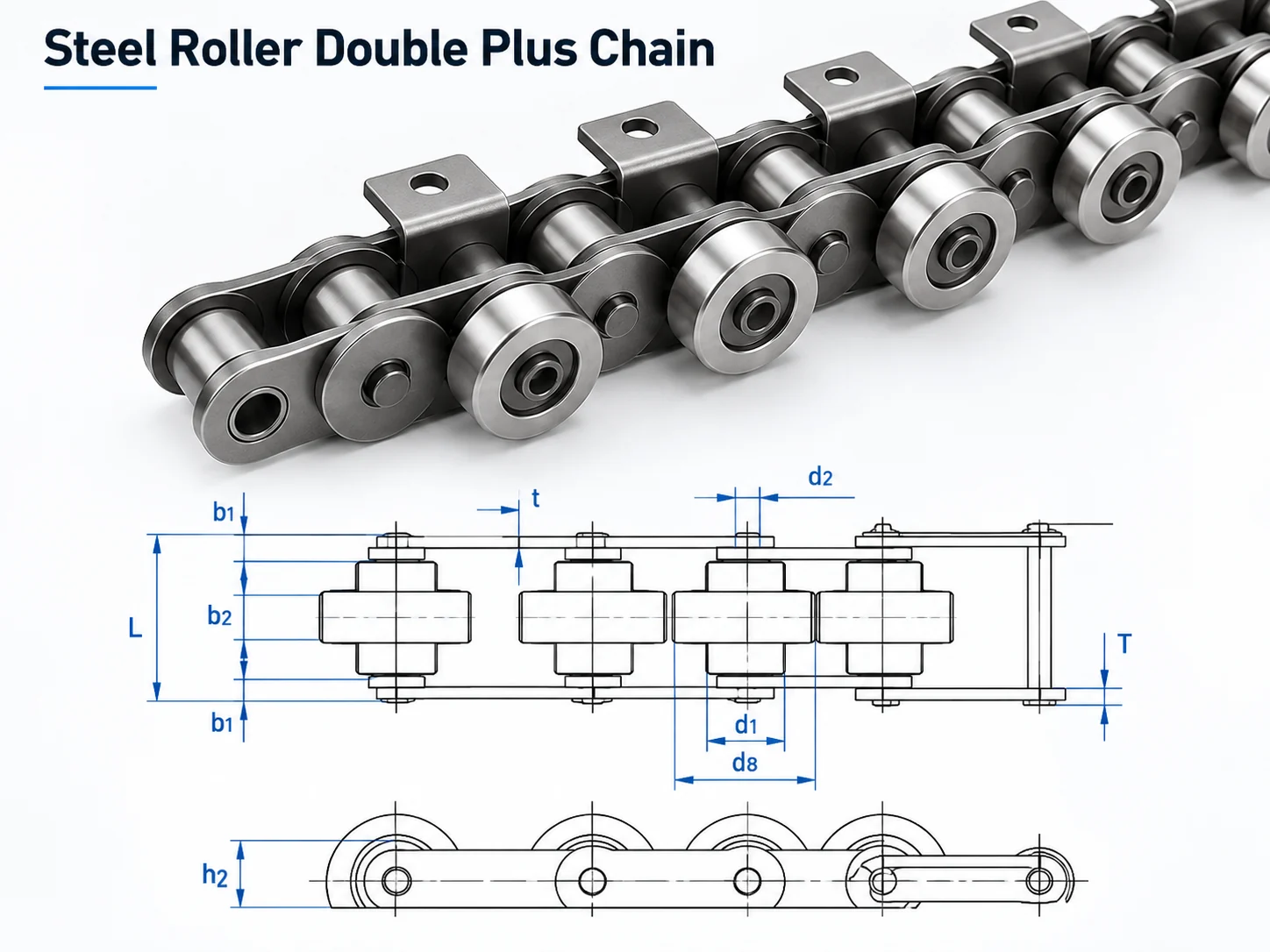
عند توفر رقم الطراز، استخدم مواصفات الطراز الدقيقة والرسم المطابق. قارن المسافة بين الدبابيس، وأقطار البكرات، والعرض الداخلي، وقطر الدبوس وطوله، وارتفاع الصفيحة وسماكتها، وأي أبعاد للبكرات الجانبية أو البكرات الكبيرة أو الدبابيس المجوفة التي تتصل بالناقل. في حال عدم معرفة الرمز، قم بقياس السلسلة المركبة بشكل منهجي. يُعد قياس المسافة بين الدبابيس عبر عدة دبابيس أكثر موثوقية من قراءة فجوة واحدة مهترئة، ويجب أن تُظهر الصور المظهر الجانبي، وترتيب البكرات، وتلامس العجلة المسننة والسكك الحديدية.
لا تستخدم قوة الشد كقيمة لحمولة المنصة. قيم قوة الشد المذكورة في الكتالوج هي خصائص اختبار المواد/المكونات. تشمل ظروف تشغيل الناقل أيضًا طول الخط، وعدد خيوط السلسلة، وعدد الحوامل، والتسارع، والصدمات، والاحتكاك، والتشحيم، وحجم العجلة المسننة، وحالة التآكل، ومعامل الأمان المطلوب. لا يمكن التحقق من السلسلة لأي نظام إلا بعد فهم هذه الظروف.

سير عمل الاختيار
- Take-Up Range: قارن الحالة المطلوبة مع الرسم التخطيطي الدقيق للسلسلة أو تصميم النظام وسجل أي أسئلة مفتوحة لتأكيد طلب عرض الأسعار.
- Sprocket Wrap: قارن الحالة المطلوبة مع الرسم التخطيطي الدقيق للسلسلة أو تصميم النظام وسجل أي أسئلة مفتوحة لتأكيد طلب عرض الأسعار.
- Return Support: قارن الحالة المطلوبة مع الرسم التخطيطي الدقيق للسلسلة أو تصميم النظام وسجل أي أسئلة مفتوحة لتأكيد طلب عرض الأسعار.
- Thermal/Length Changes: قارن الحالة المطلوبة مع الرسم التخطيطي الدقيق للسلسلة أو تصميم النظام وسجل أي أسئلة مفتوحة لتأكيد طلب عرض الأسعار.
- الناقل والجهة الموكلة إليه: سجل كتلة الناقل المحمل، وعدد الناقلات، وسرعة الخط، وعدد مرات البدء في الساعة، ونمط التراكم، وأي ميل أو انتقال رأسي.
- القيادة والعودة: تأكيد بيانات العجلة المسننة، ومحاذاة العمود، ونطاق الشد، ودعامة الإرجاع، وإمكانية الوصول إلى التشحيم.
- شروط الإفراج: قم بإدراج أي حقل لا تذكره البيانات الفنية - مثل درجة المواد الخاصة، أو الطلاء، أو الحمل المسموح به للنظام، أو التصنيف البيئي - كبند تأكيد في طلب عرض الأسعار بدلاً من تقديره.
تكامل الأنظمة
بعد تحديد السلسلة، تحقق من كيفية نقل الناقل للحمل إلى باقي أجزاء الآلة. يجب أن يدعم دليل السلسلة أو سكة التآكل سطح البكرة المقصود وأن يظل متصلاً عبر الوصلات. يجب أن تكون المسافة المركزية بين الخيوط المتوازية محددة وأن يكون توقيت الحركة متزامنًا. يجب أن تلامس نقاط التوقف سطح المنصة المصمم، وليس لوحة جانب السلسلة. تحتاج عمليات النقل والرفع العرضية إلى دعم كافٍ حتى لا يسقط الناقل في فجوة أو يهبط على حافة دبوس/لوحة.
بالنسبة للأنظمة التي تتراكم فيها المواد، يجب فصل عملية النقل عن عملية التوقف. قد تستمر السلسلة في الحركة أثناء توقف الناقل، ولكن لا يزال من الضروري فحص قوة التوقف، وطول قائمة الانتظار، وتسلسل إعادة التشغيل، والاحتكاك الموضعي. أما بالنسبة للأنظمة التي تحدد موضع قطعة العمل للمعالجة، فيُفضل استخدام ميزات تحديد المواقع المخصصة عندما تكون دقة التكرار المطلوبة أعلى مما يوفره النقل العادي بواسطة السيور الناقلة.
التشغيل والصيانة
قم بتشغيل ناقل جديد أو مُصلح بسرعة منخفضة أولاً. حرّك عدة دورات كاملة للسلسلة وراقب حركة الدفع والعودة وانتقالات القضبان والتوقفات وعمليات النقل. استمع إلى الأصوات التي تتكرر مرة واحدة لكل دورة للسلسلة أو مرة واحدة لكل دورة للعجلة المسننة، لأن هذه الأنماط تساعد في تحديد الوصلات الضيقة أو تلف البكرات أو وجود خلل في القضبان أو العجلة المسننة. مع منصات قطع العمل الصلبة، انتبه إلى أي انحراف عبر الخيوط المتوازية؛ حتى اختلافات التوقيت الصغيرة يمكن أن تُحمّل جانبًا واحدًا من الناقل.
ينبغي أن تتبع الصيانة الاتجاهات بدلاً من انتظار حدوث عطل. سجّل فحوصات الاستطالة أو الطول باستخدام الطريقة المعتمدة، وافحص البكرات للتأكد من دورانها بحرية وعدم وجود أسطح مستوية غير طبيعية، وابحث عن علامات التلامس الجانبية المصقولة التي تشير إلى عدم المحاذاة، وافحص أسنان العجلة المسننة وتحقق من وضعية الشد. يجب أن تتناسب فترات التشحيم مع بيئة التشغيل وإرشادات الشركة المصنعة للسلسلة؛ فزيادة كمية المُشحِّم ليست بالضرورة أفضل إذا كانت تجذب الملوثات الكاشطة أو تدخل منطقة المعالجة.
قائمة التحقق من طلب عرض الأسعار
لطلب استبدال، يُرجى إرسال رمز الطراز (إن كان واضحًا)، وقياس المسافة بين البكرات، وترتيب البكرات، وعرض السلسلة، وارتفاع الصفيحة، وأبعاد الدبابيس، وصورة للجانب، وصورة توضح تلامس العجلة المسننة مع السكة. أما بالنسبة لنظام جديد، فيُرجى إضافة طول الناقل، وحجم الحامل، والوزن المُحمّل، وعدد الخيوط، والمسافة بين الخيوط، والسرعة، ونقاط البدء/التوقف، وطول منطقة التخزين المؤقت، والظروف البيئية، وبلد الوجهة. تُتيح هذه التفاصيل فصل عملية مطابقة السلسلة عن حساب الحمل الكامل للناقل.
Use take-up to control slack, not to force alignment
Take-up should provide the travel needed for installation, wear and thermal or length changes without turning the chain into a tightly stretched belt. Excess tension can increase bearing and rail loads while doing little to correct misalignment.
Check the drive/return arrangement, available take-up travel, strand balance and return support. On paired chains, compare take-up position on both sides and investigate unequal movement before compensating with extra tension.
قياس الواجهة
استخدم أبعادًا متعددة الخطوات، وهندسة المنظر النهائي، وتفاصيل العجلة المسننة/السكك الحديدية عندما يجب أن يتناسب البديل مع آلة موجودة.
صف الواجب
يشمل ذلك كتلة الناقل المحملة، والسرعة، والبدايات، وسلوك التراكم أو الفهرسة، وبيئة التشغيل.
اختبر أسوأ الحالات
يتم التعامل مع شركات النقل التمثيلية وأكثر حالات الانتظار والتوقف والتحويل وإعادة التشغيل تطلبًا بدلاً من السفر بدون حمولة فقط.
أبقِ العناصر المفتوحة واضحة
إذا لم يتم ذكر مادة أو طلاء أو تفاوت خاص أو حاجة إلى وثائق أو حمل نظام مسموح به، فيرجى تأكيد ذلك في الاستفسار.
الأسئلة الشائعة
هل يمكنني اختيار بديل بناءً على الملعب فقط؟
For chain tension and take-up on pallet conveyors, pitch is only the first filter. Confirm roller geometry, inner width, pins, plates and any side-roller or hollow-pin features against the installed conveyor before treating two chains as interchangeable.
هل تعني قيمة الشد الأعلى أنه يمكنني حمل هذا الحمل على المنصة؟
For chain tension and take-up on pallet conveyors, do not convert tensile strength directly into pallet payload. Service load depends on strand count, friction, acceleration, stop impact, sprockets, rails and the safety margin used for the machine.
هل يمكن لصورة عائلية نموذجية أن تثبت الطراز الدقيق؟
لا. يمكن أن تساعد صورة عائلية نموذجية في شرح عملية البناء، ولكن يجب أن تأتي هوية النموذج وأبعاده من المواصفات الفنية الخاصة بالنموذج أو الرسم أو بيانات التصنيع المؤكدة.
ما هي المعلومات التي تسرّع عملية الحصول على عرض سعر؟
For an RFQ related to chain tension and take-up on pallet conveyors, send the model code or dimensional sketch, clear photographs, conveyor layout, loaded carrier information, quantity and delivery country so the review starts from reproducible machine data.
Key engineering variables for Chain Tension and Take-Up on Pallet Conveyors
ينبغي ربط القرار بمدخلات الآلة القابلة للقياس ورسم السلسلة الدقيق بدلاً من تصنيف عام. سجّل حالة التشغيل في سطر واحد: ما الذي يحمله الناقل، وسرعته، ومكان توقفه، والظرف الذي استدعى المراجعة. دوّن الأبعاد والملاحظات التي يمكن لمهندس آخر إعادة إنتاجها.
| مدخل | ما الذي يجب تسجيله؟ | لماذا يُعد ذلك مهماً؟ |
|---|---|---|
| الناقل/الحمولة | الكتلة المحملة، مركز الثقل، نقطة التلامس السفلية، وعدد الحوامل | الدعم والاحتكاك وسلوك التوقف |
| حركة | السرعة، والبدايات، والتوقفات، والتراكم، والفهرسة | الطلب الديناميكي وتوقيت العمليات |
| مسار السلسلة | المسافة بين الأسلاك، والبكرات، والمسافة بين الخيوط، والقضبان | التوافق الميكانيكي والتتبع |
| يقود | أسنان العجلة المسننة، والمحاذاة، والشد، وموضع القيادة | المشاركة وتوزيع التوتر |
| بيئة | حدود درجة الحرارة والغبار والرطوبة والتنظيف والتشحيم | خيارات المواد والصيانة |
موارد ذات صلة بالمنتجات والاختيارات
استخدم كتالوج سلاسل نقل البضائع على المنصات لمقارنة العائلات و سير عمل اختيار الهندسة when machine data is incomplete. For adjacent component context, see chain tensioner placement guidance.
What to include with an enquiry about Chain Tension and Take-Up on Pallet Conveyors
حدد نوع السلسلة المركبة أو المقترحة، وكميتها، وتطبيقها، وناقلها/حمولتها، وأبعادها الرئيسية، وظروف التشغيل التي يجب أن يحلها الجزء الجديد. أرفق صورًا أو رسومات توضيحية عندما يكون الرمز الحالي غير واضح، واحرص على إبقاء المواد والوثائق ومتطلبات التسليم غير المكتملة ظاهرة للعيان.
Turn symptoms into measured maintenance data
Maintenance decisions become more reliable when the same points are measured at each inspection. Mark a repeatable chain section, measure elongation over several pitches, record take-up position and inspect the corresponding sprocket teeth and rail contact. Note whether wear is even on both strands, whether rollers rotate freely and whether the carrier tracks centrally through transfers. For noise or vibration complaints, record the operating state when the symptom occurs: empty running, loaded transfer, accumulation, restart or a specific station. That separates chain wear from alignment, transfer impact, loose guarding or a damaged carrier. Lubrication changes should be tied to the chain construction and environment rather than used as a universal response to noise.
يقيس
Several-pitch elongation, roller rotation, take-up position and strand-to-strand difference.
Inspect
Sprocket tooth profile, rail wear, transfer impact points, fasteners and carrier underside contact.
Record
Operating state, load, queue condition, temperature/contamination and the exact location of the symptom.
Decide
Correct alignment or interface faults before replacing chain solely because a symptom is present.
Set take-up travel from the complete conveyor layout
Take-up should control slack without forcing the chain to run as if it were a belt. Review the full chain path, drive location, return support, transfer points and expected wear adjustment range before setting the take-up. A setting that looks acceptable while the conveyor is empty can become unsuitable after carriers accumulate or after the chain reaches operating temperature.
Commission in stages: run empty at low speed, add representative carriers, exercise normal stop and accumulation sequences, and observe the slack side near the drive and take-up. Record the final reference position so later maintenance teams can distinguish normal adjustment from a rapid change that may indicate wear, alignment problems or a damaged component.
Measure the interfaces that control fit and tracking
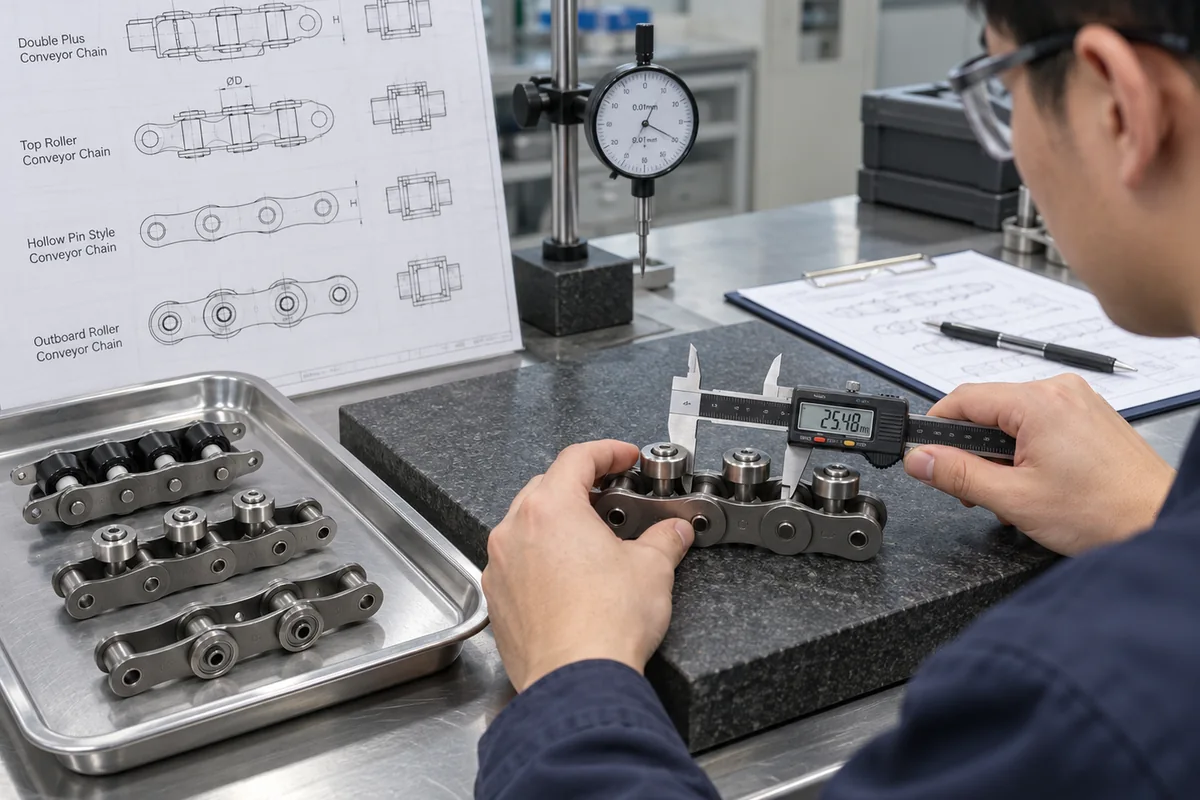
For Chain Tension and Take-Up on Pallet Conveyors, start with a dimensioned record of the installed conveyor. Measure several pitches rather than one joint, then add roller or pin geometry, plate dimensions, strand centers and the rail/contact section. At the drive, record sprocket tooth count, bore or shaft arrangement and visible tooth wear. At stations, identify stop faces, locators, transfer gaps and the carrier surfaces that actually touch the conveyor.
Repeat the review with a representative loaded pallet at safe low speed. Watch whether the carrier stays square, whether both strands share the load and whether any symptom begins at the same fixed location. A change tied to one rail joint, stop or sprocket should be corrected at that interface before chain tension or a new chain is used as the remedy. Keep photographs of the measurement reference points with the RFQ so an engineer can reproduce the comparison against the proposed drawing.
Chain geometry
Several-pitch length plus roller, pin, plate and attachment dimensions.
Carrier geometry
Loaded mass, underside supports, datums, center of gravity and stop faces.
Drive geometry
Sprocket, shaft, center distance and available take-up travel.
Fixed locations
Rail joints, transfers, stops and points with recurring wear or impact.
Use take-up position as a diagnostic measurement
Record the take-up position on both sides of a paired conveyor and note the available remaining travel. Compare the reading over time rather than tightening until the chain “feels” taut. Conveyor chain needs controlled slack for articulation and sprocket entry; treating it like a stretched belt can increase bearing and rail loads.
Observe the return strand and chain entry at the drive. Excessive sag, whipping or tooth climbing indicates a problem, but the cause may be wear, misalignment or insufficient support rather than simply low tension. Unequal take-up positions between strands are especially useful clues to rail or drive timing issues.
After adjustment, run representative carriers through acceleration, stops and the longest queue. Confirm that sprocket engagement remains smooth and that carriers do not skew. Include take-up travel and drive/return layout in a new-system RFQ so adjustment range is considered before installation.