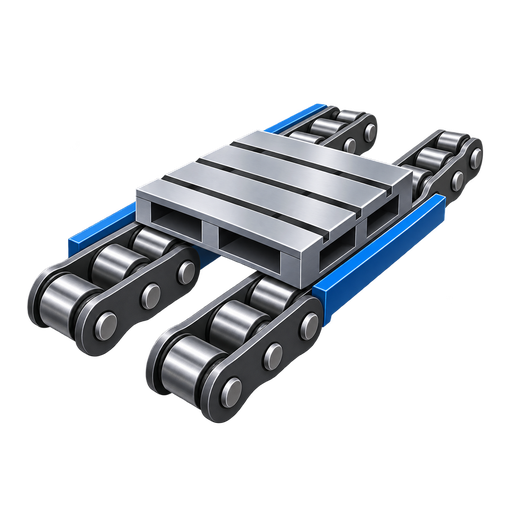
Guide Rails and Wear Strips for Pallet Chain Conveyors
Practical engineering guide: Guide Rails and Wear Strips for Pallet Chain Conveyors. Selection, interfaces, application checks, maintenance and RFQ inputs.
This guide focuses on how rail support, surface finish, alignment and transitions influence rollers and chain tracking. It is written for machine builders, maintenance teams and buyers who need a chain selection that can be checked against drawings and the real conveyor rather than a generic product label.
Guide Rails and Wear Strips for Pallet Chain Conveyors
A pallet conveyor looks simple from a distance, but its reliability depends on several interfaces working at the same time. In a typical project such as a long assembly conveyor with several bolted rail sections, chain pitch, roller contact, rail alignment, sprocket engagement, carrier stiffness, stops and maintenance access all influence the result. A useful engineering review therefore combines model-level data with the operating sequence of the machine.

یہ مسئلہ کیوں اہم ہے۔
How rail support, surface finish, alignment and transitions influence rollers and chain tracking affects more than catalogue selection. It changes how the workpiece carrier enters a station, how loads pass into guide rails, how the chain approaches the drive and how the system behaves during stopping or accumulation. If one interface is ignored, the symptom may appear somewhere else: a roller can wear because a rail joint is high, a chain can pull sideways because a pallet stop is offset, or a new chain can run badly because the old sprocket is worn.
The practical objective is not to eliminate every variation in the machine. It is to identify the variables that must be controlled, define which dimensions are fixed by the chain source, and leave unsupported items for explicit RFQ confirmation. This is also why creating a step at a rail joint that repeatedly impacts a roller is a risky shortcut. It replaces measurable machine data with an assumption and can make a correct-looking part fail at installation.
پہلے وضاحت کرنے کے لیے چار چیک
Rail Material
Record the relevant diameter, offset, contact surface, clearance and visible wear so the running interface can be checked.
Straightness
قابل پیمائش حالت، نصب شدہ انٹرفیس اور قبولیت کی جانچ کو بیان کریں جو کنویئر کے اس حصے پر لاگو ہوتا ہے۔
Joint Transitions
قابل پیمائش حالت، نصب شدہ انٹرفیس اور قبولیت کی جانچ کو بیان کریں جو کنویئر کے اس حصے پر لاگو ہوتا ہے۔
Lubrication Compatibility
حقیقی آپریٹنگ ماحول اور دیکھ بھال کی رکاوٹوں کو بیان کریں تاکہ مکمل کنویئر کے لیے مواد اور چکنا کرنے کے انتخاب کا جائزہ لیا جائے۔
عین مطابق سلسلہ جیومیٹری کے ساتھ شروع کریں۔
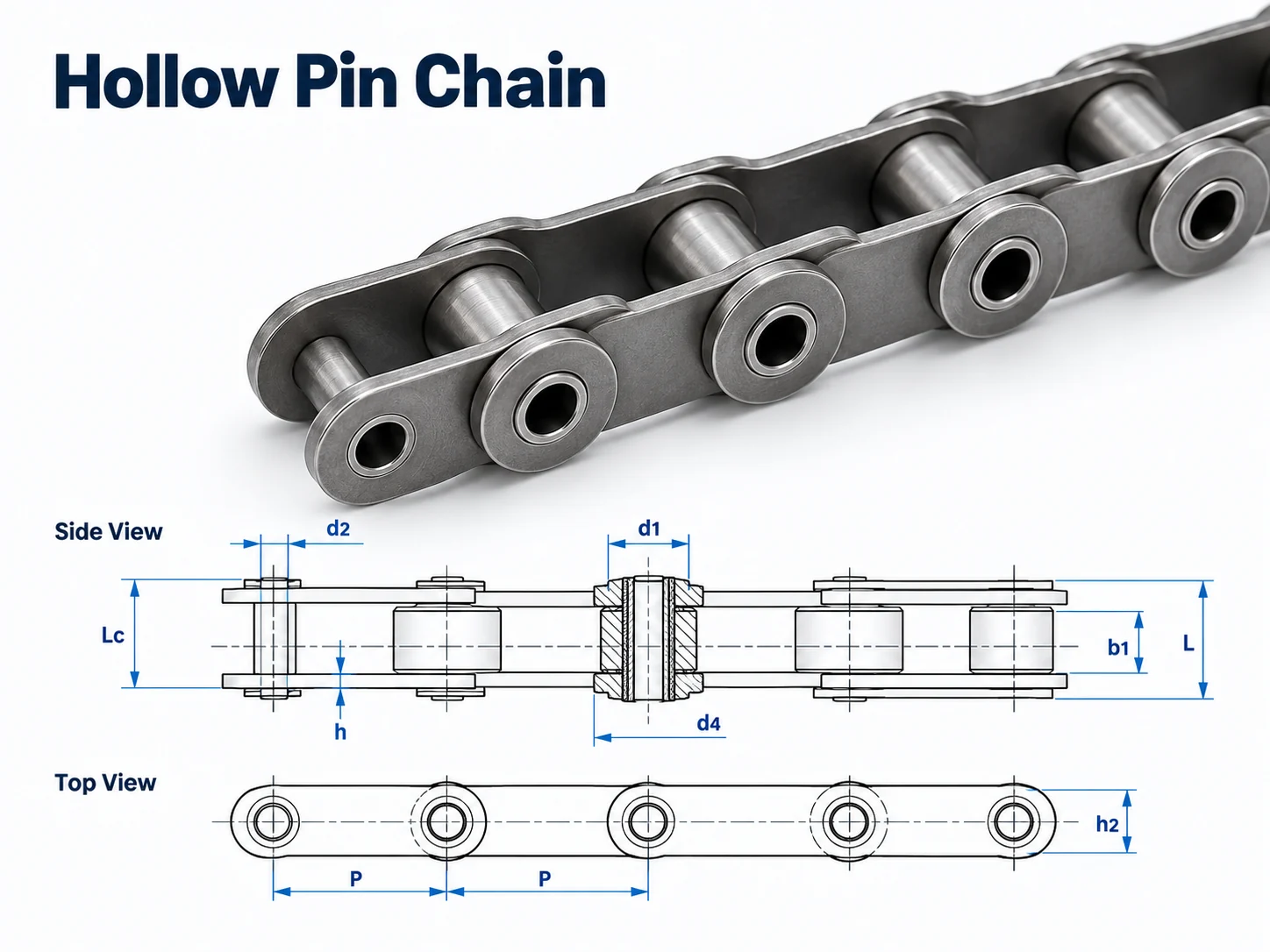
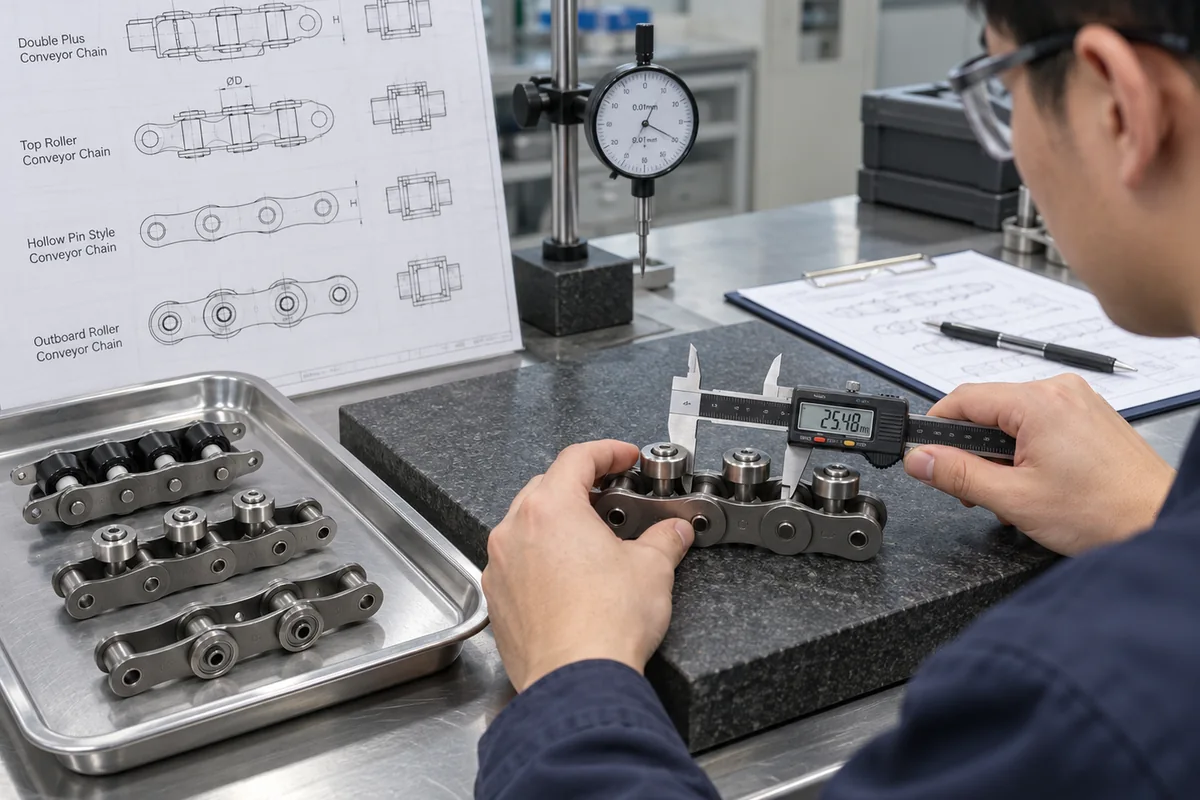
جب کوئی ماڈل نمبر دستیاب ہو، تو ماڈل کی صحیح تفصیلات اور مماثل ڈرائنگ استعمال کریں۔ پچ، رولر قطر، اندرونی چوڑائی، پن کا قطر اور لمبائی، پلیٹ کی اونچائی اور موٹائی، اور کسی بھی سائیڈ رولر، بڑے رولر یا کھوکھلی پن کے طول و عرض کا موازنہ کریں جو کنویئر کے ساتھ انٹرفیس کرتے ہیں۔ کوڈ نامعلوم ہونے پر، نصب شدہ سلسلہ کو منظم طریقے سے پیمائش کریں۔ کئی پنوں کے درمیان پچ کی پیمائش ایک واحد پہنے ہوئے خلا کو پڑھنے سے زیادہ قابل اعتماد ہے، اور تصویروں میں سائیڈ پروفائل، رولر ترتیب، سپروکیٹ اور ریل کا رابطہ ظاہر ہونا چاہیے۔
ٹینسائل طاقت کو پیلیٹ پے لوڈ کے طور پر استعمال نہ کریں۔ کیٹلاگ ٹینسائل کے اعداد و شمار مواد/جزو کی جانچ کی خصوصیات ہیں۔ کنویئر کے کام کرنے کے حالات میں لائن کی لمبائی، چین کے تاروں کی تعداد، کیریئر کی گنتی، سرعت، جھٹکا، رگڑ، چکنا، سپروکیٹ کا سائز، پہننے کی حالت اور مطلوبہ حفاظتی عنصر بھی شامل ہوتا ہے۔ ان شرائط کو سمجھنے کے بعد ہی کسی سسٹم کے لیے سلسلہ کی تصدیق کی جا سکتی ہے۔
سلیکشن ورک فلو
- Rail Material: عین مطابق چین ڈرائنگ یا سسٹم لے آؤٹ کے ساتھ مطلوبہ حالت کا موازنہ کریں اور RFQ کی تصدیق کے لیے کوئی کھلا سوال ریکارڈ کریں۔
- Straightness: عین مطابق چین ڈرائنگ یا سسٹم لے آؤٹ کے ساتھ مطلوبہ حالت کا موازنہ کریں اور RFQ کی تصدیق کے لیے کوئی کھلا سوال ریکارڈ کریں۔
- Joint Transitions: عین مطابق چین ڈرائنگ یا سسٹم لے آؤٹ کے ساتھ مطلوبہ حالت کا موازنہ کریں اور RFQ کی تصدیق کے لیے کوئی کھلا سوال ریکارڈ کریں۔
- Lubrication Compatibility: عین مطابق چین ڈرائنگ یا سسٹم لے آؤٹ کے ساتھ مطلوبہ حالت کا موازنہ کریں اور RFQ کی تصدیق کے لیے کوئی کھلا سوال ریکارڈ کریں۔
- کیریئر اور ڈیوٹی: ریکارڈ لوڈڈ کیریئر ماس، کیریئرز کی تعداد، لائن کی رفتار، فی گھنٹہ شروع ہوتا ہے، جمع کرنے کا نمونہ اور کوئی بھی مائل یا عمودی منتقلی۔
- ڈرائیو اور واپسی: سپروکیٹ ڈیٹا، شافٹ الائنمنٹ، ٹیک اپ رینج، ریٹرن سپورٹ اور چکنا رسائی کی تصدیق کریں۔
- رہائی کی شرط: کسی بھی فیلڈ کی فہرست بنائیں جسے تکنیکی ڈیٹا میں بیان نہیں کیا گیا ہے — جیسے کہ ایک خاص میٹریل گریڈ، کوٹنگ، قابل اجازت سسٹم لوڈ یا ماحولیاتی درجہ بندی — اس کا تخمینہ لگانے کے بجائے RFQ تصدیقی آئٹم کے طور پر۔
سسٹم انضمام
زنجیر کی شناخت ہونے کے بعد، چیک کریں کہ کنویئر کس طرح بوجھ کو باقی مشین میں منتقل کرتا ہے۔ گائیڈ یا پہننے والی ریل کو مطلوبہ رولر کی سطح کو سہارا دینا چاہیے اور جوڑوں کے ذریعے مسلسل رہنا چاہیے۔ متوازی اسٹرینڈز کے درمیان مخصوص فاصلہ اور مطابقت پذیر ڈرائیو ٹائمنگ ہونی چاہیے۔ اسٹاپس کو ڈیزائن کردہ پیلیٹ چہرے سے رابطہ کرنا چاہئے، چین کی طرف والی پلیٹ سے نہیں۔ کراس ٹرانسفر اور لفٹوں کو کافی مدد کی ضرورت ہوتی ہے تاکہ کیریئر کسی خلا میں نہ گرے یا پن/پلیٹ کے کنارے پر نہ اترے۔
جمع ہونے والے نظاموں کے لیے، ٹرانسپورٹ کو رکنے سے الگ کریں۔ زنجیر چلتی رہ سکتی ہے جب تک کہ کیریئر ہولڈ ہو، لیکن اسٹاپ فورس، قطار کی لمبائی، دوبارہ شروع کرنے کی ترتیب اور مقامی رگڑ کو ابھی بھی چیک کرنے کی ضرورت ہے۔ ایسے سسٹمز کے لیے جو پروسیسنگ کے لیے ورک پیس کی جگہ رکھتے ہیں، جب مطلوبہ ریپیٹ ایبلٹی عام کنویئر ٹرانسپورٹ فراہم کر سکتی ہے اس سے زیادہ سخت ہونے پر مخصوص لوکیشن فیچر استعمال کریں۔
کمیشننگ اور دیکھ بھال
پہلے کم رفتار پر ایک نیا یا مرمت شدہ کنویئر کمیشن کریں۔ کئی مکمل چین سرکٹس کو جوڑیں اور ڈرائیو، ریٹرن، ریل ٹرانزیشن، اسٹاپس اور ٹرانسفر کا مشاہدہ کریں۔ ایسی آوازوں کو سنیں جو ایک بار فی چین ریوولیشن یا ایک بار فی اسپراکٹ گردش میں دہرائی جاتی ہیں کیونکہ یہ پیٹرن تنگ جوائنٹ، رولر ڈیمیج، لوکل ریل سٹیپ یا سپروکیٹ ایشو کو الگ کرنے میں مدد کرتے ہیں۔ سخت ورک پیس پیلیٹس کے ساتھ، متوازی کناروں پر جھکاؤ کے لیے دیکھیں۔ یہاں تک کہ چھوٹے وقت کے اختلافات کیریئر کے ایک طرف لوڈ کر سکتے ہیں.
بحالی کو ناکامی کا انتظار کرنے کے بجائے رجحانات کو ٹریک کرنا چاہئے۔ منظور شدہ طریقہ کا استعمال کرتے ہوئے لمبائی یا لمبائی کی جانچ پڑتال ریکارڈ کریں، مفت گردش اور غیر معمولی فلیٹوں کے لیے رولرس کا معائنہ کریں، پالش شدہ سائیڈ کنٹیکٹ نشانات دیکھیں جو غلط ترتیب کی تجویز کرتے ہیں، سپروکیٹ دانتوں کا معائنہ کریں اور ٹیک اپ پوزیشن کی تصدیق کریں۔ چکنا کرنے کے وقفوں کو آپریٹنگ ماحول اور چین مینوفیکچرر کی رہنمائی کی عکاسی کرنی چاہیے۔ زیادہ چکنا کرنے والا خود بخود بہتر نہیں ہوتا ہے اگر یہ کھرچنے والی آلودگی کو راغب کرتا ہے یا عمل کے علاقے میں داخل ہوتا ہے۔
RFQ چیک لسٹ
متبادل کی درخواست کے لیے، ماڈل کوڈ بھیجیں اگر قابل پڑھا جائے، ناپی گئی پچ، رولر ترتیب، زنجیر کی چوڑائی، پلیٹ کی اونچائی، پن کے طول و عرض، سائڈ پروفائل کی تصویر اور سپروکیٹ/ریل کے رابطے کی تصویر۔ ایک نئے سسٹم کے لیے، کنویئر کی لمبائی، کیریئر کا سائز اور بھری ہوئی مقدار، اسٹرینڈز کی تعداد، اسٹرینڈ اسپیسنگ، رفتار، شروع/اسٹاپ، بفر کی لمبائی، ماحولیاتی حالات اور منزل کا ملک شامل کریں۔ یہ تفصیلات مکمل کنویئر ڈیوٹی کیلکولیشن سے چین میچ کو الگ کرنا ممکن بناتی ہیں۔
Use contact marks to tune the guide rail
The rail should support the intended roller or chain surface continuously through joints, transfers and changes in elevation. Polished marks, edge wear or localized scuffing show where the real load path differs from the drawing.
Check rail straightness, joint steps, parallelism between strands and the transition into sprockets. Material and lubrication decisions should also consider contamination and maintenance access. Correct rail geometry before using tension or extra lubrication to mask a tracking problem.
انٹرفیس کی پیمائش کریں۔
جب کسی متبادل کے لیے موجودہ مشین میں فٹ ہونا ضروری ہے تو کئی پچ ڈائمینشنز، اینڈ ویو جیومیٹری اور سپروکیٹ/ریل کی تفصیلات استعمال کریں۔
فرض بیان کریں۔
لوڈڈ کیریئر ماس، رفتار، آغاز، جمع یا اشاریہ سازی کا رویہ اور آپریٹنگ ماحول شامل کریں۔
بدترین کیس کی جانچ کریں۔
نمائندہ کیریئرز کے ساتھ کمیشن اور صرف بغیر بوجھ کے سفر کے بجائے سب سے زیادہ مطالبہ کرنے والی قطار، رکنے، منتقلی یا دوبارہ شروع کرنے کی حالت۔
کھلی اشیاء کو واضح رکھیں
اگر مواد، کوٹنگ، خصوصی رواداری، دستاویزات کی ضرورت یا قابل اجازت سسٹم بوجھ بیان نہیں کیا گیا ہے، تو انکوائری میں اس کی تصدیق کریں۔
اکثر پوچھے گئے سوالات
کیا میں اکیلے پچ سے متبادل منتخب کرسکتا ہوں؟
For guide rails and wear strips for pallet chain conveyors, pitch is only the first filter. Confirm roller geometry, inner width, pins, plates and any side-roller or hollow-pin features against the installed conveyor before treating two chains as interchangeable.
کیا زیادہ ٹینسائل ویلیو کا مطلب ہے کہ میں اس بوجھ کو پیلیٹ پر اٹھا سکتا ہوں؟
For guide rails and wear strips for pallet chain conveyors, do not convert tensile strength directly into pallet payload. Service load depends on strand count, friction, acceleration, stop impact, sprockets, rails and the safety margin used for the machine.
کیا ایک نمائندہ خاندانی تصویر صحیح ماڈل ثابت کر سکتی ہے؟
نہیں، ایک نمائندہ خاندانی تصویر تعمیر کی وضاحت میں مدد کر سکتی ہے، لیکن ماڈل کی شناخت اور طول و عرض ماڈل کے لیے مخصوص تکنیکی تفصیلات، ڈرائنگ یا تصدیق شدہ مینوفیکچرنگ ڈیٹا سے آنا چاہیے۔
کون سی معلومات کوٹیشن کو تیز کرتی ہے؟
For an RFQ related to guide rails and wear strips for pallet chain conveyors, send the model code or dimensional sketch, clear photographs, conveyor layout, loaded carrier information, quantity and delivery country so the review starts from reproducible machine data.
Key engineering variables for Guide Rails and Wear Strips for Pallet Chain Conveyors
فیصلہ ایک عام فیملی لیبل کے بجائے پیمائش کے قابل مشین ان پٹ اور عین مطابق چین ڈرائنگ سے منسلک ہونا چاہیے۔ آپریٹنگ کیس کو ایک لائن میں ریکارڈ کریں: کنویئر کیا لے جاتا ہے، کتنی تیزی سے حرکت کرتا ہے، کہاں رکتا ہے اور کس حالت نے جائزہ کو متحرک کیا۔ طول و عرض اور مشاہدات کو کیپچر کریں ایک اور انجینئر دوبارہ پیش کر سکتا ہے۔
| ان پٹ | کیا ریکارڈ کرنا ہے۔ | یہ کیوں اہمیت رکھتا ہے۔ |
|---|---|---|
| کیریئر/لوڈ | بھری ہوئی ماس، کشش ثقل کا مرکز، زیریں رابطہ اور کیریئر کی گنتی | سپورٹ، رگڑ اور رویہ روکنا |
| حرکت | رفتار، آغاز، رک جانا، جمع اور اشاریہ بندی | متحرک مطالبہ اور عمل کا وقت |
| زنجیر کا راستہ | پچ، رولرس، اسٹرینڈ اسپیسنگ اور ریل | مکینیکل فٹ اور ٹریکنگ |
| ڈرائیو | سپروکیٹ دانت، سیدھ، ٹیک اپ اور ڈرائیو پوزیشن | مصروفیت اور تناؤ کی تقسیم |
| ماحولیات | درجہ حرارت، دھول، نمی، صفائی اور چکنا کرنے کی حد | مواد اور دیکھ بھال کے انتخاب |
متعلقہ مصنوعات اور انتخاب کے وسائل
استعمال کریں۔ pallet conveyor سلسلہ کیٹلاگ خاندانوں اور خاندانوں کا موازنہ کرنا انجینئرنگ سلیکشن ورک فلو جب مشین کا ڈیٹا نامکمل ہو۔
What to include with an enquiry about Guide Rails and Wear Strips for Pallet Chain Conveyors
انسٹال یا مجوزہ چین فیملی، مقدار، ایپلیکیشن، کیریئر/لوڈ، کلیدی جہتوں اور آپریٹنگ کنڈیشنز کی شناخت کریں جسے نئے حصے کو حل کرنا ہوگا۔ جب موجودہ کوڈ غیر یقینی ہو تو تصویریں یا ڈرائنگ منسلک کریں اور کھلے مواد، دستاویزات یا ترسیل کے تقاضوں کو دکھائی دیں۔
Turn symptoms into measured maintenance data
Maintenance decisions become more reliable when the same points are measured at each inspection. Mark a repeatable chain section, measure elongation over several pitches, record take-up position and inspect the corresponding sprocket teeth and rail contact. Note whether wear is even on both strands, whether rollers rotate freely and whether the carrier tracks centrally through transfers. For noise or vibration complaints, record the operating state when the symptom occurs: empty running, loaded transfer, accumulation, restart or a specific station. That separates chain wear from alignment, transfer impact, loose guarding or a damaged carrier. Lubrication changes should be tied to the chain construction and environment rather than used as a universal response to noise.
پیمائش کریں۔
Several-pitch elongation, roller rotation, take-up position and strand-to-strand difference.
Inspect
Sprocket tooth profile, rail wear, transfer impact points, fasteners and carrier underside contact.
Record
Operating state, load, queue condition, temperature/contamination and the exact location of the symptom.
Decide
Correct alignment or interface faults before replacing chain solely because a symptom is present.
Inspect rail continuity, support and contact before commissioning
Guide rails and wear strips should present a continuous, correctly located running surface to the roller or chain element they are intended to support. Pay particular attention to joints, fasteners, transfer transitions and local height changes because a small step can create repeated impact at every passing pitch. The rail must also stay laterally stable under the actual carrier load and stop sequence.
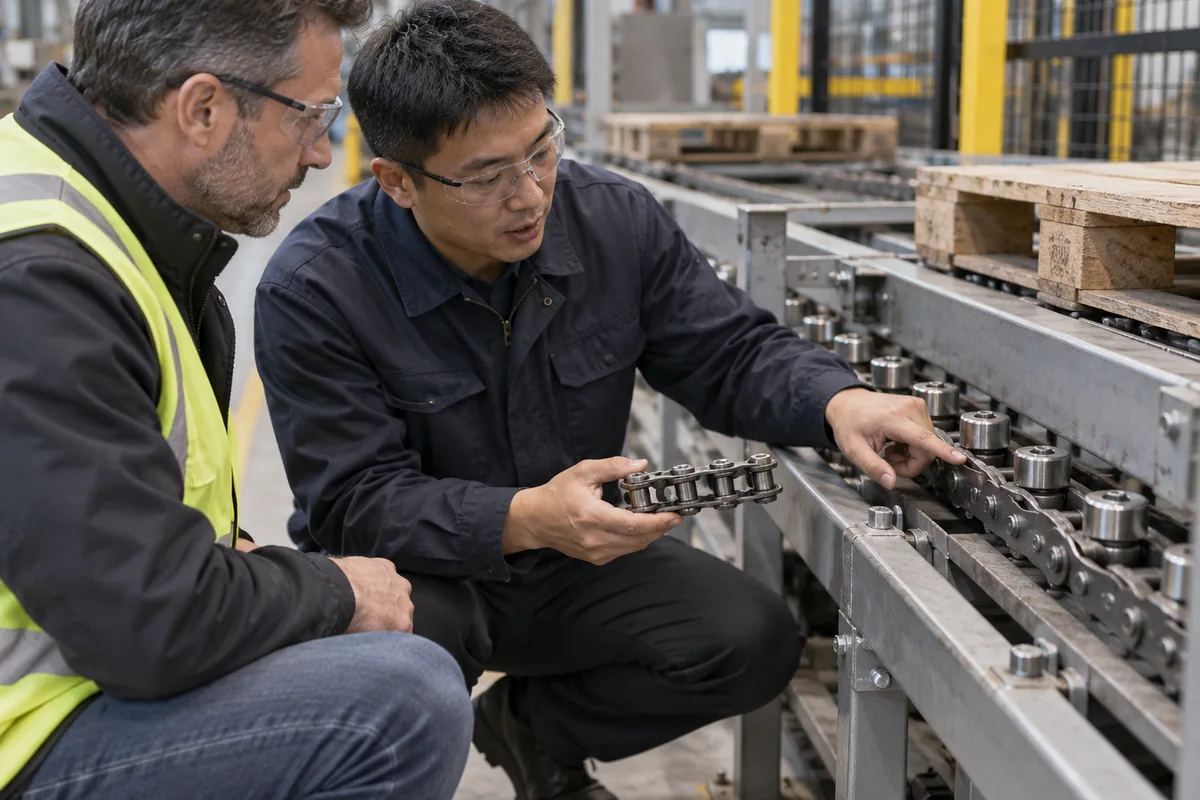
During commissioning, mark several rail joints and observe the chain at low speed before adding full carrier load. Look for roller lift, side rubbing, sudden sound changes or a visible change in chain path. For replacement work, photographs of the rail cross-section and worn contact surface help separate normal running marks from a geometry or alignment issue.
Measure the interfaces that control fit and tracking
For Guide Rails and Wear Strips for Pallet Chain Conveyors, start with a dimensioned record of the installed conveyor. Measure several pitches rather than one joint, then add roller or pin geometry, plate dimensions, strand centers and the rail/contact section. At the drive, record sprocket tooth count, bore or shaft arrangement and visible tooth wear. At stations, identify stop faces, locators, transfer gaps and the carrier surfaces that actually touch the conveyor.
Repeat the review with a representative loaded pallet at safe low speed. Watch whether the carrier stays square, whether both strands share the load and whether any symptom begins at the same fixed location. A change tied to one rail joint, stop or sprocket should be corrected at that interface before chain tension or a new chain is used as the remedy. Keep photographs of the measurement reference points with the RFQ so an engineer can reproduce the comparison against the proposed drawing.
Chain geometry
Several-pitch length plus roller, pin, plate and attachment dimensions.
Carrier geometry
Loaded mass, underside supports, datums, center of gravity and stop faces.
Drive geometry
Sprocket, shaft, center distance and available take-up travel.
Fixed locations
Rail joints, transfers, stops and points with recurring wear or impact.
Read the wear pattern along the rail
Walk the rail from drive to return and mark joints, transfers and locations with heavy polish, grooves or edge contact. Compare the marks with roller position and carrier path. A short bright band at a joint often tells more about local alignment than a general statement that the chain is noisy or wearing quickly.
Check rail straightness, height and parallelism between strands. Use a straightedge across joints and verify that transfer sections maintain support under the intended roller or carrier surface. If a wear strip is replaceable, inspect its retaining method and whether a lifted edge can catch a roller.
During commissioning, observe a loaded carrier through the same marked locations. Correct the rail geometry before increasing tension or lubrication. Include the rail cross-section and end photographs with a replacement RFQ, because chain dimensions and rail geometry must be reviewed together.