Stainless Steel Side Roller Chain Selection
Practical engineering guide: Stainless Steel Side Roller Chain Selection. Selection, interfaces, application checks, maintenance and RFQ inputs.
This guide focuses on how to specify stainless construction without assuming the stainless grade, washdown certification or chemical resistance. It is written for machine builders, maintenance teams and buyers who need a chain selection that can be checked against drawings and the real conveyor rather than a generic product label.
Stainless Steel Side Roller Chain Selection
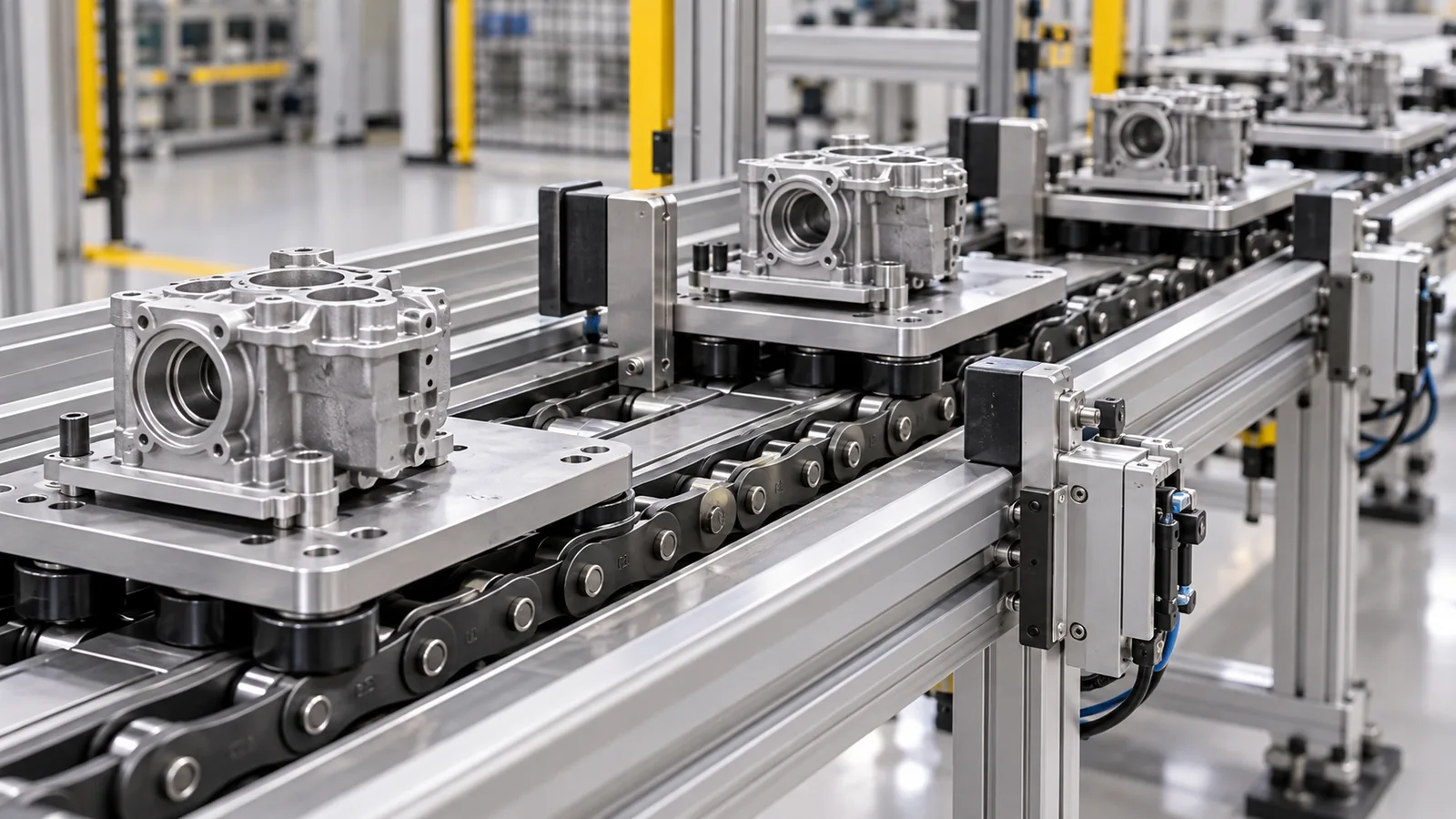
A pallet conveyor looks simple from a distance, but its reliability depends on several interfaces working at the same time. In a typical project such as a conveyor exposed to moisture or routine cleaning, chain pitch, roller contact, rail alignment, sprocket engagement, carrier stiffness, stops and maintenance access all influence the result. A useful engineering review therefore combines model-level data with the operating sequence of the machine.
Bu konunun önemi
How to specify stainless construction without assuming the stainless grade, washdown certification or chemical resistance affects more than catalogue selection. It changes how the workpiece carrier enters a station, how loads pass into guide rails, how the chain approaches the drive and how the system behaves during stopping or accumulation. If one interface is ignored, the symptom may appear somewhere else: a roller can wear because a rail joint is high, a chain can pull sideways because a pallet stop is offset, or a new chain can run badly because the old sprocket is worn.
The practical objective is not to eliminate every variation in the machine. It is to identify the variables that must be controlled, define which dimensions are fixed by the chain source, and leave unsupported items for explicit RFQ confirmation. This is also why treating the word stainless as a complete environmental specification is a risky shortcut. It replaces measurable machine data with an assumption and can make a correct-looking part fail at installation.
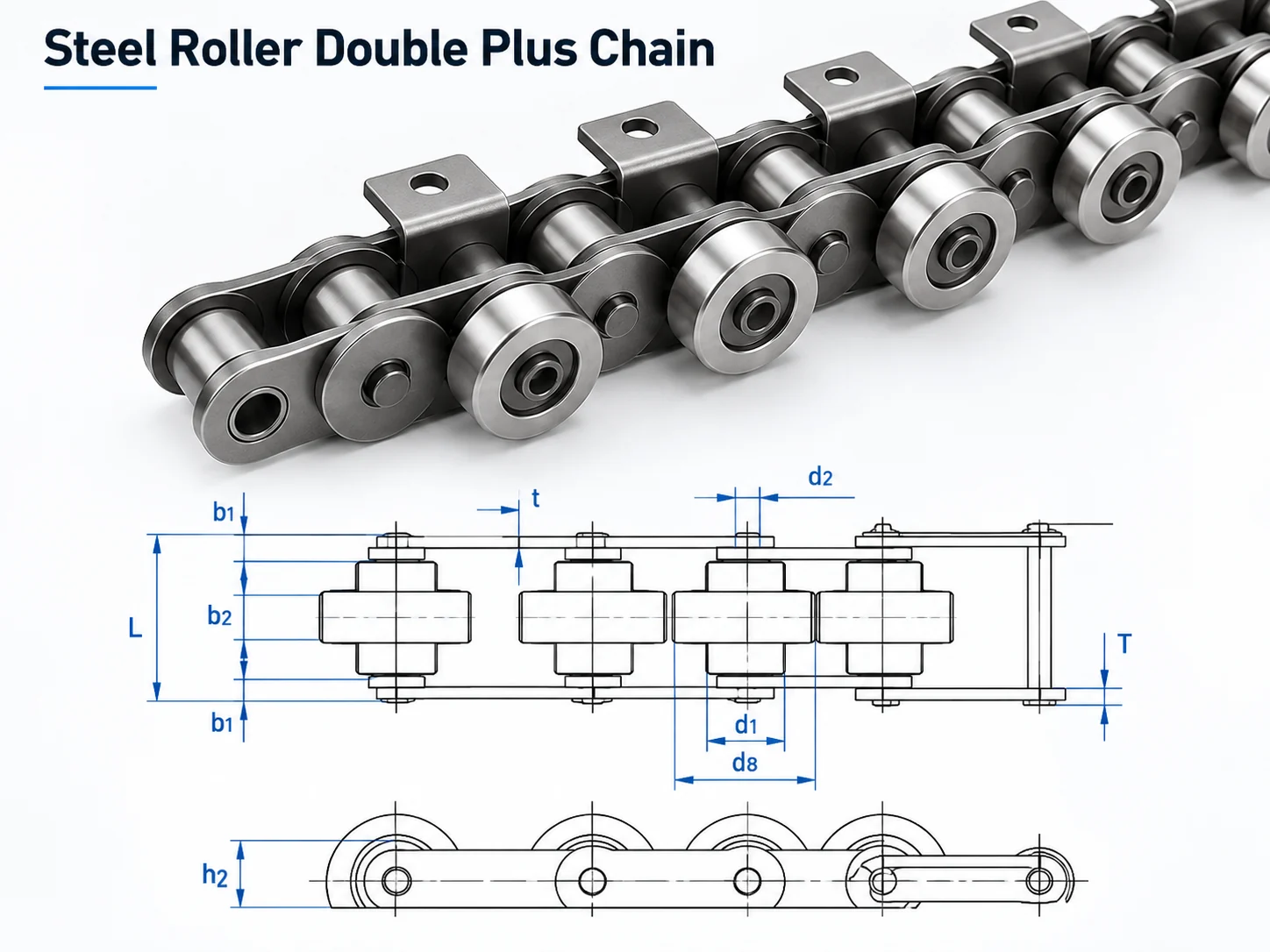
Side-roller chains are especially sensitive to the rail interface because the outboard roller position determines where support or guidance occurs. The rail should meet the intended roller surface without pushing the chain plates laterally. Keep standard-pitch, double-pitch, polymer-roller and stainless families distinct when their geometry differs; those boundaries should remain visible in the product structure.
İlkini tanımlamak için dört kontrol
Stainless Grade Request
Konveyörün bu bölümü için geçerli olan ölçülebilir koşulu, kurulu arayüzü ve kabul kontrolünü belirtin.
Cleaning Chemical
State the real operating environment and maintenance constraints so material and lubrication choices are reviewed for the complete conveyor.
Side-Roller Geometry
Record the relevant diameter, offset, contact surface, clearance and visible wear so the running interface can be checked.
Lubrication Constraints
State the real operating environment and maintenance constraints so material and lubrication choices are reviewed for the complete conveyor.
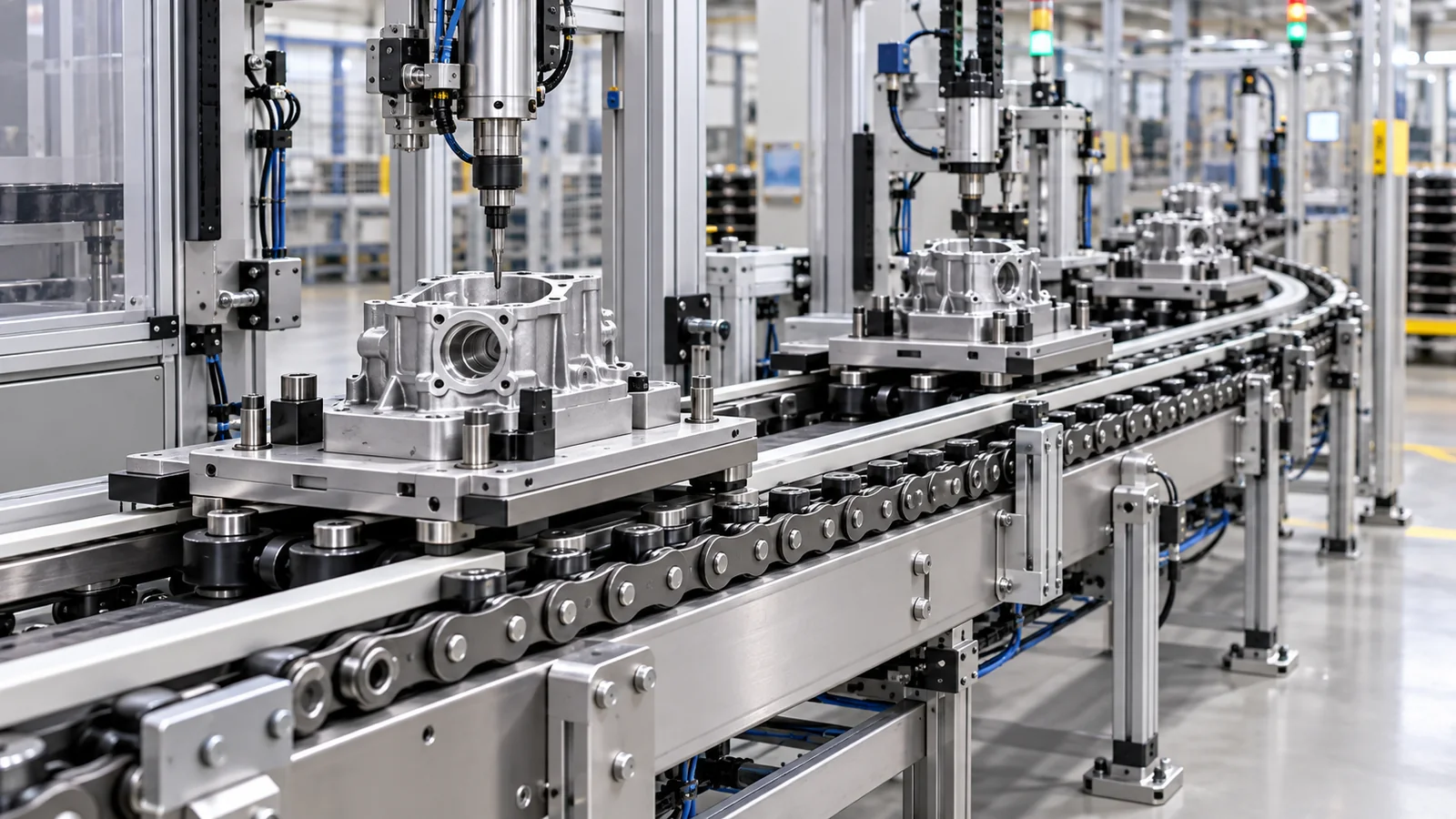
Öncelikle zincirin tam geometrisiyle başlayın.
Model numarası mevcutsa, tam model spesifikasyonunu ve eşleşen çizimi kullanın. Hatve, makara çapları, iç genişlik, pim çapı ve uzunluğu, plaka yüksekliği ve kalınlığı ile konveyörle temas eden yan makara, büyük makara veya içi boş pim boyutlarını karşılaştırın. Kod bilinmiyorsa, takılı zinciri sistematik olarak ölçün. Birkaç pim boyunca hatveyi ölçmek, tek bir aşınmış boşluğu okumaktan daha güvenilirdir ve fotoğraflar yan profili, makara düzenini, dişli çarkı ve ray temasını göstermelidir.
Palet taşıma kapasitesini belirlerken çekme dayanımını kullanmayın. Kataloglardaki çekme dayanımı değerleri, malzeme/bileşen test özellikleridir. Konveyör çalışma koşulları ayrıca hat uzunluğunu, zincir tel sayısını, taşıyıcı sayısını, ivmeyi, şoku, sürtünmeyi, yağlamayı, dişli çark boyutunu, aşınma durumunu ve gerekli güvenlik faktörünü de içerir. Zincir, ancak bu koşullar anlaşıldıktan sonra bir sistem için doğrulanabilir.
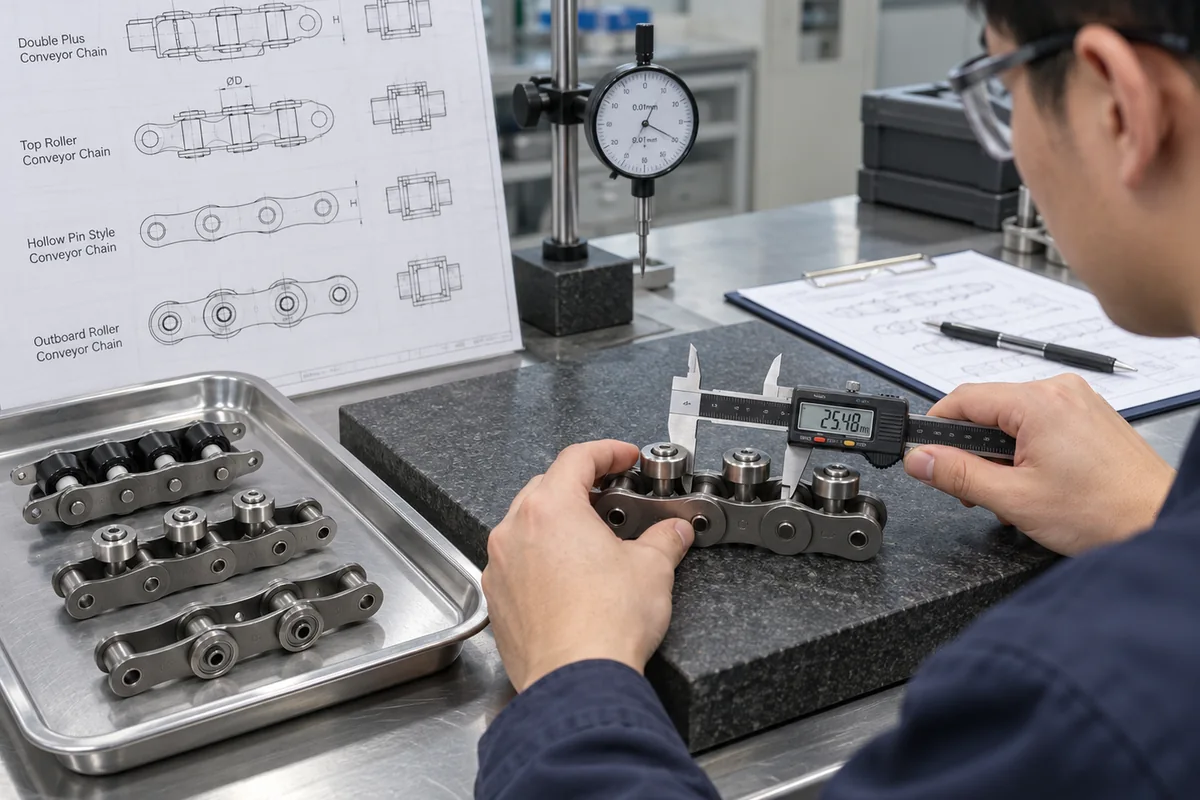
Seçim iş akışı
- Stainless Grade Request: İstenen koşulları, kesin zincir çizimi veya sistem düzeniyle karşılaştırın ve teklif talebi onayı için açık kalan soruları kaydedin.
- Cleaning Chemical: İstenen koşulları, kesin zincir çizimi veya sistem düzeniyle karşılaştırın ve teklif talebi onayı için açık kalan soruları kaydedin.
- Side-Roller Geometry: İstenen koşulları, kesin zincir çizimi veya sistem düzeniyle karşılaştırın ve teklif talebi onayı için açık kalan soruları kaydedin.
- Lubrication Constraints: İstenen koşulları, kesin zincir çizimi veya sistem düzeniyle karşılaştırın ve teklif talebi onayı için açık kalan soruları kaydedin.
- Taşıyıcı ve görev: Yüklenen taşıyıcı kütlesini, taşıyıcı sayısını, hat hızını, saatteki çalıştırma sayısını, birikim düzenini ve herhangi bir eğim veya dikey geçişi kaydedin.
- Sürüş ve dönüş: Dişli çark verilerini, şaft hizalamasını, gergi aralığını, geri dönüş desteğini ve yağlama erişimini doğrulayın.
- Serbest bırakma koşulu: Teknik verilerde belirtilmeyen herhangi bir alanı (örneğin özel malzeme sınıfı, kaplama, izin verilen sistem yükü veya çevresel derecelendirme gibi) tahmin etmek yerine, teklif talebi onay maddesi olarak listeleyin.
Sistem entegrasyonu
Zincir tanımlandıktan sonra, konveyörün yükü makinenin geri kalanına nasıl aktardığını kontrol edin. Kılavuz veya aşınma rayı, amaçlanan makara yüzeyini desteklemeli ve bağlantı noktalarından sürekli kalmalıdır. Paralel teller, belirtilen merkez mesafesine ve senkronize tahrik zamanlamasına sahip olmalıdır. Durdurucular, zincir yan plakasına değil, tasarlanmış palet yüzeyine temas etmelidir. Çapraz transferler ve kaldırmalar, taşıyıcının bir boşluğa düşmemesi veya bir pim/plaka kenarına oturmaması için yeterli desteğe ihtiyaç duyar.
Biriktirme sistemlerinde, taşıma işlemini durdurma işleminden ayırın. Taşıyıcı tutulurken zincir hareket etmeye devam edebilir, ancak durdurma kuvveti, kuyruk uzunluğu, yeniden başlatma sırası ve yerel sürtünme yine de kontrol edilmelidir. İş parçasını işleme için konumlandıran sistemlerde, gerekli tekrarlanabilirlik normal konveyör taşımasının sağlayabileceğinden daha sıkı olduğunda özel konumlandırma özellikleri kullanın.
Devreye alma ve bakım
Yeni veya onarılmış bir konveyörü önce düşük hızda devreye alın. Zincirin birkaç tam turunu çalıştırın ve tahrik, geri dönüş, ray geçişleri, duruşlar ve transferleri gözlemleyin. Zincir devri başına veya dişli çark dönüşü başına bir kez tekrarlanan sesleri dinleyin, çünkü bu kalıplar sıkı bir bağlantıyı, makara hasarını, yerel ray basamağını veya dişli çark sorununu belirlemeye yardımcı olur. Sert iş parçası paletlerinde, paralel teller boyunca eğilmeye dikkat edin; küçük zamanlama farklılıkları bile taşıyıcının bir tarafını yükleyebilir.
Bakım, arıza beklemek yerine eğilimleri takip etmelidir. Onaylanmış yöntemi kullanarak uzama veya uzunluk kontrollerini kaydedin, makaraların serbest dönüşünü ve anormal düzlüklerini inceleyin, yanlış hizalamayı gösteren cilalı yan temas izlerine bakın, dişli çark dişlerini inceleyin ve alma konumunu doğrulayın. Yağlama aralıkları, çalışma ortamını ve zincir üreticisinin kılavuzunu yansıtmalıdır; aşındırıcı kirlenmeyi çekiyorsa veya bir işlem alanına giriyorsa, daha fazla yağlayıcı otomatik olarak daha iyi anlamına gelmez.
Teklif talebi kontrol listesi
Değişim talebi için, okunabiliyorsa model kodunu, ölçülen hatveyi, makara düzenini, zincir genişliğini, plaka yüksekliğini, pim boyutlarını, yan profil fotoğrafını ve dişli çark/ray temasını gösteren bir fotoğrafı gönderin. Yeni bir sistem için, konveyör uzunluğunu, taşıyıcı boyutunu ve yüklenen kütleyi, tel sayısını, tel aralığını, hızı, başlatma/durdurma noktalarını, tampon uzunluğunu, çevresel koşulları ve hedef ülkeyi ekleyin. Bu ayrıntılar, zincir uyumunu tam bir konveyör yükü hesaplamasından ayırmayı mümkün kılar.
Specify the stainless requirement precisely
Stainless construction can be important for a project, but the family name does not define every grade, treatment or documentation requirement. State the operating environment and any specific material or inspection requirement together with the mechanical dimensions.
Confirm side-roller position, rail contact, sprocket data and carrier load exactly as with a standard chain. If cleaning chemicals, moisture or temperature are significant, include those conditions in the enquiry instead of relying on a generic corrosion-resistance assumption.
Arayüzü ölçün
Yedek parçanın mevcut bir makineye uyması gerektiğinde, çeşitli adım boyutlarını, uçtan görünüm geometrisini ve dişli çark/ray detaylarını kullanın.
Görevi tanımlayın
Yüklenen taşıyıcı kütlesi, hız, kalkışlar, birikim veya indeksleme davranışı ve çalışma ortamını dahil edin.
En kötü senaryoyu test edin
Temsilci taşıyıcılarla yapılan komisyon ve sadece boş taşıma değil, en zorlu kuyruk, durak, aktarma veya yeniden başlatma koşulları.
Açık maddeleri açıkça belirtin.
Eğer bir malzeme, kaplama, özel tolerans, dokümantasyon ihtiyacı veya izin verilen sistem yükü belirtilmemişse, bunu sorguda teyit edin.
Sıkça sorulan sorular
Sadece ses tonuna bakarak bir yedek oyuncu seçebilir miyim?
For stainless steel side roller chain selection, pitch is only the first filter. Confirm roller geometry, inner width, pins, plates and any side-roller or hollow-pin features against the installed conveyor before treating two chains as interchangeable.
Daha yüksek çekme dayanımı değeri, o yükü palet üzerinde taşıyabileceğim anlamına mı geliyor?
For stainless steel side roller chain selection, do not convert tensile strength directly into pallet payload. Service load depends on strand count, friction, acceleration, stop impact, sprockets, rails and the safety margin used for the machine.
Temsili bir aile fotoğrafı, modelin tam olarak kim olduğunu kanıtlayabilir mi?
Hayır. Temsili bir aile fotoğrafı yapım aşamasını açıklamaya yardımcı olabilir, ancak modelin kimliği ve boyutları modele özgü teknik özelliklerden, çizimlerden veya onaylanmış üretim verilerinden gelmelidir.
Fiyat teklifi sürecini hızlandıran bilgiler nelerdir?
For an RFQ related to stainless steel side roller chain selection, send the model code or dimensional sketch, clear photographs, conveyor layout, loaded carrier information, quantity and delivery country so the review starts from reproducible machine data.
Key engineering variables for Stainless Steel Side Roller Chain Selection
Side rollers transfer support to external rails, so roller diameter, rail height and side loading need explicit checks. Record the operating case in one line: what the conveyor carries, how fast it moves, where it stops and what condition triggered the review. Capture dimensions and observations another engineer can reproduce.
| Giriş | Ne kaydedilecek? | Neden önemli? |
|---|---|---|
| Taşıyıcı/yük | Yüklenen kütle, ağırlık merkezi, alt yüzey teması ve taşıyıcı sayısı | Destek, sürtünme ve durdurma davranışı |
| Hareket | Hız, başlatma, durdurma, biriktirme ve indeksleme | Dinamik talep ve süreç zamanlaması |
| Zincir yolu | Hatve, makaralar, tel aralığı ve raylar | Mekanik uyum ve izleme |
| Sürmek | Dişli çark dişleri, hizalama, gergi ve tahrik konumu | Katılım ve gerilim dağılımı |
| Çevre | Sıcaklık, toz, nem, temizlik ve yağlama sınırları | Malzeme ve bakım seçenekleri |
İlgili ürün ve seçim kaynakları
Kullanın palet taşıma zinciri kataloğu aileleri karşılaştırmak için ve mühendislik seçim iş akışı Makine verileri eksik olduğunda.
What to include with an enquiry about Stainless Steel Side Roller Chain Selection
Kurulacak veya planlanan zincir ailesini, miktarını, uygulamasını, taşıyıcı/yükünü, temel boyutlarını ve yeni parçanın çözmesi gereken çalışma koşulunu belirtin. Mevcut kodun belirsiz olduğu durumlarda fotoğraf veya çizim ekleyin ve açık malzeme, dokümantasyon veya teslimat gereksinimlerini görünür halde tutun.
Make the selection from interfaces, not from one catalogue dimension
A useful selection sequence starts with the carrier and rail, then moves to the chain and sprocket. Measure several pitches, identify the roller arrangement and compare plate height, pin dimensions and roller position against the drawing. Confirm the sprocket tooth count and bore and check whether the chain enters the rail smoothly after leaving the sprocket. For side-roller or hollow-pin designs, include the outboard rail or cross-rod interface in the same review. For Double Plus layouts, state the required conveying and accumulation behavior together with queue length and stop sequence. If any key dimension is unknown, leave it as an RFQ confirmation item instead of filling it from a neighboring model.
Geometry
Pitch over several joints, roller arrangement, pin/plate dimensions and strand spacing.
Sürmek
Sprocket tooth count, bore, shaft alignment, take-up and chain entry/exit geometry.
Duty
Speed, starts per hour, maximum queue, carrier mass and environmental conditions.
Confirm the model
Compare the complete model drawing and list any unstated material, tolerance or application requirement in the enquiry.
Define why stainless construction is required
Stainless side-roller chain should be selected from the operating environment and interface requirements, not from material name alone. Identify the reason stainless construction is being considered—such as moisture, cleaning practice or corrosion exposure—and then confirm that the exact chain geometry still matches the rail and sprocket system. Material choice does not remove the need to verify pitch, roller position, plate dimensions and pin interfaces.
Include the cleaning method, expected contaminants, operating temperature, carrier load, speed and duty cycle in the RFQ. If a specific stainless grade, surface treatment or compliance document is required, state it directly. Those requirements should be confirmed for the quoted configuration rather than inferred from the broader product family.
Capture the special interface as well as the base chain
For Stainless Steel Side Roller Chain Selection, the feature that differentiates the family must be measured directly. Side-roller chains need an end view showing roller diameter, offset and rail contact. Hollow-pin chains need pin-bore and cross-rod information, including rod span and retention. Material-specific versions also need the real operating environment stated separately from their dimensions. A nominal pitch or side photograph alone is not enough to confirm interchangeability.
Follow the special feature through the complete loop. Check rail joints, transfers, sprocket approach, return support and any location where a rod, roller or fastener could lose clearance. If two strands are connected by a carrier or cross rod, compare strand centers and take-up positions. For an RFQ, combine the exact geometry with loaded carrier information, speed, stop/queue behavior and any special material or documentation requirement; this keeps mechanical fit and application suitability visible as separate checks.
End view
Show roller offset, hollow-pin bore or attachment relationship to the chain body.
Clearance
Check rails, sprockets, return supports, guards and transfer gaps.
Load path
Identify how the carrier, fixture or cross rod transfers force.
Service condition
State environment, cleaning, lubrication and material/document requirements.
Define the corrosion or cleaning problem before specifying stainless
Record where corrosion, staining or wear occurs and whether it correlates with washdown, condensation, chemicals or a particular station. Then state the operating environment and any required material grade or documentation. “Stainless” is a family description, not a complete proof of chemical resistance or traceability.
At the same time, verify the normal chain interfaces: pitch, side-roller geometry, rail section, strand spacing, sprocket tooth count/bore and loaded carrier. If damage appears mainly at one rail joint or on one side, investigate alignment and support before treating it as a material-selection problem.
For quotation, keep the environmental requirement and the dimensional replacement data together. Include cleaning agents and temperature when relevant, but avoid assuming an unstated grade, treatment or allowable load. Those details should be confirmed for the proposed configuration.