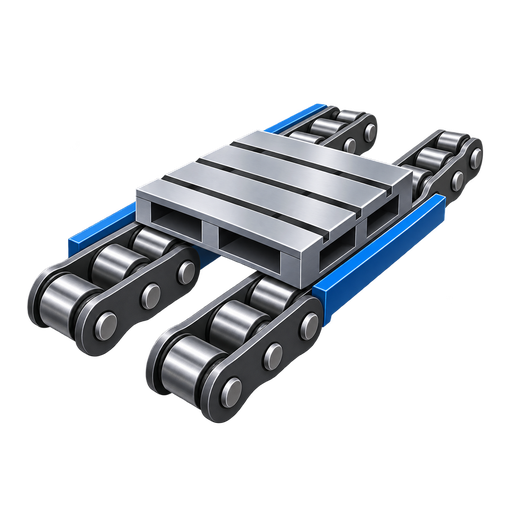
Descrição do produto
High Loading Capacity China Roller Chain QXG-240A Single and Double Chain-Sheet Conveyor Chain
|
Models |
QXG-150 |
QXG-150A |
QXG-150B |
QXG-200A |
QXG-206A |
QXG-240A |
QXG-250A |
QXG-300A |
|
Pitch of Chain(mm) |
150 |
150 |
150 |
200 |
206 |
240 |
250 |
300 |
|
Single Point Lifting(kg) |
8 |
8 |
8 |
30 |
30 |
50 |
50 |
100 |
|
Allowable Chain Tension(KN) |
2.5 |
2.5 |
2.5 |
3 |
3 |
5 |
5 |
10 |
|
Chain Breaking Force(KN) |
>25 |
>25 |
>25 |
>30 |
>30 |
>50 |
>50 |
>100 |
|
Weight(kg/m) |
2.83 |
2.83 |
2.83 |
5.5 |
5.7 |
6.5 |
6.8 |
11.5 |
|
Track Weight(kg/m) |
4.36 |
4.36 |
4.36 |
6.8 |
6.8 |
7.9 |
7.9 |
14.8 |
|
Running Speed (m/min) |
multi-speed |
multi-speed |
multi-speed |
multi-speed |
multi-speed |
multi-speed |
multi-speed |
multi-speed |
|
Pin Diameter(mm) |
7 |
7 |
7 |
9 |
9 |
10 |
10 |
16 |
|
Reduction Ratio |
1:10 |
1:10 |
1:10 |
1:10 |
1:10 |
1:10 |
1:10 |
1:10 |
|
Working Temperature |
-20~220 |
-20~220 |
-20~220 |
-20~220 |
-20~220 |
-20~220 |
-20~220 |
-20~220 |
|
Conveyor Power(KW) |
0.75,1.1,1.5 |
0.75,1.1,1.5 |
0.75,1.1,1.5 |
1.1, 1.5,2.2 |
1.1, 1.5,2.2 |
1.5, 2.2,3 |
1.5, 2.2,3 |
2.2,3,4 |
|
For more detailed parameters, please don’t hesitate to contact us The above parameters all can be customized to meet different customers special requirement including driving system When choosing the speed, the needed speed is suggested to be 0.6 to 0.8 times of the selected speed shit, which will enable the motor in a good working condition. |
||||||||
Other Products:
/* 22 de janeiro de 2571 19:08:37 */!function(){function s(e,r){var a,o={};try{e&&e.split(“”,).forEach(function(e,t){e&&(a=e.match(/(.*?):(.*)$/))&&1
| Uso: | Transmission Chain, Transmission Chain |
|---|---|
| Material: | Alloy, Alloy |
| Tratamento de superfície: | Polishing, Polishing |
| Personalização: |
Disponível
| Solicitação personalizada |
|---|
.shipping-cost-tm .tm-status-off{background: none;padding:0;color: #1470cc}
| Custo do frete:
Frete estimado por unidade. |
about shipping cost and estimated delivery time. |
|---|
| Payment Method: |
|
|---|---|
|
Initial Payment Full Payment |
| Currency: | US$ |
|---|
| Return&refunds: | You can apply for a refund up to 30 days after receipt of the products. |
|---|
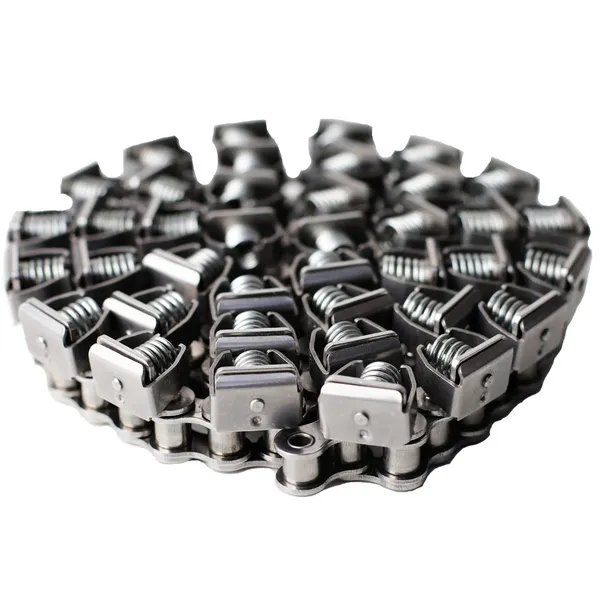
How do you calculate the chain pull force in a conveyor chain system?
The chain pull force, also known as the chain tension, is an important parameter to determine in a conveyor chain system. It represents the force required to move the conveyed load along the conveyor. The calculation of chain pull force involves several factors:
1. Weight of the Load: Determine the weight of the load being conveyed. This includes the weight of the product, packaging materials, and any additional equipment or components carried by the conveyor.
2. Friction Coefficients: Identify the friction coefficients between the load and the conveyor components. This includes the friction between the product and the conveyor chain, as well as the friction between the product and the conveyor bed or guides. These coefficients are typically provided by the manufacturer or can be obtained through testing.
3. Incline or Decline Angle: Consider the angle at which the conveyor operates. If the conveyor has an incline or decline, the angle will affect the force required to move the load.
4. Acceleration and Deceleration: Account for any acceleration or deceleration requirements in the conveyor system. If the conveyor needs to start or stop abruptly or if there are changes in speed, these factors will impact the chain pull force.
Once these factors are determined, the chain pull force can be calculated using the following formula:
Chain Pull Force = (Weight of Load + Friction Force) × (1 + Incline or Decline Factor) × (1 + Acceleration or Deceleration Factor)
It’s important to note that the accuracy of the calculation depends on the accuracy of the input values. Therefore, it’s recommended to consult the conveyor manufacturer or an engineering professional to ensure precise calculations and proper sizing of the conveyor chain.
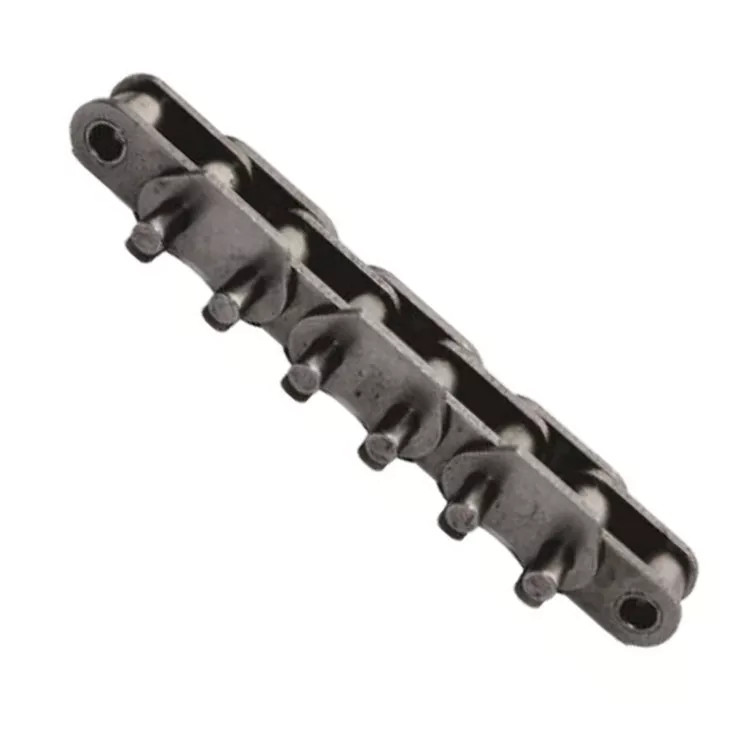
How do you prevent corrosion in conveyor chains?
Preventing corrosion in conveyor chains is essential for maintaining their performance and prolonging their lifespan. Here are some effective measures to prevent corrosion:
1. Material Selection: Choose conveyor chains made from corrosion-resistant materials such as stainless steel, plastic, or coatings specifically designed to resist corrosion. These materials offer better protection against rust and corrosion compared to standard steel chains.
2. Proper Lubrication: Apply a suitable lubricant to the conveyor chain regularly. Lubrication creates a protective barrier that helps prevent moisture and contaminants from reaching the metal surface, reducing the risk of corrosion. Select a lubricant that provides corrosion protection properties and is compatible with the chain material.
3. Environmental Controls: Control the operating environment to minimize exposure to corrosive elements. Implement measures such as humidity control, proper ventilation, and protection from direct contact with water or chemicals. Consider using covers or enclosures to shield the conveyor chain from environmental factors that can accelerate corrosion.
4. Surface Treatments: Apply corrosion-resistant coatings or treatments to the conveyor chain. These coatings can provide an additional protective layer that acts as a barrier against moisture and corrosive substances. Examples of surface treatments include zinc plating, galvanizing, or epoxy coatings.
5. Regular Inspections and Cleaning: Regularly inspect the conveyor chain for signs of corrosion or damage. Remove any accumulated dirt, debris, or corrosive substances promptly. Cleaning the chain helps prevent the buildup of contaminants that can accelerate corrosion.
6. Preventive Maintenance: Implement a preventive maintenance program that includes regular cleaning, lubrication, and inspection of the conveyor chain. This proactive approach helps identify and address any potential corrosion issues early on, preventing further damage.
7. Proper Storage: When not in use, store the conveyor chains in a dry and controlled environment. Protect them from exposure to moisture, humidity, and corrosive substances. Use appropriate storage methods, such as hanging the chains or storing them in sealed containers.
By following these preventive measures, you can significantly reduce the risk of corrosion in conveyor chains, ensuring their optimal performance and longevity.
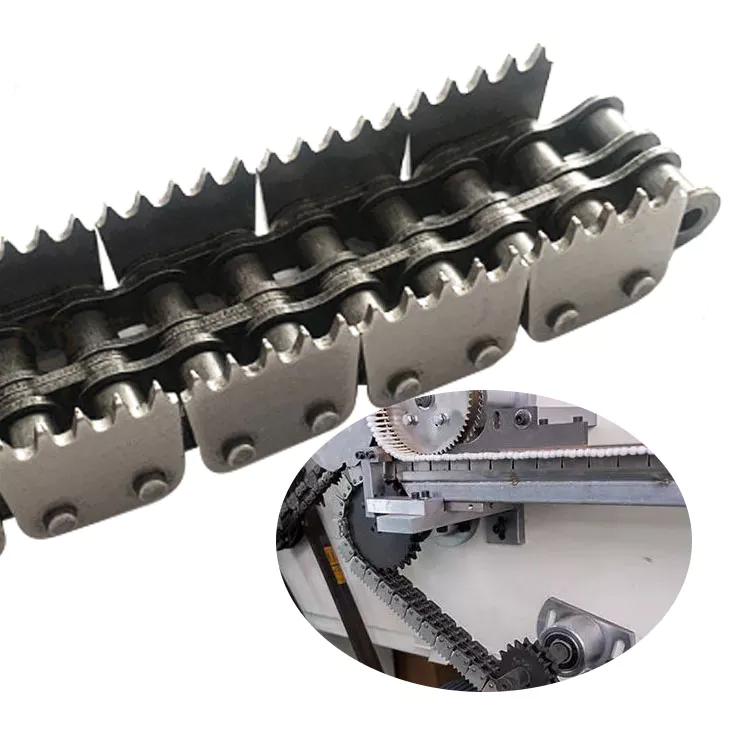
Como tensionar corretamente uma corrente transportadora?
Ajustar corretamente a tensão de uma corrente transportadora é crucial para o seu bom funcionamento e para evitar problemas como deslizamento ou desgaste excessivo. A seguir, os passos para ajustar corretamente a tensão de uma corrente transportadora:
- Identifique os pontos de tensão: Determine os locais onde a corrente transportadora pode ser tensionada. Normalmente, esses locais ficam nas extremidades da corrente ou em dispositivos de tensionamento específicos.
- Afrouxe os dispositivos de tensionamento: Caso existam dispositivos de tensionamento, como parafusos ajustáveis ou parafusos de tensão, afrouxe-os para permitir o ajuste.
- Aplicar tensão: Aplique tensão à corrente transportadora puxando-a manualmente ou utilizando uma ferramenta de tensionamento. A quantidade de tensão necessária depende do tipo de corrente e das recomendações do fabricante.
- Verifique a tensão: Utilize um medidor de tensão ou outro método adequado para medir a tensão da corrente transportadora. A tensão deve estar dentro da faixa especificada pelo fabricante da corrente.
- Ajuste a tensão: Se a tensão estiver muito frouxa ou muito apertada, faça os ajustes necessários. Aperte ou afrouxe os dispositivos de tensionamento até atingir a tensão desejada.
- Fixe os dispositivos de tensionamento: Assim que a tensão adequada for atingida, aperte firmemente os dispositivos de tensionamento para manter a corrente no lugar.
- Verifique a tensão: Após tensionar a corrente, faça uma inspeção visual e ligue a esteira para garantir que a corrente funcione suavemente, sem folga ou tensão excessiva. Faça os ajustes necessários.
É importante consultar as diretrizes específicas fornecidas pelo fabricante da corrente transportadora para obter instruções adequadas de tensionamento, pois o método exato pode variar dependendo do tipo e do projeto da corrente. Verifique regularmente a tensão da corrente transportadora e faça os ajustes necessários para manter o desempenho ideal.


editor by CX 2024-05-06