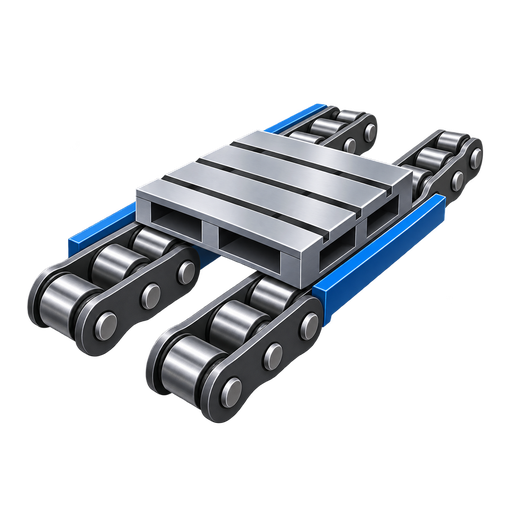
Pallet conveyor chain demand is concentrated in regions with established automation, machine-tool, automotive, electronics and general manufacturing supply chains. Market support is organized around engineering information and shipment requirements rather than a one-size-fits-all regional catalogue.
Priority market coverage
Korea and East Asia
Proximity to Korea supports projects serving automated assembly, electronics, machine-tool and component manufacturing where carrier-based production lines are common.
Japan and Southeast Asia
Suitable for OEM, factory-automation and replacement enquiries that can provide installed dimensions, drawings or conveyor interface information.
Germany and wider Europe
Focus on technically documented pallet-transfer and workpiece-carrier projects, with RFQs identifying dimensional, material and shipment requirements before release.
United States and Canada
Support for new-system and replacement enquiries from automation integrators, machine builders, maintenance teams and industrial distributors.
What travels with a cross-border RFQ
Provide chain model or measured geometry, quantity, carrier/load data, application, sprocket and rail details, environment and the destination. Where a project requires material or product-specific inspection documentation, state the requirement at quotation stage.
Commonly discussed trade terms include EXW, FOB, CIF and DAP; FCA, CFR, CPT, CIP and DDP can be reviewed for a specific shipment. Final terms depend on destination, shipment characteristics and the agreed commercial arrangement.
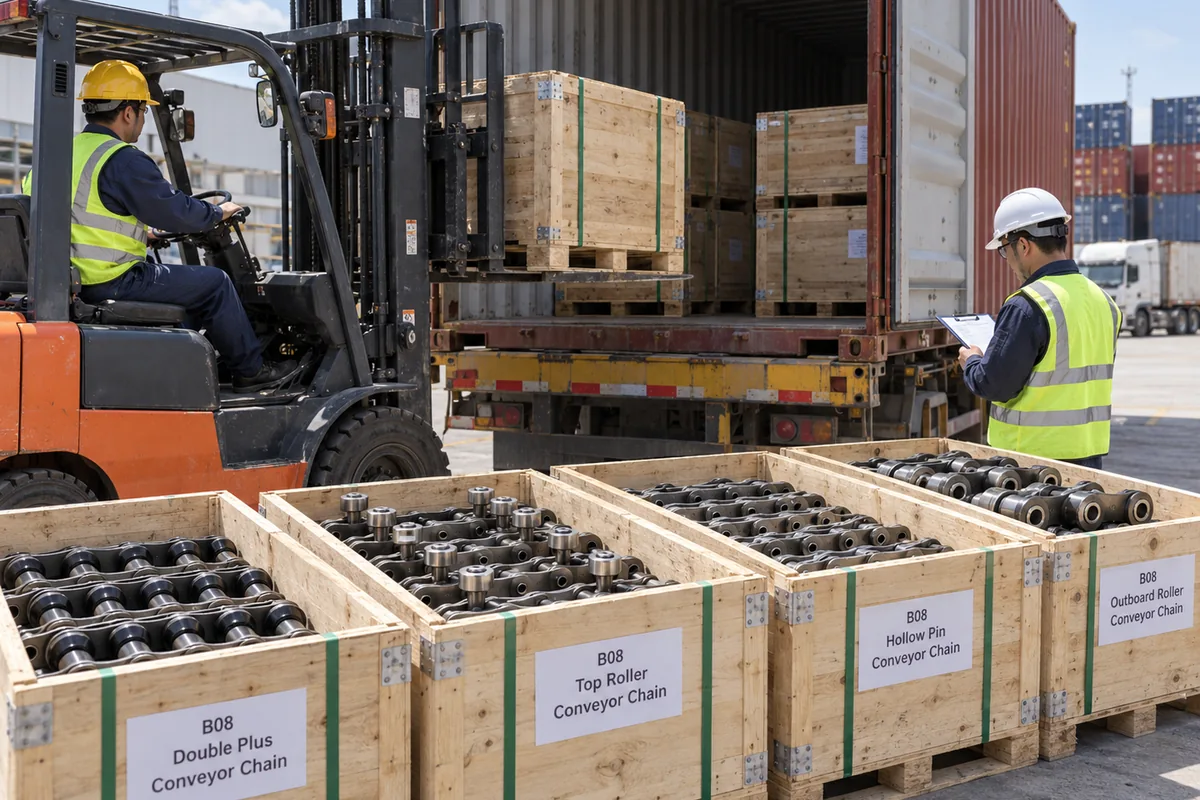
Local machine information remains the priority
Regional standards and common practices can help frame a discussion, but replacement compatibility is controlled by the installed chain, sprocket, rail and carrier interfaces. For that reason, the same RFQ checklist is used across markets: identify the machine, measure the interfaces, record duty and environment, and keep unsupported properties open for confirmation.